



When I first arrived in China, I carried with me the simple, unspoken stereotypes that many young Africans grow up hearing about distant nations. Like most people across the Global South, my understanding of the outside world was shaped largely by headlines, political speeches, and fragmented media narratives – not by real human encounters. Over the past decade, I have walked through more than 60 Chinese villages, mingled and spoken with local farmers, students, teachers, and grassroots community workers, and co-built the China-Africa Youth Federation to connect young people across Africa and China. This decade of on-the-ground grassroots experience has taught me what global policy debates often overlook: global governance is never only about treaties, institutions, and rules. At its core, it is about people.
Against the backdrop of rising global division and the persistent "clash of civilizations" rhetoric, people-to-people exchanges are no longer a soft, optional add-on to international diplomacy. They have become the most reliable, binding force for dissolving prejudice, rebuilding cross-civilizational trust, and reshaping a more inclusive global governance system. As the world gathered at the 2026 Global Governance Forum in Xiong'an in late October to discuss inter-civilizational inclusiveness and mutual learning, I want to share lessons not based on textbooks or conference papers, but on years of walking, talking, and building real ties between African and Chinese youth.
First, we must ask why the "clash of civilizations" narrative has regained strong traction in recent years. For decades, this divisive framework has framed different cultures, religions, and development models as inherently competitive, even incompatible. In times of global uncertainty – slowing economic growth, regional conflicts, widening north-south gaps, and technological disruption – this simple narrative offers easy explanations for complex global problems. It reduces diverse civilizations to opposing blocs, turns cultural differences into political boundaries, and encourages societies to view outsiders with suspicion rather than curiosity.
What makes this narrative so dangerous is that it thrives on distance and ignorance. Elite political dialogue can often be rigid, interest-driven, and disconnected from ordinary people's lives. When ordinary people from different civilizations have few chances to interact, they fill the information gap with stereotypes. A single negative story can overshadow years of unreported cooperation; a single cultural misunderstanding can harden into a fixed national or civilizational bias. This is how division takes root, not from inherent cultural conflicts, but from a lack of sustained, grassroots human connection.
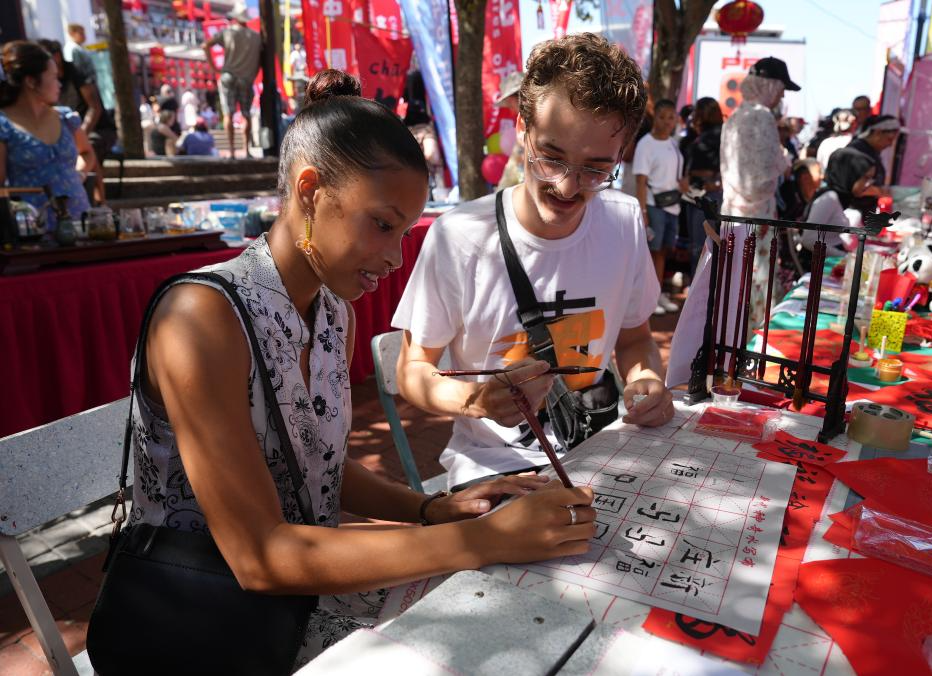
This is precisely where people-to-people exchanges deliver their most powerful impact: they replace abstract prejudice with tangible humanity. During my village travels across China, I have witnessed countless small but transformative moments that no official statement can replicate. I have eaten home-cooked meals with rural families who knew almost nothing about Africa before meeting me, yet treated me as a family guest. I have sat in village classrooms and watched Chinese students exchange ideas with African peers via online youth forums, not talking about geopolitics, but about shared dreams: better education, greener communities, stable jobs, and a more peaceful world. These ordinary interactions do not make global problems disappear overnight, but they gradually dismantle the ideological walls that the "clash of civilizations" narrative relies on.
Grassroots exchanges build trust in ways that formal diplomacy cannot. Official cooperation can be fragile, easily shaken by political fluctuations and diplomatic tensions. But friendships forged between young people, mutual understanding built between ordinary families, and shared experiences across continents create people-level goodwill that outlasts political shifts. For nearly a decade, I have witnessed this truth repeatedly. We are seeing more African youth abandon one-sided perceptions of China as a distant, unfamiliar power and recognize it as a partner of the Global South. We are also seeing Chinese youth move beyond superficial impressions of Africa, understanding the continent not as a place defined by challenges, but as a land of innovation, ambition, and youthful potential.
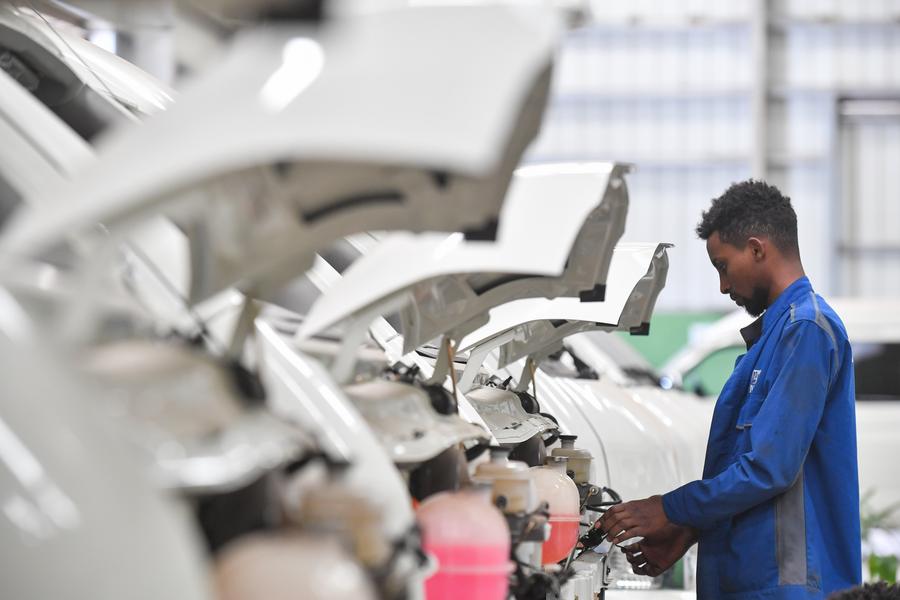
This shift in public perception matters deeply to global governance reform. Today's global system still carries the legacy of a century-old, Western-dominated order, where most rules, agendas, and evaluation standards are set by developed nations. For decades, the Global South has been largely confined to a passive role: discussing global issues, responding to external agendas, and adapting to rules designed without its full participation. This structural imbalance is one of the root causes of global inequity, recurring development gaps, and growing civilizational distrust.
To change this reality, the Global South needs more than economic cooperation and political negotiation. It needs cultural and discursive empowerment rooted in people-to-people solidarity. True global governance reform is not just about gaining seats at international tables; it is also about changing how the world sees diverse civilizations and development paths. When African and Chinese youth collaborate on community projects, share development experiences, and co-create cross-cultural public content, they rewrite outdated narratives from the bottom up. They prove that different civilizations do not need to compete for supremacy – they can learn from each other's strengths.
China's decades-long practice of inclusive inter-civilizational exchange offers valuable insights for the entire global community. In contrast with those Western narratives that frame modernization as a single, uniform Western model, China's grassroots exchanges with Global South countries respect diversified development paths. Chinese rural development experiences, poverty alleviation practices, and grassroots governance models are not exported as universal templates; instead, they are shared through face-to-face communication, field visits, and youth joint research, allowing Global South communities to adapt and innovate based on their own national conditions and cultural traditions. This spirit of equality and mutual learning is the core of inclusive global governance.
Young people, in particular, are the most vital engine of this transformation. They are less bound by old ideological prejudices and more open to cross-border collaboration. They speak the universal language of innovation, solidarity, and a shared future. Every youth exchange program, every cross-continental volunteer project, and every online dialogue between Global South youth is a small step toward a fairer global order. These efforts accumulate into lasting social consensus, creating public support for more inclusive and equitable global governance rules and agendas.
If we want to end the recurrence of civilizational conflict narratives, we must invest more in grassroots, long-term people-to-people connectivity. If we want the Global South to move from passive participation to active leadership in global governance, we must first build solid cross-civilizational trust among ordinary people. Global rules work only when they are rooted in shared human understanding; global solidarity endures only when it is built on sincere people-to-people bonds.
Over my years of traveling through China's villages and connecting African and Chinese young people, I have learned one simple but profound lesson: civilization is not a barrier. It is a bridge. Differences in history, culture, and development stage do not divide us; prejudice and ignorance do. As we reshape global governance for a more inclusive future, we must look beyond institutional negotiations and elite dialogues. The most powerful, sustainable force for global progress lies in the countless ordinary people who choose to know each other, trust each other, and grow together across continents and civilizations.
Joseph Olivier Mendo'o, Cameroonian political scientist, is head of the African Youth Delegation in China and executive director of the international exchange department of the China-Africa Business Council.





