




International trade has rarely been more important to economic prosperity, or more challenging to sustain. Geopolitical uncertainty, changing supply chains, technological disruption and shifting investment patterns are reshaping global markets. For countries such as Australia and China, with deeply connected economies and essential interests in international trade, constructive economic engagement is all the more important.
It is worth remembering that trade is fundamentally reciprocal. Its benefits accrue not only to the country producing and exporting goods and services, but also to the country importing them: through access to products, technology and expertise, greater competition and productivity, and better value for consumers and businesses.
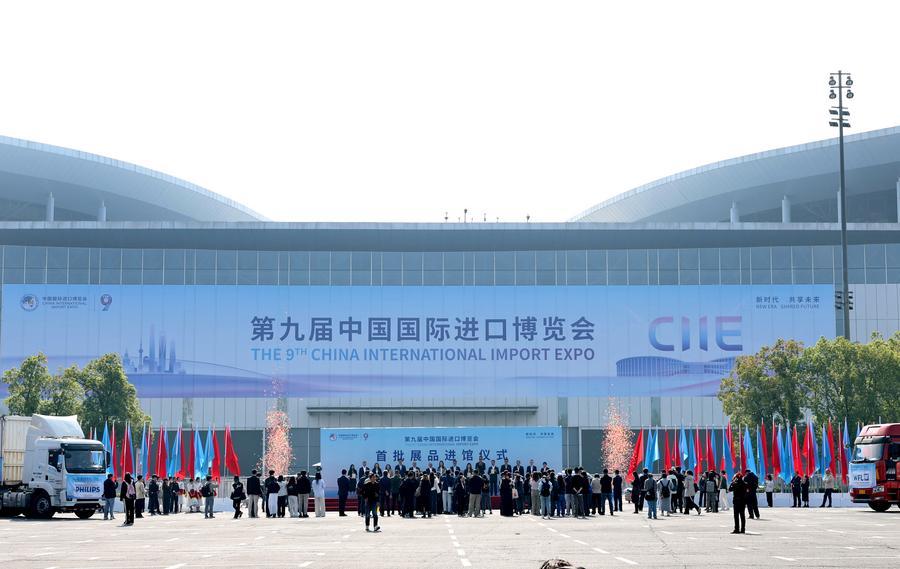
The China International Import Expo (CIIE), opening in Shanghai, is a significant expression of this principle. China has become one of the world’s most capable manufacturing and exporting economies, but it has also made a deliberate commitment to expanding imports and welcoming international suppliers into its enormous market. China Customs data show that during Jan.-Sept. 2026, Chinese merchandise imports rose by 27.5 percent y-o-y, 6.2 percentage points faster than its exports growth (21.3 percent). CIIE demonstrates that China’s ambitions in international trade extend well beyond its export capacity.
For Australian businesses, this presents an opportunity to consider the relationship in its entirety: not simply what we can sell to China, but what we can buy, learn and achieve through engagement with the Chinese economy.
No bilateral economic relationship is as consequential to Australia’s prosperity as the one we have with China. Built over decades, our economic connections support jobs, investment, regional communities and national prosperity. Two-way trade in goods and services reached 326 billion Australian dollars (about 230 billion U.S. dollars) in 2025, accounting for around a quarter of Australia’s total trade.
The underlying complementarity of our economies provides a particularly strong foundation for future growth.
Australia brings abundant natural resources, highly productive agriculture, renewable energy potential and strengths in research, education and professional services. China has enormous manufacturing capacity, sophisticated industrial supply chains, technological capabilities and a vast, increasingly diverse consumer market. These differences are not barriers to economic engagement; they are among its greatest strengths.
Australian energy, minerals and agricultural products support China’s industrial development and food security. In return, competitively priced Chinese manufactured goods, technologies and equipment help Australian businesses manage costs, improve productivity and remain competitive. They also give Australian households access to affordable products, contributing to living standards and helping moderate cost-of-living pressures.

We should recognize both sides of this equation. Imports are not simply the other side of exports; they are essential to a productive and competitive economy. Access to quality goods, technologies and inputs from international markets strengthens Australia’s economic capacity.
The relationship is also evolving. For much of the past generation, Australia’s economic engagement with China has been understood primarily through resources, energy and agricultural commodities. These remain important, but they tell only part of the story. China’s investment in innovation, advanced manufacturing, digital technologies and clean energy is reshaping industries and global supply chains. Its consumers are creating demand for new products, services and experiences. These developments offer Australian enterprises opportunities well beyond traditional trade.
The clean energy transition is one particularly promising area. Australia’s resources, research strengths and renewable energy potential complement China’s manufacturing scale and technological capabilities. Together, these create opportunities in renewable energy, energy storage, critical minerals and industrial decarbonization.
Agriculture and food remain equally important. Australian producers have established an outstanding reputation for quality, safety and reliability. As Chinese consumers become more discerning, opportunities will continue to emerge for premium food, beverages, seafood and health products.
There is also scope to expand cooperation in professional services, financial technology, healthcare, elderly care, tourism, education, creative industries and research. In these sectors, relationships, knowledge and an understanding of each other’s markets are often as important as the products and services exchanged.
Two-way investment deserves greater attention. While trade creates commercial connections, investment can embed them more deeply, supporting innovation, employment, technology transfer and enduring business partnerships. Chinese investment has contributed to Australia’s development, while Australian businesses have established successful operations in China. There is scope to broaden these connections, consistent with the regulatory frameworks and national interests of both countries.
A mature economic relationship need not be one without differences. Australia and China have different political systems, economic structures and perspectives on international issues. That need not prevent productive commercial engagement. Countries do not need to be alike, or share every perspective, to recognize the value of economic complementarity and identify areas of common interest. For business, this means recognizing where cooperation is both possible and necessary in the national interests of our two countries, while approaching opportunities with sound judgement and an understanding of the operating environment.
Realizing the relationship’s potential requires greater China capability in Australia. China is a large, complex and highly competitive market. Businesses need the knowledge to understand it, networks to establish meaningful relationships, cultural adaptability to operate effectively, and the leadership and appropriate strategic judgement to make sound decisions. They must also understand localization and in-market operations, recognizing that China’s regions, industries and consumer segments offer different opportunities and challenges.
This is an important part of the work of the Australia China Business Council (ACBC). For more than five decades, ACBC has helped connect Australian and Chinese businesses, facilitate dialogue and build the relationships underpinning commercial cooperation. Our responsibility is not simply to promote trade, but to strengthen the capacity of Australian companies to engage with China intelligently, confidently and sustainably.
CIIE provides an important setting for this engagement. It brings together businesses, governments and industry leaders from across the global economy, giving Australian companies opportunities to showcase their capabilities, understand developments in the Chinese market, meet prospective partners and explore commercial possibilities.
But the value of participation extends beyond the exhibition itself. The relationships established, conversations continued and opportunities developed over time are what ultimately matter. CIIE is also a reminder that successful international trade depends on openness in both directions and a recognition that its benefits should be mutual.
Looking ahead, Australia and China have every reason to continue investing in their economic relationship. In an increasingly uncertain international environment, reliable commercial relationships, open markets and constructive dialogue have considerable value. Both countries share an interest in regional economic stability and a trading system that provides confidence and opportunity for business.
The task is to build on the considerable achievements of the past while adapting to the realities of the future: looking beyond established patterns of trade, recognizing new areas of complementarity and ensuring businesses on both sides can participate in the opportunities available.
The China-Australia economic relationship has already delivered extraordinary benefits to both countries. Its foundations remain strong, its opportunities continue to evolve, and much of its potential is yet to be realized.
The challenge is to approach the next chapter with clear eyes, strategic purpose and a consistent willingness to engage. Trade works best when it creates value in both directions. That is the principle that should guide the next phase of Australia’s economic relationship with China.
The article reflects the author's opinions, and not necessarily the views of China Focus.





