



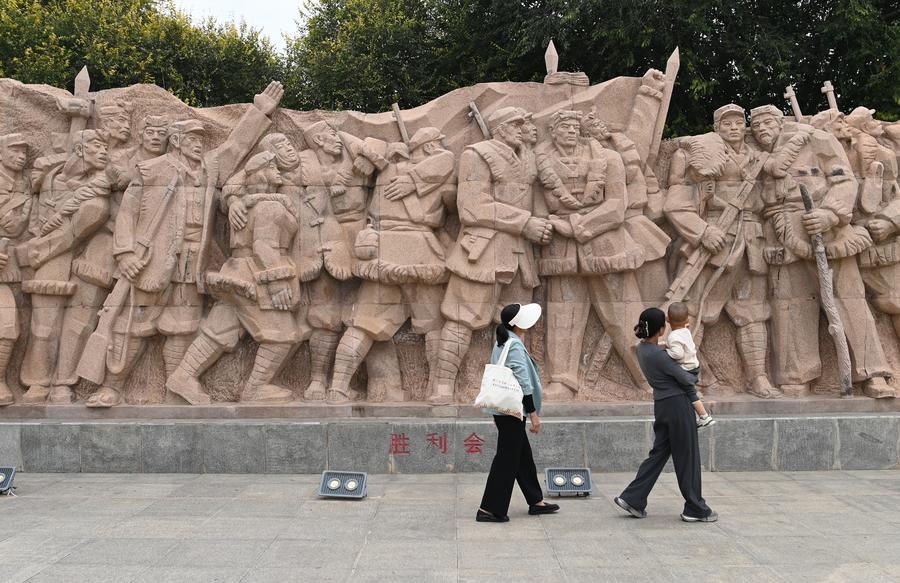
What enables a historical event to transcend its own borders and inspire future generations? The Long March (1934-36), a cornerstone of contemporary China, has undoubtedly made this legendary achievement. In brief, the Long March can be described as an experience of collective survival in the face of seemingly insurmountable circumstances. Confronted by an enemy superior in numbers and technology, multiple units of the Communist Party of China (CPC)-led Chinese Workers' and Peasants' Red Army embarked on a strategic retreat unprecedented in human history. They crossed rivers, snow-capped mountains and inhospitable terrain before reaching northwest China.
Latin American readers may find parallels between the Long March and their own region's 19th-century struggles for independence. General José de San Martín's crossing of the Andes with his Mounted Grenadiers Regiment resembles this revolutionary feat in terms of the immense geographical difficulties involved, the need for collective organization and discipline, and, above all, the conviction that the political objective justified confronting such enormous obstacles.
Comparing the founding events of Latin American nations, from the crossing of the Andes to the struggles led by Hidalgo and Morelos in Mexico, with China's Long March therefore has clear historical and ideological limitations. Nevertheless, all these events became enduring narratives about generations that made tremendous sacrifices to transform their collective destiny and improve the living conditions of their societies.
A turning point in the revolution
The events that precipitated the Long March are widely known. The Red Army's rural bases came under relentless encirclement campaigns by the Kuomintang regime's forces. Unable to repel the fifth encirclement campaign of the Central Soviet Area in Jiangxi and Fujian provinces, the CPC leadership was compelled to execute a strategic retreat, first toward the southwest, and then northward.
In October 1934, more than 86,000 Central Red Army soldiers left their bases in Jiangxi and Fujian. According to official figures, only about 6,000 to 7,000 of them reached the end of the journey two years later. They had endured mountain ranges, immense rivers, hunger, disease, battles and enormous distances traveled on foot.
How can a group continue moving forward after suffering losses of such magnitude? How long can morale and discipline be maintained when geographical, political and economic conditions are all unfavorable? The answer lies in the spirit of the Long March: conviction in shared ideals, solidarity and comradeship, the ability to adapt to changing circumstances and the leadership required to keep a common goal clearly in view.
The Long March was not merely a test of physical endurance. It was also a process of political and strategic learning. The Zunyi Meeting in Guizhou Province in January 1935 provides an excellent example. The meeting reshuffled the CPC leadership and reoriented the Party's strategy, opening a new stage in which the Chinese Communists would address concrete problems with greater autonomy.
Likewise, the arrival in northwest China and the establishment of a new revolutionary base in Yan'an, Shaanxi Province, made it possible to consolidate these lessons within a more effective political and military organization. It also enabled the revolutionary forces to strengthen their ties with rural communities, experiment with social development policies, participate actively in resisting the Japanese invasion and ultimately win the Chinese revolution.
The Long March teaches us that advancing toward a historic objective sometimes requires reorganization and a new point of departure. In politics, as in life, forward movement is not always possible when conditions are unfavorable. Circumstances must be accurately assessed in order to determine the possibilities of success and recognize when it is wiser to withdraw and wait for a more favorable moment.
It is also important to recognize that without the political and organizational survival ensured by the Long March, China's subsequent history would not have followed the same path. The achievement of the Red Army created the conditions for founding a new country and building a modern society committed to economic development and social equity.
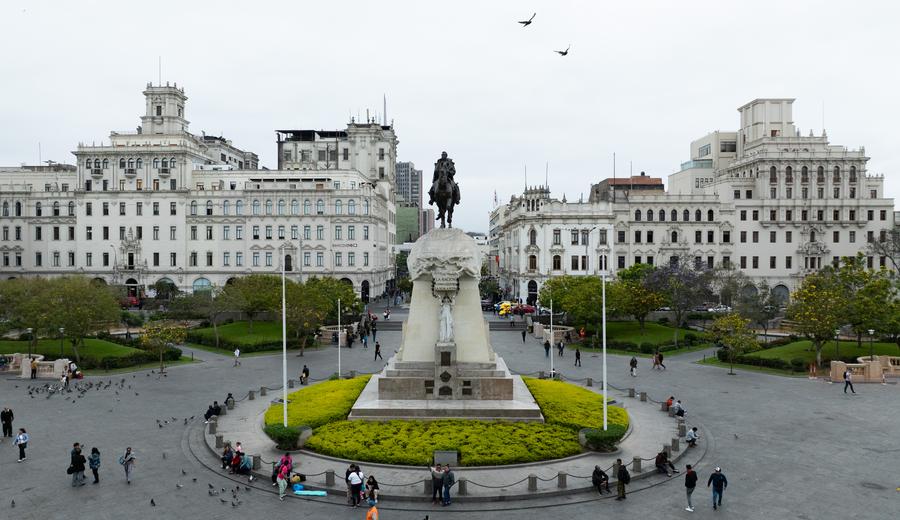
The Long March spirit and Latin American youth
What connection can a young person in Buenos Aires, Bogotá, Lima or Mexico City have with a legendary event that occurred in China almost a century ago? The Long March is, above all, a story of resilience, teamwork and sacrifice in pursuit of the liberation of a people and the salvation of a nation. Besides being an achievement of Chinese society, it is an inspiring historical event that belongs to all humanity. It is particularly meaningful for younger generations in the Global South.
Contemporary narratives often emphasize the exceptional individual: the entrepreneur, the leader, the champion or the "self-made man." The Long March offers a different conception of communal success, one based on the understanding that no great social transformation is the work of a single person.
Latin American cultural values, reflected in historical experiences of community solidarity, producer cooperatives, social movements and even team sports, highlight that the region possesses a collectivist tradition that urgently needs to be recovered today. This tradition does not erase individual initiative, but places it within a broader framework of shared responsibility and common goals.
As a prelude to the major economic, technological and social advances China has made since the founding of the People's Republic in 1949, the legacy of the Long March can resonate with the youth of Latin America. Today's generations will probably not have to cross snow-capped mountains or travel thousands of kilometers to defend their convictions, as did the armies of San Martín, Bolívar and Hidalgo, or the revolutionary leaders of new China. Their challenges will be different: social inequality, climate change, technological transformation and the pursuit of more just societies.
Yet the fundamental question linking the generation that experienced the Long March with young Latin Americans today remains essentially the same: Are we capable of remaining united when the road becomes difficult, or will today's individualistic mindset leave us at the mercy of historical circumstances?
This is one of the defining questions of our time. The lasting value of the Long March lies not in mechanically reproducing the choices made in another country and another historical period, but in recognizing the human capacities revealed by that experience: collective discipline, adaptability, solidarity, strategic patience and commitment to a goal larger than individual interests.
For Latin American youth, the Long March legacy is therefore both historical and ethical. It reminds them that setbacks do not necessarily mean defeat, that withdrawal can sometimes preserve the possibility of future progress and that major transformations require organization as much as courage. It also shows that a shared political objective can sustain a community even under exceptionally difficult conditions.
The Long March cannot provide ready-made answers to Latin America's contemporary problems. The region's societies must respond to their own circumstances, histories and priorities. Nevertheless, the experience can inspire young people to see collective action not as a relic of the past, but as an essential resource for confronting the future.
In an age marked by uncertainty and fragmentation, the central message remains powerful: Seemingly insurmountable obstacles can be overcome when people preserve their convictions, learn from changing conditions and continue advancing together.
The author teaches at the College of Foreign Languages and Cultures of Sichuan University.





