



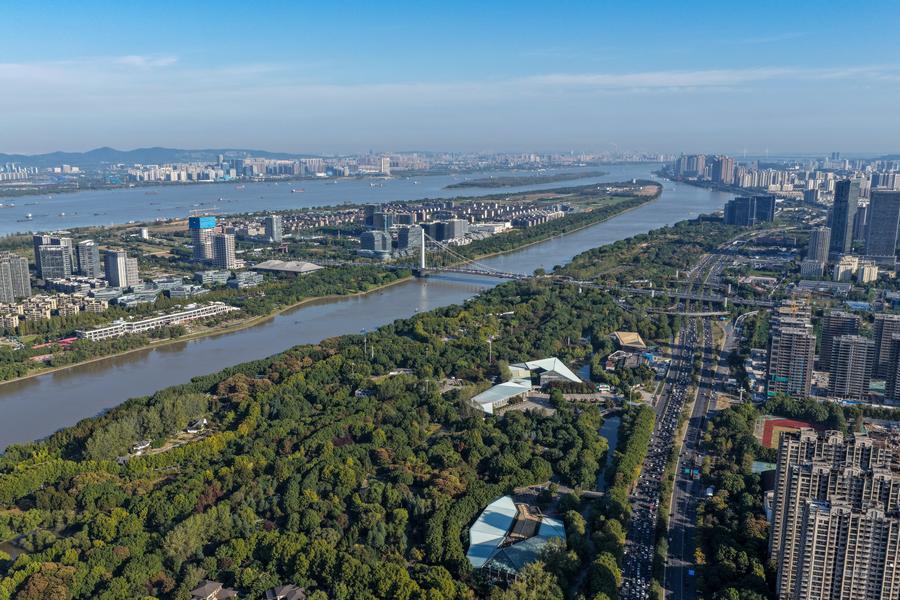
East China's Jiangsu Province is expanding renewable energy application and protecting the Yangtze River at the same time, while keeping trade and business strong in the cities along its banks. The Yangtze is often called the mother river of China. The province’s approach to it rests on a simple principle: protect the river first, and refrain from large-scale development along its banks. A four-day trip along the Jiangsu section of the river shows what that principle looks like in practice.
Giving the river's wildlife room to recover
Certain sections of the Yangtze are now under a 10-year fishing ban, and the Zhenjiang Yangtze River Finless Porpoise Provincial Nature Reserve is one place where its effects are visible. It is the earliest aquatic life reserve established in Jiangsu and the largest and most ecologically valuable nature reserve in Zhenjiang. In 2023, it joined the Chinese Biosphere Reserves Network (CBRN). The reserve connects stretches of the river upstream and downstream of the city. This gives animals such as the Yangtze finless porpoise a corridor to move between populations. Porpoises can be seen in the river there. Reserve staff say that after years of protection, approximately 34 to 38 porpoises live year-round in the reserve. The reserve also shelters rare birds and wetland plants that are under national-level protection.
A fishing ban depends on enforcement, and the city of Jiangyin has built a system to carry it out. A river patrol station controls more than 500 cameras along the busiest sections of the river. Dedicated police officers monitor these cameras and operate drones around the clock. AI helps analyze footage of the river surface to flag suspicious activity, allowing officers to respond quickly and precisely. The patrol station brings command, data analysis, and personnel management together in one place. Officials describe the office as the river's eyes and ears, and the public security department has added monitoring equipment on the water itself. The system was launched in 2021, as the ban took effect, and it now covers the stretches of the river where illegal fishing is most likely.
Wetlands that clean water before it reaches the Yangtze
Protecting wildlife also depends on the quality of the water flowing into the river. In Yangzhong, part of Zhenjiang, the Xinglong wastewater treatment plant shows one way to approach it. Beside the plant sits an ecological buffer zone built on land reclaimed from former industrial factories. The project was completed in 2024, and the site covers about 13 acres. Treated water from the plant does not go straight into the Yangtze. It first passes through an ecological oxidation pond and then through a series of constructed wetlands. There, plants and soil filter it a second time. The extra step raises the quality of the water that reaches the river and reduces the pollutants entering it.
The site is also open to visitors. It adds wetland and green space to the riverbank, restores habitat for birds and other wildlife, and increases the wetland’s capacity to absorb carbon. Science education displays sit alongside the water treatment. Visitors can see how the system protects the river while enjoying the surrounding park. The design shows how a treatment plant, a wetland and a public park can share the same land and serve the same goal.
Clean energy on the same riverbank
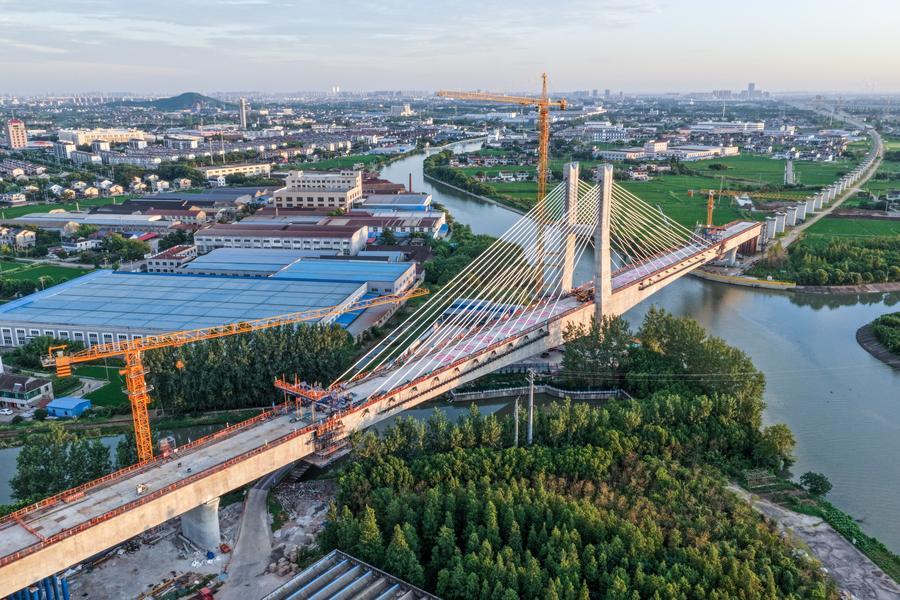
Protecting the river does not mean stepping back from industry. It means changing what the industry produces. In Zhangjiagang, old chemical plants along the river were shut down, and new companies were set up in the same area to build green energy products. One manufacturer there produces large forgings used in wind power equipment, including components for offshore wind turbines. Its new plant has contracts with major overseas businesses, including the American multinational company General Electric and France’s multinational energy company TotalEnergies.
Jiangsu is an immense industrial hub in the Yangtze River Delta, and its electricity demand keeps reaching new highs. As wind and solar capacity grows, the grid also needs ways to store that power. The pumped storage power station in Jurong is one answer. It is a key national energy project, and its dam has set three world records. At 182.3 meters, or about 598 feet, it is the tallest dam of any pumped storage power station. It is also the highest asphalt-concrete-faced rockfill dam, and it is the largest reservoir basin-filling project in the world. The station sits at the center of the East China grid, close to major cities such as Nanjing, and helps provide power to over 250 million people. It is one of the core sources of peak-shaving power on that grid. Its first unit connected to the grid in 2024, and the full station began operating in October 2025. It stores electricity when demand is low and releases it at peak hours.
The future of the Yangtze River Delta
Several of these projects are still growing. The second phase of the wind equipment plant in Zhangjiagang is under construction. The fishing ban on the river is a 10-year measure that is still in force. The reserve in Zhenjiang, the monitoring office in Jiangyin and the wetland in Yangzhong are all working parts of the same effort. Each one protects a different piece of the river, from its wildlife to its water quality.
The Jurong station points to where the approach could spread. Its operators describe the design as a replicable model for building high-dam pumped storage stations in plains, where large-scale storage is hard to build. They also say the technology supports the low-carbon transformation of industries across the Yangtze River Delta. For Jiangsu and China as a whole, the next stage is to repeat what has worked. That means more green space along the banks, more storage for wind and solar power, and an industrial base that builds clean energy equipment.





