



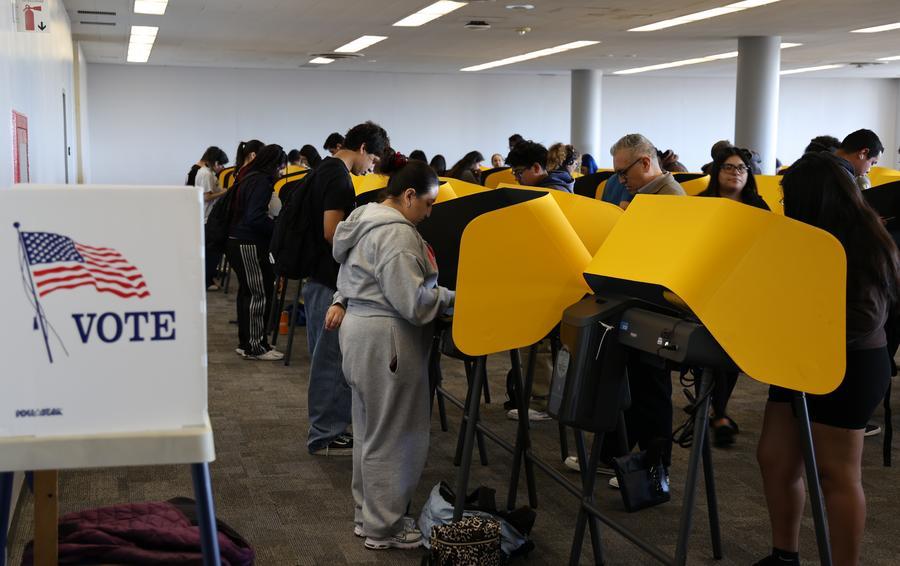
In the midterm elections, U.S. President Donald Trump's Republican Party suffered a crushing defeat, handing Democrats control of both chambers of Congress and adding to uncertainty over the future of American politics.
The ruling party almost invariably loses congressional seats in midterm elections. Yet losing control of both chambers at once is rare: A party in power has done so only four times in the past century—in 1946, 1954, 1994 and 2006.
Economic concerns are at the heart of the American discontent: 63 percent believe the economy is getting worse, and 68 percent disapprove of the Trump administration's handling of inflation. Bringing inflation under control was, after all, one of Trump's key campaign promises. Since the United States launched military strikes on Iran, however, oil prices have soared. The annual cost of filling up a typical family car in the U.S. is now nearly $500 higher than it was a year ago. Alongside rising food prices and rents, this added burden has deepened voter frustration. According to U.S. media reports, retail diesel prices have climbed nearly 70 percent since the U.S. and Israel began their campaign of aggression against Iran, driving up transportation and agricultural production costs. Trump's tariff policies have also backfired: His trade war has fueled inflation at home and prompted retaliatory tariffs from trading partners, dealing a direct blow to U.S. agricultural exports. The agricultural states in the Midwest have long been Republican strongholds, but as their economies suffer, once-reliable Republican voters are beginning to waver. The Democrats' Senate victory in Kansas in these midterms illustrates that shift, with the party winning a U.S. Senate election in the state for the first time since 1932.
The U.S. midterm elections are, of course, a domestic affair. For observers across the Pacific in China, interest in the vote stems largely from concern about what comes next. If the Trump administration has less room for maneuver in its final two years in office, what might that mean for China-U.S. relations, which have only just begun to show signs of a thaw?
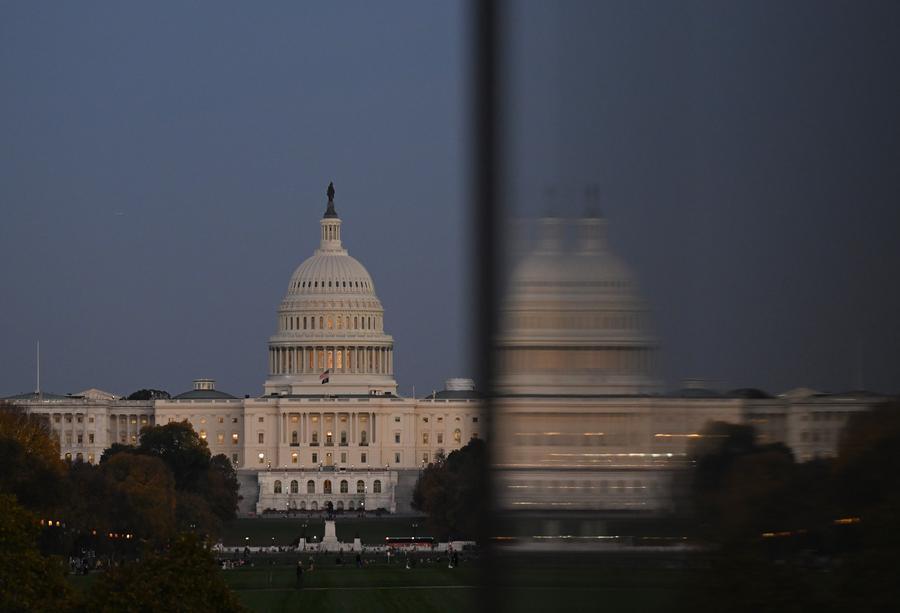
It is too soon to offer a definitive answer. One feature of these midterms, however, deserves attention: The "China threat" narrative, which both Republicans and Democrats once eagerly promoted, has gained little traction this year.
According to a tally by Japan's Nikkei Asia, the two parties have run just 44 TV campaign ads mentioning China this year, a steep drop from 190 in the 2022 midterms and 216 during the 2020 presidential election. With economic pressures and the cost of living dominating the campaign, and the war with Iran still unresolved, candidates campaigning on a tough-on-China platform are clearly out of step with voter priorities.
Democratic candidates' approach to foreign policy remains broadly in line with that of the Joe Biden administration: strengthening alliances and using international rules to shape strategic competition. Put simply, this means working with countries in Europe and the Asia-Pacific to continue containing China in politics, economics, technology and other areas. On China policy, the bipartisan consensus remains to reduce dependence on Chinese products and technology, and continue introducing rules that disadvantage China and undermine its companies' global competitiveness, thereby reinforcing a Western-centered international economic order.
For the Trump administration, Democratic control of both chambers of Congress will likely mean sustained opposition to its domestic agenda. With its legislative options constrained at home, the administration may increasingly turn to foreign affairs and trade, areas in which the president has greater authority, to advance its existing agenda on China. The two countries' leaders are expected to have two more opportunities to meet face to face in the final two months of this year. A single midterm election will not fundamentally alter the course of China-U.S. relations. Whether the recent thaw can be sustained, however, will depend above all on both sides following through on the understandings they have reached and carefully managing their differences.
Competition between China and the United States, the world's two largest economies, is inevitable. Keeping that competition orderly and not spiralling out of control will remain a central challenge for America's policy elite for years to come. One encouraging sign from these midterms is that they may prompt American politicians to recognize that invoking the "China threat" alone is no longer enough to win over voters, and that stoking hostility can backfire. If that recognition takes hold more broadly, it could create an opening for improved China-U.S. relations.





