



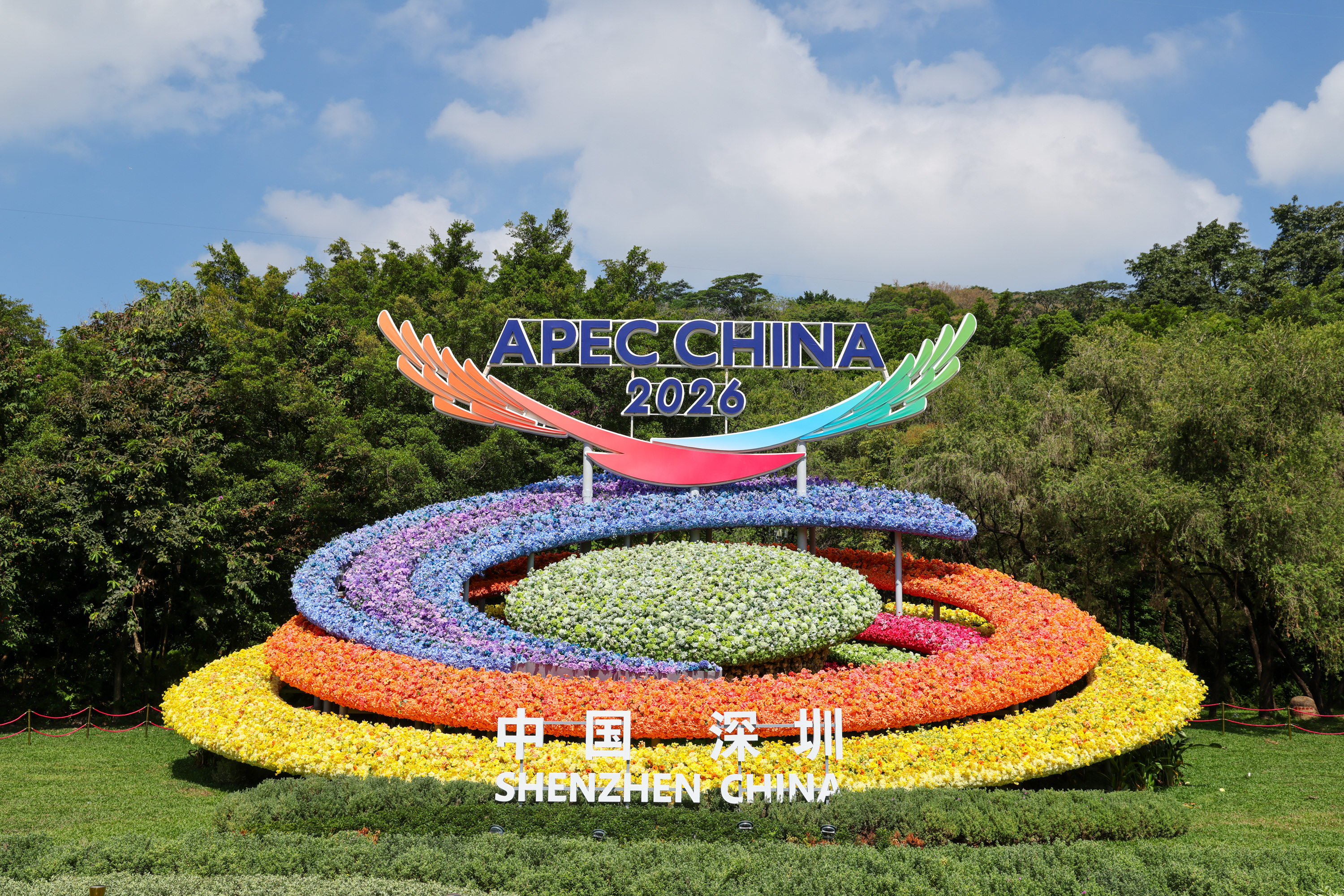
When the leaders of Asia-Pacific economies sat down in Shenzhen on Nov. 18, they met in a region known as the Greater Bay Area (GBA). The GBA is one of the most populated urban areas in the world, with an estimated 86 million people living around the Pearl River Delta. To put that into perspective, the region has a population larger than Germany's living in an area the size of Croatia.
The GBA encompasses Hong Kong, Macao, Shenzhen, Guangzhou, and 7 other cities. It functions as one giant, interconnected working economy, and for the first time, it will host the Asia-Pacific's most important meeting. That makes it more than a venue. It is a live demonstration of how neighboring cities with different strengths can build something together, and it deserves as much attention as what global leaders are announcing in the meetings.
A gathering on a scale few cities attempt
The APEC CEO Summit, held from Nov. 17 to 18, brought together more than 2,000 business, political, and media representatives. Twelve leaders of APEC economies attended the CEO Summit. They were joined by representatives of 115 Fortune Global 500 companies, including CEOs from Visa, Mastercard, UPS, PayPal, and Deloitte. Nearly 5,000 Chinese and foreign journalists are expected in the city to cover this week's event. Hong Kong alone is sending at least 54 business leaders, one of its largest delegations ever, drawn from long-established conglomerates, banks and business chambers. Few cities ever have this many of a region's decision makers in one place at the same time.
Shenzhen has spent months preparing for them. Its volunteer corps, which the city puts at 4.2 million people, now includes more than 4,000 international volunteers stationed at ports, business districts and transport hubs, and 148 volunteer stations have been upgraded to international standards. Taxi drivers carry translation devices covering nearly 150 languages. Foreign Visa and Mastercard cards now work at every metro gate and at tens of thousands of shops and hotels, which removes one of the primary frustrations international visitors commonly face. Metro and bus fares are half price during meeting week, and about 2 million residents have signed a pledge to welcome guests. The Huanggang Port, a crossing between Shenzhen and Hong Kong, also opened in upgraded form in October, so travelers coming from Hong Kong now pass through a newly renovated gateway.
Three strengthsand one supply chain
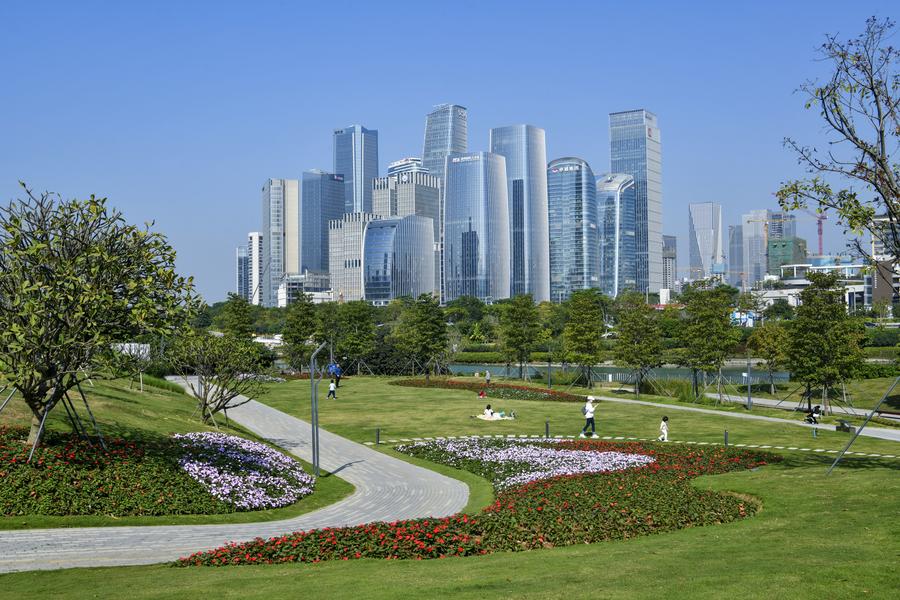
Behind the event sits the economic structure that makes the Greater Bay Area work. Hong Kong contributes finance, with deep capital markets, a common-law legal system, and expertise connecting companies to international investors. Shenzhen contributes technology, with hardware makers, engineers, and startups clustered close together in districts like Nanshan and Futian. Dongguan, just north of Shenzhen, is the region's main manufacturing hub, with factories and suppliers that can turn designs into finished products at scale. Each one does something the other two rely on, and the value comes from how easily things move between them.
That movement shows up in ordinary business. A company based in the GBA can raise international financing in Hong Kong, develop a product in Shenzhen, and manufacture it in Dongguan, all within a short drive. Once products are made, they can be shipped worldwide from Shenzhen Port, Hong Kong Port, or Guangzhou Port. The arrangement succeeds because each one focuses on what it already does best, and because the distances and procedures between them have been steadily reduced.
What visiting delegates can see in Shenzhen
Delegates visiting Shenzhen this week will see more than presentations about the city's development. Guangdong has arranged 218 visitor sites and 43 tour routes for attendees, including a route through Nanshan, one of the city's technology hubs. The tours offer a firsthand look at what makes the region a massive economic engine for China. Three features of the city stand out. Some APEC economies have looked directly to Shenzhen, while others are pursuing similar ideas, and together they show that these approaches can work beyond China.
The first is the value of a partner next door. Shenzhen's growth began as a special economic zone located next to Hong Kong, which supplied capital and international connections while Shenzhen supplied land and labor. Johor Bahru, in Malaysia, is applying a similar idea across its border with Singapore. Johor Chief Minister Onn Hafiz Ghazi has said the Johor-Singapore Special Economic Zone is modeled on Shenzhen's, and he has set the goal of making Johor the "Shenzhen of Southeast Asia." Unlike Shenzhen and Hong Kong, however, Malaysia and Singapore are separate countries. Their cooperation rests on an agreement between their governments, with plans including special tax arrangements, bonded warehouses, and a rail link due to open in early 2027.

The second is how closely industrial supply chains sit together. In Shenzhen, designers, component suppliers, and factories operate within an hour of each other, allowing a new product to move from idea to production without leaving the region. Thailand, an APEC member, is building a similar arrangement across its Eastern Economic Corridor(EEC), an area on the country's eastern seaboard funded by the government, private investors, and development banks. The government has identified 12 industries and combined them into five clusters so manufacturers, suppliers, and service providers can set up near one another. It names four requirements for attracting them: industry-specific land, reliable water and electricity, a trained workforce, and predictable regulations. Some Chinese companies investing in the project include Alibaba, ByteDance, BYD, Huawei, and CRRC. A 2025 study found that Chinese firms accounted for 27percent of newly permitted foreign businesses in the EEC, surpassing Japan. Each of these companies sees investing in the area as a positive step toward integrating into the local economy and capturing a share of Southeast Asia's fast-growing consumer market.
The third is visible on any street. Shenzhen's 16,000 buses have been fully electric since 2017, a change supported by national and local authorities for new buses and charging stations. Chile, another APEC member, has taken a similar path in Santiago, renewing the city's bus fleet through a series of public investments. The capital now runs more than 4,000 electric buses, the largest fleet outside of China. Most of its electric buses come from Chinese manufacturers, including BYD, which is headquartered in Shenzhen.
Why Shenzhen is the right host for APEC
This year's APEC meeting is aiming for practical outcomes. China has said it hopes to adopt the Shenzhen Declaration and make progress in areas such as trade, connectivity, the digital economy and AI. Hosting the meeting in Shenzhen adds something a conference room cannot: a city where many of these priorities are already taking shape. Delegates will leave with a declaration, but also with a firsthand look at how Shenzhen puts these pillars of modern economic growth into practice. The meeting's lasting value will ultimately depend on which of those ideas and Shenzhen experiences governments choose to put into practice at home.





