



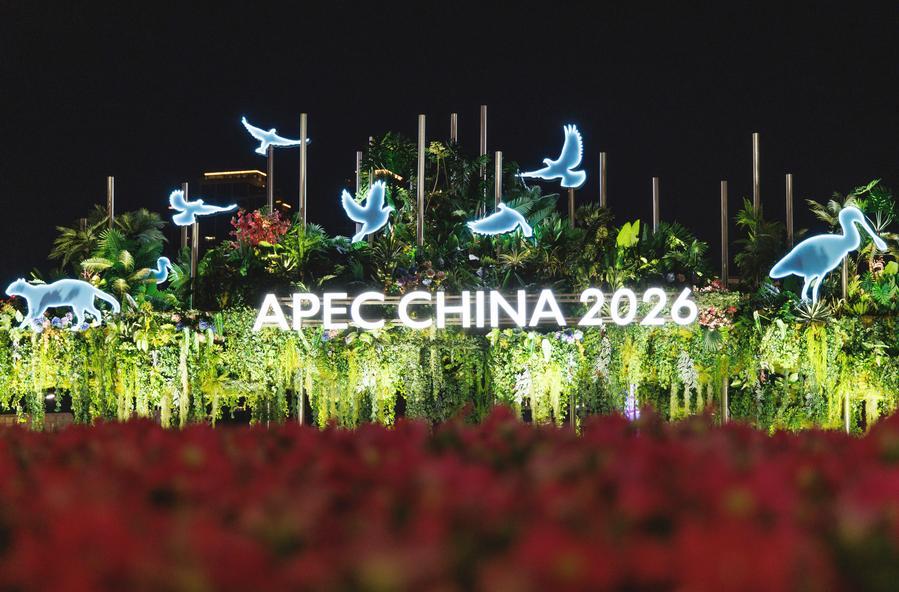
"When I first set foot in Shenzhen, I felt I was seeing the embryonic form of a city of the future," said Malcolm Clarke, a two-time Academy Award-winning British documentary director, in his newly released film Shenzhen: People Who Build the Future.
On November 18, Shenzhen, a former fishing town that has turned into a global tech hub in the Guangdong-Hong Kong-Macao Greater Bay Area, hosted the 33rd APEC Economic Leaders' Meeting. Under the theme "Building an Asia-Pacific Community to Prosper Together," delegates focused on three priorities: openness, innovation, and cooperation. A day earlier, the APEC CEO Summit had drawn more than 2,000 political and business leaders from all 21 APEC member economies and 13 non-APEC economies, including the U.K., France, Germany, and Switzerland – seen as a vote of confidence in the Asia-Pacific as the engine of global growth.
Amid mounting geopolitical uncertainty, how can ambitious goals translate into tangible benefits for ordinary people? In Shenzhen's smart factories and container terminals, visiting delegates and overseas observers shared their thoughts.
The fruits of openness
How far is APEC from the ordinary people? Perhaps no farther than a cherry.
On November 10, a 2.5-tonne shipment of Chilean dark cherries cleared customs at the Zhuhai checkpoint of the Hong Kong-Zhuhai-Macao Bridge, the world's longest sea crossing, reaching consumers in Guangdong Province within 72 hours of harvest. What young Chinese consumers jokingly call "cherry freedom," meaning the ability to afford once-pricey imported fruit, relies on the success of Asia-Pacific economic cooperation. Free trade agreements have cut tariffs, while APEC has steadily advanced customs facilitation and mutual recognition of standards and connectivity, clearing the bottlenecks in cross-border cold chain logistics. According to the APEC Secretariat, average tariffs across the region fell from 16.9 percent in 1989 to 5.1 percent in 2024, while the share of zero-tariff product lines rose from 27.3 percent to 48.9 percent.
Ryan Perkins, a British geopolitical and economic analyst and editor-in-chief of Global Economic Indicator, sees a deeper layer. "The Asia-Pacific is the world's most dynamic economic region," he told China Today, "APEC's 21 members, with roughly one-third of the world’s population, generate over 60 percent of global output and nearly half of global trade." China, he noted, is aligning its economy more systematically with international rules and standards.
This observation was corroborated on November 18, when Chinese President Xi Jinping addressed the opening ceremony of the APEC CEO Summit. He proposed safeguarding peace and stability, building bridges of opening up and cooperation, boosting innovation to drive growth, and expanding ways for mutual benefits and win-win outcomes, and promised global business communities a super-sized open market, a promising land for development, and an environment that enables mutually reinforcing cooperation. From expanding imports of quality goods and services to steadily advancing the process toward a Free Trade Area of the Asia-Pacific, China's opening up is moving beyond merchandise trade into the service and digital trade.
"If these commitments converge with what APEC is already working toward, it would result in a powerful synergy," Perkins said. "China's institutional opening up makes regional integration more achievable, while APEC gives that opening up a regional platform."
And the region's openness affects more than just the region itself. "My first focus is [on] trade integration in the Asia-Pacific," said Christina Otte, a foreign trade journalist with Germany Trade & Invest, Germany's federal agency for economic promotion. She noted that despite the many free trade agreements already signed in the Asia-Pacific region, this APEC meeting was still expected to deliver new trade and investment facilitation measures, "because small and medium-sized German enterprises have invested heavily in the Asia-Pacific, [and] they too will benefit from broader regional economic integration."
Innovation you can touch
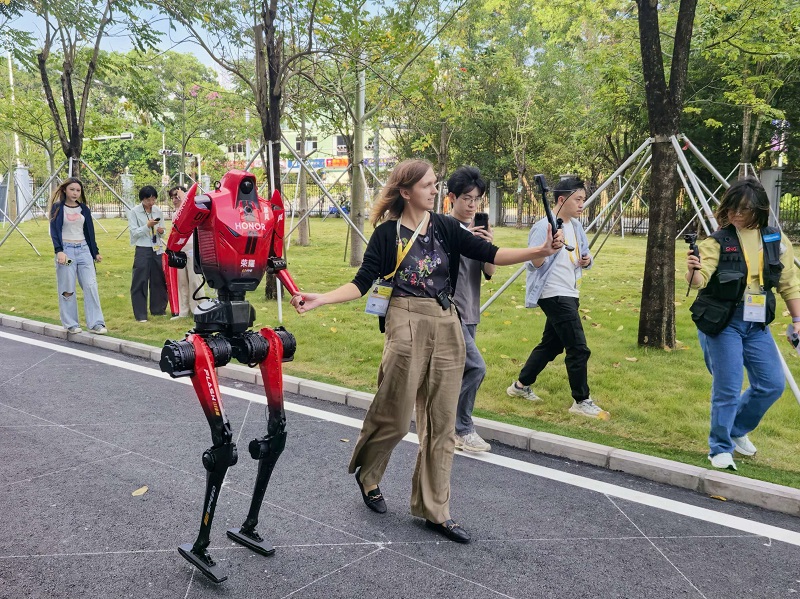
On November 16, at the smart manufacturing campus of smartphone maker Honor in Shenzhen's Pingshan District, Otte raced with "Lightning," the humanoid robot that won the humanoid half-marathon held in Beijing last April. "Very impressive!" she told China Today.
A flagship phone rolls off Honor's production lines every 18.5 seconds, with more than 85 percent of the process automated. Foldable phones have slimmed from 14.3 mm to 8.75 mm; AI inspectors catch defects invisible to the human eye; and the plant is among the first in the industry certified as a zero-carbon factory.
Innovation was the second priority on Otte's reporting agenda. Citing the Global Innovation Index 2026 published by the World Intellectual Property Organization (WIPO), she noted that the Shenzhen-Hong Kong-Guangzhou cluster now ranks first among the world's top 100 innovation clusters. "German companies want to know what innovations this region is exporting to the world – in electric mobility, robotics and, of course, environmental technology," she said.
Innovation here never happens behind closed doors. On Honor's customization lines, software and packaging are tailored to the requirements of different countries and regions – one reason that this six-year-old brand became the fastest-growing leading Android vendor worldwide in the first half of this year, according to U.S. market research firm IDC.
A short drive away, at the global headquarters of electric vehicle giant BYD, the Blade Battery and megawatt flash-charging technologies tell a similar story: the company invested RMB 63.4 billion (about US $8.9 billion) in research and development in 2025, the largest sum by any company listed on China's A-share market for two consecutive years.
"Everyone is watching electric vehicles, but we focus on EV infrastructure. Battery swapping is an innovation that can replace a depleted battery in 99 seconds," Zeng Yuqun, chairman of battery maker CATL, told the CEO Summit on November 17. With innovation in technology, products, and solutions, he said, "we can develop solutions that can be shared." The secret behind the Shenzhen-Hong Kong-Guangzhou cluster's rise lies in the simple fact that there are no walls between the laboratory and the factory floor.
Cooperation you can count on
Openness and innovation create new growth, and cooperation helps everyone benefit from that growth.
Hussein Askary, vice chairman of the Belt and Road Institute in Sweden, a Stockholm-based think tank, has long studied connectivity and development. One of his findings is striking: "Infrastructure is a prerequisite for eliminating inequality." Projects under the Belt and Road Initiative (BRI), such as the China-Laos Railway and the Johor Bahru-Singapore Rapid Transit System, are turning APEC's vision of strengthening physical, institutional, and people-to-people connectivity into concrete reality, Askary told China Today. He argues that far from zero-sum expansion, these projects are the underlying interface for shared prosperity in the region, redefining the much-celebrated "Asia-Pacific miracle" away from headline GDP figures and toward poverty reduction, resilience, and the lives of ordinary people.
The evidence is conclusive. Two years after its inauguration, Chancay Port in Peru – South America's first smart, green deep-water port – has cut shipping time to China from 33-45 days to 23-25 days. "Connectivity means markets and opportunities," as one Peruvian exporter put it. Goods arriving in Shanghai can be transshipped onward to Busan and other Asian ports. In Malaysia, the East Coast Rail Link, a flagship BRI project, is expected to catalyze growth in the peninsula's east coast states, bringing investment, tourism, jobs, logistics hubs, and industrial parks. And in Indonesia, a green industrial chain built by Chinese battery maker EVE Energy has cut operating costs for 12,000 motorcycle taxi riders and lit up more island villages.
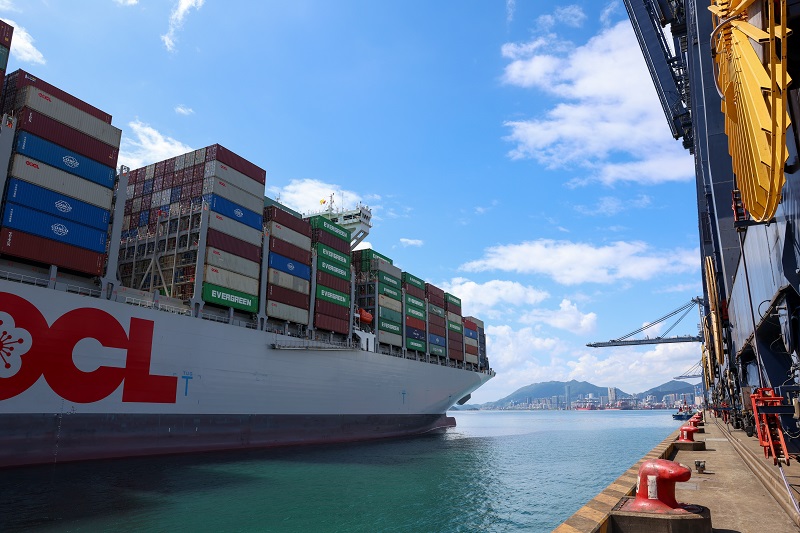
Supply chain resilience, an important topic throughout the APEC meetings, is anchored in places like Shenzhen's Yantian Port, whose deep-water channel accommodates the world's largest container ships and which has opened 11 new routes to other APEC ports this year. In the first five months of 2026, trade between China's mainland and other APEC economies passing through Yantian accounted for more than half of the port's total throughput.
Cooperation also means growing local capacity. BYD's plant in Rayong, Thailand, went from groundbreaking to production in about 16 months and is expected to create 10,000 jobs. Its base in West Java, Indonesia, plans to employ 18,000 people, boosting local supply chains, vocational training, and green industrial capabilities along the way. Perkins stressed the same logic when it comes to green transition: supplying equipment alone is not enough, as local staff and engineers must be trained, and local suppliers cultivated. "In this way," he said, "clean energy becomes a foundation of self-reliance rather than a new strategic vulnerability."
A community measured in lives
"Shenzhen's story has always been about the people who come here," Clarke says in the film. The same is true for the wider Asia-Pacific community itself, a community that is not measured by policy documents, but by the profits of Chilean fruit farmers, the 10,000 factory jobs created in Thailand, electric lights in remote Indonesian island villages, and in the full order books of German SMEs.
As Perkins put it, resilience does not mean the absence of instability; it means "building the cooperative infrastructure that prevents instability from becoming a systemic disruption." Each layer of progress at the Shenzhen meetings add to that infrastructure through openness, innovation, and cooperation, which have become more than conference buzzwords and are now real benefits that people around the world can see and touch.





