



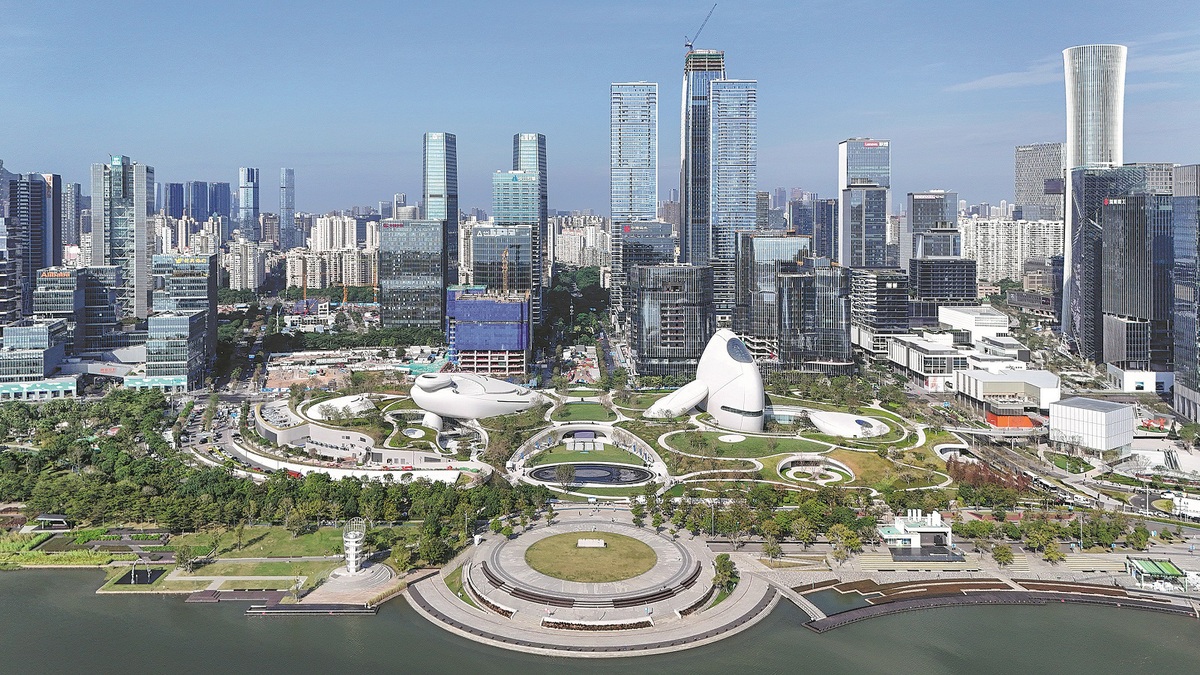
As APEC economies' leaders departed Shenzhen following the 2026 APEC Economic Leaders' Meeting, global headlines were dominated by the geopolitical calculations and diplomatic maneuvering of the world's major powers.
The historic trilateral talks, bilateral trade deals, and newly unveiled "Shenzhen Outlook" will naturally attract international attention. Yet the significance of the gathering may extend far beyond these high-profile diplomatic exchanges.
For those of us observing from the Global South, the most compelling story of the Shenzhen summit was not necessarily what happened behind closed doors. It was what could be seen beyond the conference halls — in the city's streets, its sophisticated logistics networks, and the technological transformation visible throughout Shenzhen.
The story of Shenzhen transforming from a "small fishing village" into a global technology powerhouse has been told countless times. But repetition should not overlook the extraordinary scale of that transformation.
When China established the Shenzhen Special Economic Zone in 1980, the idea that this relatively modest coastal economy could become a global center for advanced manufacturing, electronics, and technological innovation would have seemed almost unimaginable. Today, Shenzhen's development illustrates how economic reforms, industrial investment, and technological ambition can transform a city's economic future within a generation.
In Shenzhen, the future was not simply being discussed in conference halls. It was being demonstrated through technology in everyday use. From AI-assisted translation and intelligent scheduling to digital customs clearance, the city offered APEC delegates a glimpse of how innovation can improve efficiency, connectivity, and international cooperation.
The digital infrastructure supporting thousands of international delegates reflected the capabilities of a city that had invested in developing its own innovation ecosystem rather than relying solely on imported technologies.
Shenzhen's achievement lies in treating technology not merely as something people consume, but as an essential foundation for urban governance, logistics, and economic activity.
But why should Shenzhen's success matter to someone in Colombo, Nairobi, or Buenos Aires?
Because Shenzhen is not simply a story about China's rise; it is a demonstration of what sustained economic transformation can make possible. For developing countries, including Sri Lanka, its experience offers important lessons on how investment, industrial development, technological innovation, and long-term planning can reshape economic opportunities.

Shenzhen challenges the belief that a country's economic destiny is determined by where it begins. Its transformation was neither accidental nor achieved overnight. It unfolded through successive stages of economic reform, opening to the world, industrial development, and technological innovation and upgrading.
The city's first breakthrough came from embracing globalization. By integrating into international supply chains, Shenzhen became a major manufacturing center, producing goods for markets around the world. But Shenzhen understood that assembling products designed elsewhere could not be the foundation of lasting prosperity. The city moved beyond low-cost manufacturing by investing in education, research, technological capabilities, and domestic innovation. Over time, this transformation helped produce global leaders in telecommunications, drones, and consumer electronics.
This progression demonstrates how economic openness, policy experimentation, and sustained industrial upgrading can transform an economy. Shenzhen's success was not simply the result of attracting investment, but of developing the capabilities needed to move from basic manufacturing toward advanced technological innovation.
For developing countries, these successive stages offer important lessons in how deliberate policies and long-term investment can create the foundations for economic transformation.
Yet Shenzhen's success also carries an important warning. Technological advancement alone cannot guarantee sustainable urban development. Cities seeking to follow its example must ensure that rapid economic growth is accompanied by affordable housing, effective urban planning, and social protection that allow ordinary citizens to share in the benefits of progress.
The broader lesson is difficult to overlook. The "Shenzhen Outlook" called for better trade environments, stronger innovation, and voluntary sharing of good practices. But the most powerful example of good practice was not written in the declaration. It was visible throughout Shenzhen itself.
The city's transformation demonstrated what sustained economic openness, industrial development, technological innovation, and a willingness to experiment can achieve.
At a time of fragmented supply chains and geopolitical uncertainty, the Asia-Pacific does not simply need more diplomatic declarations. It needs more economies willing to transform themselves through bold reforms, long-term investment, opening-up, the best business environment, and the determination to move beyond traditional industries.
Shenzhen has demonstrated what is possible. The task for the developing world is not simply to admire its success, but to discover and build its own version of that transformation.
The article reflects the author's opinions, and not necessarily the views of China Focus.





