Why the World Can Not Wait for America
 Facebook
 Twitter
 Linkedin
 Google +

The fight for a livable planet was always a global one; now, the initiative to win that fight had finally become multipolar, led by the willing, with or without the United States.
The absence of the United States from the UN Climate Change Conference in Belém, Brazil, or COP30, taking place from November 10 to 21, was more than a diplomatic snub; it was a seismic shift that recalibrated the global order. The decision by the world’s historically largest polluter not to attend left more than an empty chair. It left a chasm.
It resulted in a summit filled with the anxious speculation of delegates, the grim calculations of scientists and the determined strategizing of those who have to act.
Varied impacts
For the European Union, America’s absence was a source of profound frustration and strategic paralysis. European diplomats were trapped. Their continent was deeply committed to the existential priority of climate action, yet they were tethered to a transatlantic partner that was politically unreliable.
While the official U.S. delegation was absent, over 100 American sub-national leaders—governors, mayors, and legislators—were present. They worked the halls and gave press conferences, promising that a “responsible America” still existed. This created a collegial atmosphere, but it was a thin facade. It highlighted the abdication of responsibility by Washington and the profound failure of its current national elites.
In response, the EU was largely muted. Its leaders, with few exceptions, chose not to condemn Washington forcefully. They feared alienating a crucial NATO ally. This silence is a form of appeasement. It betrays the EU’s own proclaimed principles, choosing geopolitical caution over climate leadership. The message is clear: Europe’s security fears outweigh its survival instincts.
Critically, the American withdrawal has crippled the old financial engine of climate action. The EU could not single-handedly fill the multi-trillion-dollar gap. The pledge of $100 billion a year to the Global South, already slow, has become a relic of a more cooperative past. The EU’s call for “actions, not words” rang hollow when it appeased rather than pressured.
For the nations of the Global South, America’s absence is the final confirmation of a bitter truth: Waiting for Western aid is a fool’s errand. The promises of the 2015 Paris and 2021 Glasgow climate conferences have evaporated. This realization, while painful, is also liberating. It has forced a necessary and overdue strategic pivot.
The conversation is shifting from begging for aid to leveraging inherent strengths. The old “resource curse,” where nations rich in critical minerals like cobalt and lithium have tended to remain poor, has to transition to a “resource benefit.” The path forward is not through aid, but through sovereignty. The Global South now realizes it needs to focus on creating its own regional bourses and commodity exchanges. By controlling the pricing and processing of their own resources, they can generate the capital for their own climate adaptation and green industrialization.
America’s empty chair is a stark lesson: self-reliance, built through collective actions in regional groupings like BRICS (a group of emerging economies originally consisting of Brazil, Russia, India, China and South Africa—Ed.), the Shanghai Cooperation Organization (SCO), the Association of Southeast Asian Nations (ASEAN), MERCOSUR (Southern Common Market) and the African Union, is the only reliable path forward when the dominant global institutions and powers have chosen to abdicate their responsibilities, even as doing so threatens their own existence.
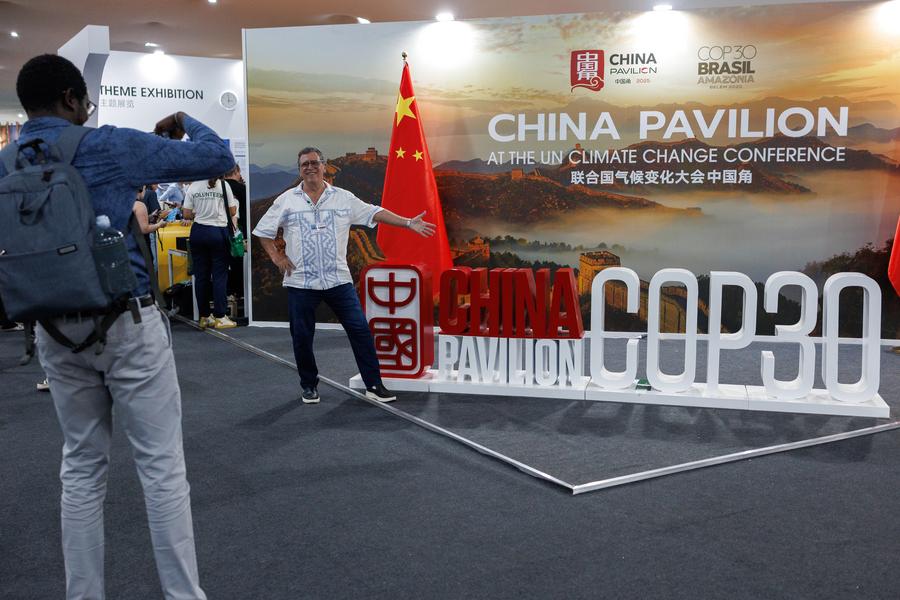
For 600 years, the world was dominated by colonial powers, which used force and politics to shape the world. China’s approach is different. It is civilizational and pragmatic, focused on collective action and consensus.
While some Western media outlets tried to infer that Beijing’s unwillingness to take Washington’s place was a sign of weakness, for China it’s the result of viewing the emerging situation from a historical perspective, seeing America’s actions not as a one-off event, but as part of a cycle of irresponsibility. From Beijing’s viewpoint, America’s “abdication” is not a strategic act, but rather a sign of decline. It is evidence of the erosion of American hegemony, indicating that the U.S. is already an unreliable and unpredictable power. Rushing to take the “vacant chair” on America’s terms would be a strategic mistake. It is wiser to be patient and let the contrast between America’s and China’s actions speak for themselves.
China’s role
At COP30, China’s role was different from the old model of dominant powers. It did not command, it convened, it facilitated. This approach aligns with its vision of a new kind of global leadership, built on key global initiatives on development, security, civilizations and governance that it has proposed to support the emergence of a collective, sustainable and responsible multipolar world order. These are a model of win-win sustainable governance, a direct contrast to the zero-sum “king of the hill” politics of the past.
China has leveraged its diplomatic weight to broker deals and fund green infrastructure through the Belt and Road Initiative (a China-proposed initiative to boost connectivity along and beyond the ancient Silk Road routes—Ed.), not just at COP30, but over the last 12 years, putting $1.3 trillion behind its words. It champions “common but differentiated responsibilities,” positioning itself as a stable, reliable partner in contrast to the see-saw politics of American governance. This was not a bid for a unipolar hegemony. China is too pragmatic; it understands that global problems require global, polycentric solutions. It has filled the vacuum not by mimicking American dominance, but by fostering a network of interdependencies, acting as a convener, not a conqueror.
The hundred American officials at COP30 gave mixed messages, presenting a microcosm of a nation at war with itself. But the world cannot be held hostage by one nation’s internal dysfunction. The abdication of American leadership is an “own goal.” It has shattered the old model of global climate governance, making a new one a necessity.
The compelling conclusion from the halls of COP30 was that the era of waiting is over. Regional and multi-aligned groups have to take the lead. BRICS, the SCO, ASEAN, MERCOSUR and the African Union represent the new collective forces required to drive action. They, by necessity, are on a road to establish resource bourses, harmonize green standards and fund adaptation.
The empty American chair was both a catastrophe and a catalyst. It forced the world to look past Washington and discover its own path. The fight for a livable planet was always a global one; now, the initiative to win that fight had finally become multipolar, led by the willing, with or without the United States. A new consensus, built on sustainable cooperation, had begun to take root.
The author is a senior fellow at the Center for International Business Ethics at the University of International Business and Economics (UIBE), founding partner of the Center for China and the World at City University of Macau and an independent economic and political affairs commentator.