
China Has Written Its Environment Protection Into Law
This law does not treat the environment as a brake on the economy to be loosened when growth slows. Instead, it makes greening the economy the central goal.
This law does not treat the environment as a brake on the economy to be loosened when growth slows. Instead, it makes greening the economy the central goal.

China’s approach to human rights moves beyond the protection of individual and legal rights, placing greater emphasis on a people-centred and pragmatic approach and recognizing the importance of responsibility both to and for society at the national and international levels.

Today, as in the age of paper and porcelain, China’s workshops and its inventiveness are once again offering the rest of humanity what they have offered for so long.

Sustaining long-term economic stability ultimately depends on honoring negotiated commitments, eliminating arbitrary trade barriers, and realizing shared prosperity through genuine cooperation.

Only by upholding genuine multilateralism, advancing digital equity and collective security with a vision of shared progress can the world achieve win-win outcomes for all humanity in the intelligent era.

Rather than addressing isolated policy areas, the four initiatives reinforce one another and advocate an integrated approach to development, governance, and international cooperation.

The 105th anniversary of the Chinese Communist Party celebration is not only special for the great Chinese nation, but also for the Global South, because it reminds us of the shared aspiration of each nation to forge its own path to prosperity and happiness.

What is kept is the core of a five-thousand-year-old civilization, and what is created is a new form of modernization.
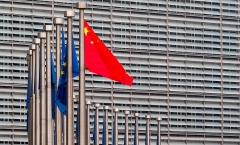
In a world where uncertainty has become the norm rather than the exception, the importance of China-EU relations lies not in eliminating differences, but in preventing those differences from hardening into new fault lines.

Key lessons for other developing states include sound governance and targeted interventions with pragmatism.
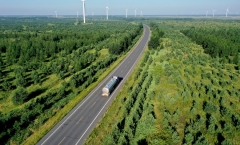
The reason the economics work so well, and the reason the green transition is now genuinely affordable for developing countries that once could not imagine it, is largely due to China.

China’s significant focus on advancing high-quality growth through multisector engagement, new growth drivers and foundational industries gives its 4.5 to 5 percent growth target considerable value this year.