 Facebook
 Twitter
 Linkedin
 Google +
Marxism, Markets and the Myth of Capitalist Democracy
China’s approach promotes sustained and substantial public engagement, which more authentically reflects democracy’s original purpose: to ensure that people truly govern their own lives.

China’s approach promotes sustained and substantial public engagement, which more authentically reflects democracy’s original purpose: to ensure that people truly govern their own lives.
I’m quite optimistic that, despite all the challenges, there will be plenty of opportunities for both sides to collaborate—not only in confronting climate change, but in tackling a broader set of global issues together.
History confirms that the trajectory of China-U.S. relations depends fundamentally on how both nations address each other’s concerns. When managed collaboratively, bilateral ties will flourish; when resorting to confrontation, they falter.

For around 40 years, the U.S. tried to maintain a global system that the U.S. would be at the top of. The Trump administration is putting an end to that.
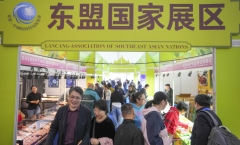
Guided by the principles of upholding free trade and fostering regional and multilateral economic and trade cooperation, it is essential to accelerate high-level implementation of the RCEP to shape a new future for Asia’s economy.

When young Americans and Chinese meet, not as representatives of competing nations but as fellow humans sharing meals, games and memes, they create the kind of trust that no policy paper can replicate.

Despite claims of seeking ‘peace and stability’ for the region, Hegseth’s message to Asia was in reality, after destabilizing and destroying the rest of Eurasia, ‘you’re next.’
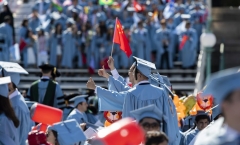
The U.S. loses first when it restricts the opportunities for Chinese students to study in the country.

Blockades never prevent breakthroughs; churning waves won’t hold back determined ships.

China and ASEAN share a common home, and the tariff hegemony is destroying our shared home. With Asian wisdom and action, we shall respond to the world’s uncertainties and establish a Southern paradigm for humanity’s peace and progress.

So the story is very simple—work with China on equal terms. Don’t deny China’s access. Because if you try to choke China, you end up with a much more formidable competitor.

Washington has created a chilling effect—closing the door to Chinese students and placing educational exchange, once a stabilizing pillar of China–U.S. relations, in a precarious position.