China-EU Relations at 50
 Facebook
 Twitter
 Linkedin
 Google +
The fact that differences exist does not mean that the two sides cannot work together. Collaboration is essential for the interests of both sides, and is essential for maintaining stability in the international system.
As China and the EU mark the 50th anniversary of their diplomatic relations this year, Beijing Review reporter Li Wenhan spoke with George N. Tzogopoulos, Senior Research Fellow at the Centre international de formation européenne. In the interview, Tzogopoulos shared his insights on the evolving China-EU relations, the impact of China-U.S. interactions on Europe and the prospects for cooperation in areas such as green transition and global governance. Edited excerpts of their conversation follow:
Beijing Review: As 2025 is the 50th anniversary of China-EU diplomatic relations, how would you evaluate the current state of bilateral economic ties?
George Tzogopoulos: This is a very important year for China and the EU. Looking back, the two sides have achieved a great deal. Trade and investment are characteristic examples of win-win cooperation. If we look at how trade numbers have evolved—how they looked in the past and how they look today—the progress clearly shows that both sides share the will to move forward economically. (Bilateral trade grew from $2.4 billion to $780 billion over the past five decades—Ed.)
For many years, Chinese companies have been investing in Europe, and they remain prepared to do so. The Belt and Road Initiative (BRI) facilitates this cooperation. Some EU member states participate in the BRI while others do not, but even those outside the initiative are influenced, directly or indirectly, by the increased connectivity it promotes. I use the term “organic interconnectivity” to describe this, because Chinese investments—whether under the BRI or not—have contributed to deeper economic ties.
Europe, for its part, is also implementing its Global Gateway mechanism to play a global role. Despite differences, the two sides can hopefully find a way forward and even cooperate in other regions such as Africa or Latin America. Investments do not only need to take place in Europe or China; they can help the developing world meet its challenges.
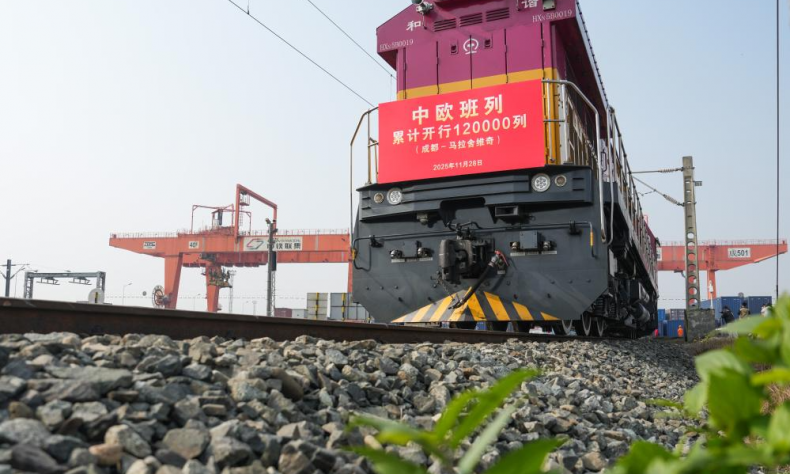
A good example is the China-Europe freight train network. The number of routes has grown significantly, and so has the volume of transported goods. (China-Europe freight trains have completed nearly 120,000 trips as of November 19—Ed.) Despite regional instability in today’s world, trade volumes remain stable—again demonstrating the willingness on both sides to work together. From the European perspective, maintaining this trade volume is important. At the same time, Europe is working with China to address the trade deficit, and European companies hope for more reciprocity in the Chinese market.
Some European industries feel challenged by the rise of Chinese technological companies, which creates frictions. But the most important point is that dialogue continues. The 25th EU-China Summit took place in Beijing in July. There are ongoing dialogues on climate change, digital issues, as well as a new format of discussions on export controls and technology.
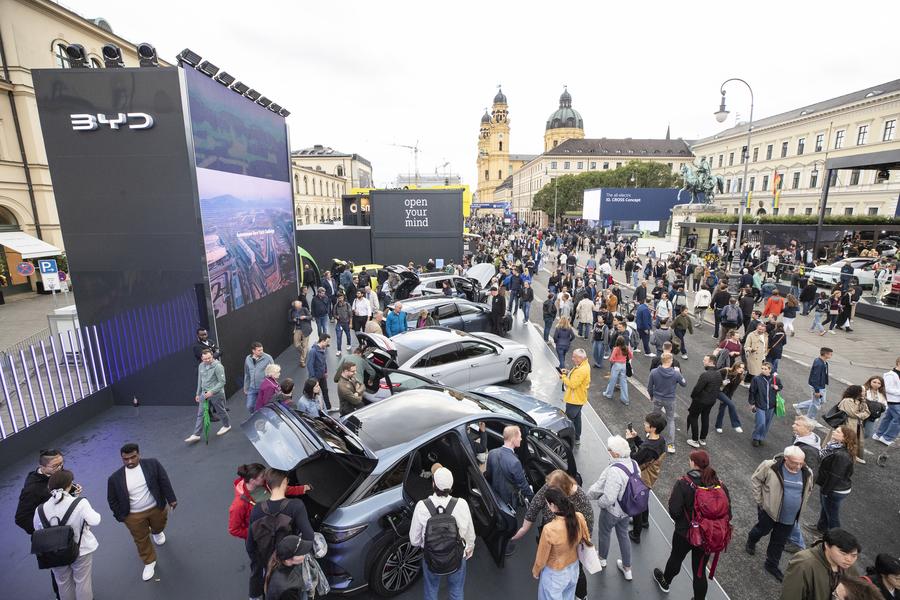
With new-energy vehicles (NEVs), China has created its own miracle. The country has become a global leader in producing electric vehicles (EVs), and this naturally impacts the European market—often seen as a competitive challenge for local industries. But European policymakers must factor in China’s rapid progress, because without China’s expertise and experience in EV manufacturing, it will be difficult for Europe to achieve its own climate and energy goals. The cooperation examples you mentioned (Volkswagen and Chinese NEV maker XPeng’s announcement in August to co-develop software) highlight the determination of both sides to find a way forward. It is not always easy, but the will exists.

Overall, after passing through phases of disagreements and agreements in recent years, China-EU relations are currently in a relatively stable phase. The two sides understand each other’s positions. Not all disagreements can be solved immediately, but both sides need each other, and this is crucial for building a more multilateral world.
Climate cooperation has been a priority for both sides, especially following the recent United Nations (UN) Climate Change Conference (COP30) in Brazil. What potential do you see for China-EU cooperation on green transition, climate governance and global governance more broadly?
There is only one planet and it belongs to all citizens of the world. Climate change is a transnational challenge that cannot be solved by any single actor; it requires cooperation. Sino-European cooperation can help both sides take meaningful measures to address climate change. EVs produced in China, for instance, are part of this broader context.
China is also a leader in energy transition. This makes China relevant not only to Europe but to the world. On this basis, I believe both sides are willing to discuss solutions. After the EU-China Summit, a joint statement on climate change was issued, showing the shared interest in cooperating. A climate change dialogue mechanism also exists. The more the two sides talk, the easier it will be for them to reach useful conclusions.
Regarding global governance, China’s proposals in this field, like the Global Governance Initiative, are important, especially as China’s influence grows and its voice becomes more prominent in the international system. The key question is whether the new world order will remain anchored in the UN. Discussions about UN Security Council reform have been ongoing for years, though reforms remain difficult to implement.
The UN is not losing its popularity. What is happening is that some of the permanent members of the security council do not necessarily value the role of the UN in the world, and they follow the policy of unilateralism. If we look at how the EU is acting in the international system, and it opts for multilateralism.
Here I see potential for China-EU collaboration, as both believe in the importance of the UN. The UN continues to play an important role, contributing to poverty eradication, addressing climate issues and maintaining elements of collective security.
With the UN’s 80th anniversary this year, it is worth reflecting on its role since World War II (WWII). There has been no global conflict on the scale of WWII since its founding.
Europe, as a strong supporter of multilateralism, continues to promote stability. And this is where China and the EU share interests: Both value calmness and stability in the international system and both want a functioning multilateral framework.
How do China and Europe navigate global tensions and public perceptions—on issues ranging from U.S. tariffs to people-to-people exchange?
It is difficult to fully assess President Donald Trump’s tariff policies because the situation is evolving, and we need more time before drawing safe conclusions. In the early months of the year, European imports from China increased due to these tariffs. The EU is not interested in entering a trade war with the U.S. Much depends on the understandings recently reaffirmed between President Xi Jinping and President Trump. If this exchange holds, it will be good news not only for China and the U.S., but also for the EU.
China-EU relations follow their own trajectory. They are not determined by U.S. policies. China and the EU have overlapping interests irrespective of Washington’s decisions, and they must navigate based on their own priorities. China is a major actor. Its economy is the world’s second largest, and Europe cannot ignore that. So while disagreements exist, Europe seeks ways forward that serve all sides’ interests.
This is where the concept of strategic autonomy comes in: Europe wants to remain strong and resilient, able to respond to international challenges without being overly influenced by U.S.-China tensions. But achieving strategic autonomy takes time. We see progress, but the real assessment must come in the medium term.
Regarding Asia-Pacific issues, it’s important to look at China’s role in contributing to peace during WWII. Because without the crucial sacrifices of China and of the Chinese people, perhaps the duration of WWII might have been prolonged, with serious consequences for the international system. And not much is known about this in the West. So it’s quite important to look at the history of the Chinese People’s War of Resistance Against Japanese Aggression and then the importance of the Chinese resistance in contributing to peace.
European audiences generally lack detailed knowledge about Asian affairs, and more academic exchanges—conferences, meetings of historians and university collaborations—can help European audiences better understand this part of history.
People-to-people exchanges are crucial. China’s visa-free policy for most EU member states is facilitating travel and research. Tourist numbers are rising, flights are increasing and the renewal of the visa-free policy for 2026 is good news. More exchanges among students, scholars and ordinary tourists can enhance mutual understanding.
This relationship is very important. The fact that differences exist does not mean that the two sides cannot work together. Collaboration is essential for the interests of both sides, and is essential for maintaining stability in the international system. I remain hopeful that the two sides will intensify contacts, and that more agreements will be reached at the highest political level.
Now, as far as ordinary citizens are concerned, I think that traveling from the one side to the other can contribute to a better understanding, and the better understanding can be the basis for friendlier ties between China and Europe.