Japan Should Face up to History, Correct Mistakes
 Facebook
 Twitter
 Linkedin
 Google +
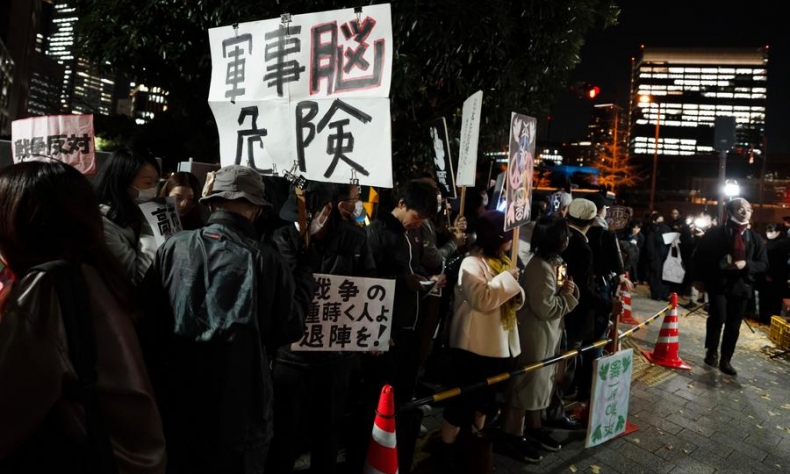
Japan should correct course, reaffirm commitments, and contribute positively to a stable, predictable and cooperative East Asia.
On Nov. 7, Japanese Prime Minister Sanae Takaichi said that the Chinese mainland’s “use of force on Taiwan” could be a “survival-threatening situation” for Japan, hinting at the possibility of Japan’s armed intervention in the Taiwan Strait. Such an irresponsible and provocative statement crossed China’s red line and sparked outrage and severe concerns across China and the wider Asia-Pacific region. Words from national leaders carry immense weight, as they can irreparably damage bilateral ties and risk destabilizing regional peace – especially at a time when dialogue, cooperation and stability are more important than ever.
China responded promptly and responsibly. The Japanese ambassador to China was summoned, and Beijing has consistently urged Japan to clarify and retract its erroneous remarks. These actions reflect China’s commitment to regional stability and the integrity of China-Japan relations, not an overreaction. The Taiwan question is an internal matter of China. Any attempt to wade into cross-Strait affairs is interference in China’s internal affairs, and an affront to historical justice and the post-World War II international order. A series of international instruments, including the Cairo Declaration, the Potsdam Proclamation and the Japanese Instrument of Surrender, have all clearly affirmed China’s sovereignty over Taiwan.
History explains why Takaichi’s remarks are so sensitive. Japan once invaded and imposed brutal colonial rule over Taiwan for 50 years. Between 1931 and 1945, Japan’s 14-year invasion of China inflicted tremendous sufferings on the Chinese people. Japan has never truly faced up to its aggression and war crimes, leaving unresolved historical tensions that still influence regional perception and trust today. Against this backdrop, statements like Takaichi’s are more than diplomatic missteps – they stir up historical anxieties and risk undermining trust that has been painstakingly built over the years.
In the 1972 China-Japan Joint Statement, the cornerstone for normalizing bilateral relations, Japan officially recognized the Government of the People’s Republic of China as the sole legal government representing the whole of China and acknowledged Taiwan as an inseparable part of China. This understanding has supported decades of cooperation, economic growth and relative stability in the region. Straying from this foundation threatens not only bilateral trust but also the broader peace and prosperity upon which East Asia depends.
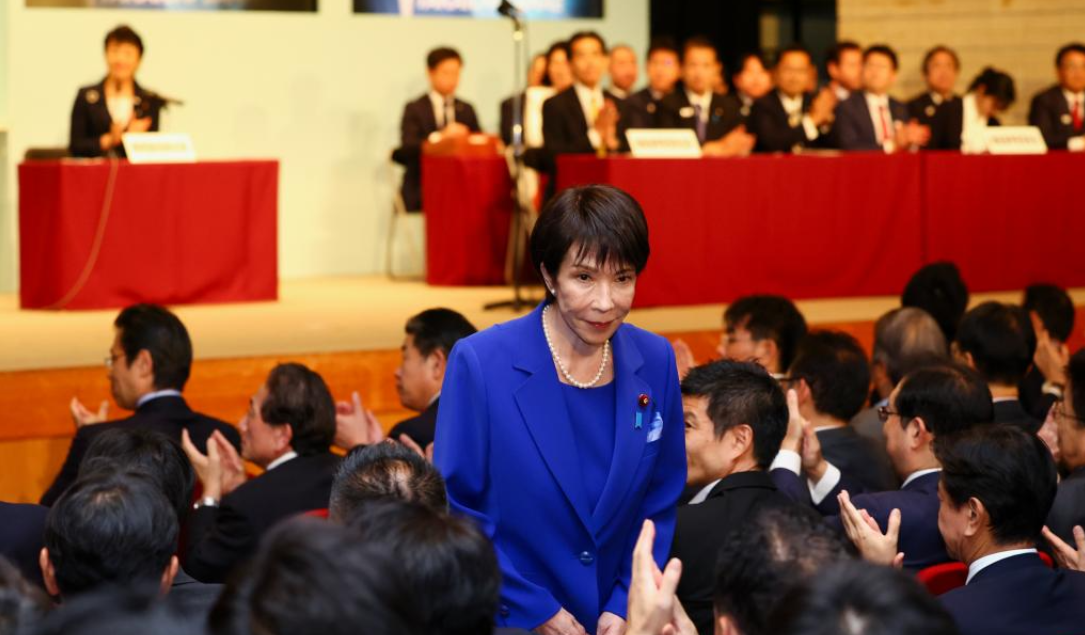
Takaichi’s remarks come amid Japan’s evolving security posture. Japan has drastically expanded defense spending, reinterpreted constitutional constraints and deepened external security partnerships. These steps, paired with rhetoric that frames China’s domestic policies as existential threats, signal a revival of Japanese militarism. This revival recalls patterns from Japan’s past aggression and raises legitimate concerns among neighboring countries. People in China and many other countries remember that militarist rhetoric often precedes concrete strategic escalation. These statements are not abstract; they evoke memories of occupation, colonization and the widespread human suffering inflicted by Japan in the past.
There is a clear and constructive path forward. Japan should immediately stop interfering in China’s internal affairs, retract its wrongful remarks, reaffirm its commitments and explicitly respect China’s sovereignty and territorial integrity. Crucially, this should go beyond a simple apology. In addition, Japan must sincerely reflect on its militarist past, admit its historical wrongdoings and adhere to peaceful diplomacy. Words and actions must demonstrate responsibility, strengthen trust and support regional stability. Strategic ambiguity or denial of historical responsibility does not enhance security; clarity, accountability and cooperation do.
The peace and prosperity in East Asia over the past several decades has depended on dialogue, mutual respect and shared responsibility. Japan has the opportunity to reaffirm its commitment to these principles. Retracting Takaichi’s remarks, acknowledging historical lessons, and acting with restraint and prudence would not only benefit China-Japan relations, but also strengthen stability across the entire Asia-Pacific region. In a region where history and geography are tightly entwined, responsible words and actions are essential to maintaining the peace and progress that millions rely upon daily.
The situation is clear: Words matter, history matters and responsibilities matter. Upholding the post-World War II international order, adhering to the one-China principle, and learning from past mistakes are practical necessities for regional peace, economic prosperity and the well-being of millions. Japan should correct course, reaffirm commitments, and contribute positively to a stable, predictable and cooperative East Asia.
Dr. Shamuratov Shovkat is a researcher in international trade and economics at Jiangxi Fenglin College of Foreign Economy and Trade in Jiujiang, China.