Chinese Factories Getting Smarter
 Facebook
 Twitter
 Linkedin
 Google +
As its smart manufacturing continually generates new models and forms of business to supply the global market, China is marching closer toward its goal of becoming a manufacturing powerhouse.
What do you think could be produced in a minute or less in a smart factory? Far more products than you can imagine.
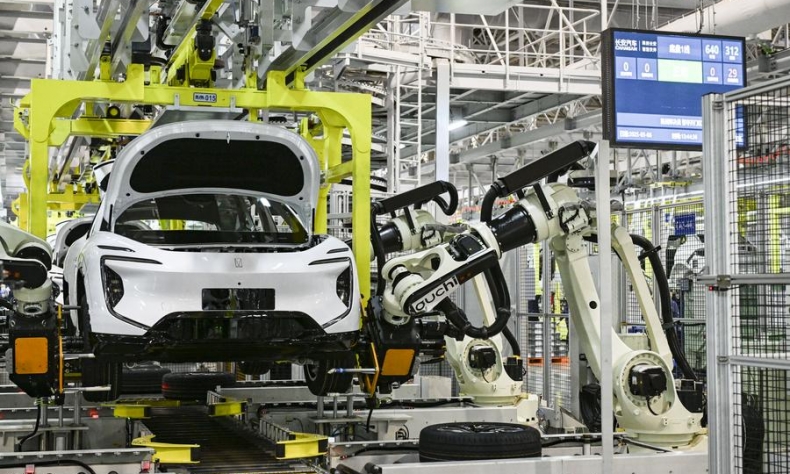
In the Beijing plant of Li Auto, a new- energy vehicle (NEV) of its flagship model rolls off the assembly line in less than a minute. Driving this speed is a smart manufacturing operation system called Li-Mos, which acts like a super brain. At its Changzhou base, it takes merely 40 seconds to complete assembling a car on average. At this rate, 90 NEVs are produced every hour and 1,800 every day.
In the Tianjin factory of China’s home appliances giant Haier, 17 washing machines are churned out every minute, each involving more than 100 parts and procedures. Moreover, the production line can switch modes – from pulsator to drum washing machines for example – at the push of a button.
At the Shanghai factory of Bright Dairy and Food, trucks bring in 30 tons of fresh milk from pastures every day. After dozens of production steps, such as raw milk testing, homogenization, sterilization, and aseptic filling, 1,200 bottles of milk are produced per minute. Meanwhile, the backend system generates 3.25 million pieces of data, which allows for full-cycle digital management and quality monitoring throughout the process.
Likewise, Jiangsu-based Bosideng’s down jacket factory now has its labor-intensive steps like cutting, sewing, down filling, and inspection all undertaken by automated and intelligent machines. A down jacket is filled and sealed every minute, and the daily output can reach 8,000 pieces during peak seasons.
Down in south China, at the air conditioner factory of Guangdong-based Gree Electric Appliances, four air conditioners are completed per minute, producing nearly zero carbon emissions. This is made possible by the company’s self-developed smart production equipment that elevates the automation rate to above 80 percent.
Intelligent manufacturing trend
These “one-minute” snapshots across China reveal the bigger picture of the growing trend of intelligent manufacturing in the country.
Manufacturing is a pillar of the national economy, a main arena for technological innovation, and a foundation for a nation’s strength and prosperity. In recent years, China has achieved historic progress in high-quality development of its manufacturing sector, which has ranked first globally for 15 consecutive years in terms of overall scale.
But Chinese manufacturing aims for not only scale but also strength. With the focus on smart manufacturing, it is accelerating fundamental transformations in production methods and enterprise structures.
Smart factories are the main venues for digital transformation and intelligent upgrading in manufacturing. To support their development, central and local governments have introduced a succession of policies. Since 2024, six central departments including the Ministry of Industry and Information Technology (MIIT), have jointly launched an initiative to create smart factories of four tiers – basic, advanced, exceptional, and pioneering, hoping to guide more Chinese factories toward intelligent manufacturing.
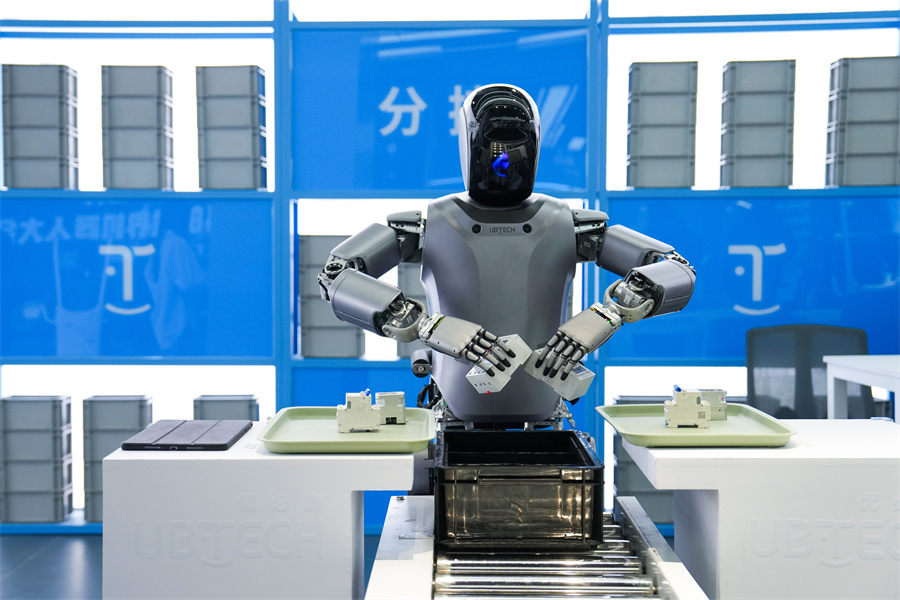
Data from the MIIT show that China has, to date, established over 35,000 smart factories at the basic level, more than 7,000 at the advanced level, and over 500 at the exceptional level. The first batch of pioneering-level smart factories is also in the making.
As smart factories proliferate, expanding the one-minute marvels within them, along with China’s smart manufacturing continually generating new models and forms of business to supply the global market, China is marching closer toward its goal of becoming a manufacturing powerhouse.
Scale and strength
In early 2015, media reports about Chinese tourists jostling for Japanese-made goods sparked wide public discussions, and even became a hot topic at that year’s “two sessions” political event. Shopping was a key part of many Chinese people’s travel to Japan, and their coveted items ranged from smart toilet lids, rice cookers and ionic hair dryers to ceramic kitchen knives.
At that time, China had already become the world’s largest manufacturer. Still many Chinese consumers chose to travel all the way to Japan to bring back these everyday products. The ensuing debate forced the nation to face the fact that Chinese manufacturing was lacking in strength, despite its massive size, and reinforced its determination to upgrade.
In that year’s government work report, China first proposed the “Made in China 2025” initiative. Two months later, the State Council issued a 10-year action plan for its implementation, outlining five major programs: building national manufacturing innovation centers, smart manufacturing, strengthening the industrial foundation, green manufacturing, and innovation in high-end equipment.
“Developing smart manufacturing became imperative due to the circumstances of that time, development needs, and the requirement of building China into a stronger country,” said Wang Ruihua, former official of the Department of Equipment Industry at the MIIT. In 2015, his department was responsible for smart manufacturing initiatives.
Wang recalled that after the international financial crisis, developed countries proposed a reindustrialization strategy, while developing countries leveraged their comparative advantages in resources and labor to focus on low- and mid-end industries. The simultaneous reshoring of high-end manufacturing in developed countries, and the relocation of low- to mid-end manufacturing to lower-income countries, mounted dual pressure on China.
At that time, many Chinese enterprises had a dim understanding of the significance of smart manufacturing and little experience in this area. “Under these circumstances, the MIIT proposed starting with pilot projects to gain experience and promoting replicable models through demonstration. It also stressed that this process should follow an approach tailored to the conditions of specific regions and enterprises, instead of a uniform method. This requirement was based on the reality that Chinese manufacturers were at varying levels of development in terms of electrification, automation, and digitization. These two points have been very important lessons to date,” Wang recalled.
In his view, China’s smart manufacturing entered the phase of exploration during the 13th Five-Year Plan period (2016-2020), moved to the phase of further advances during the 14th Five-Year Plan period (2021-2025), and will reach the stage of scale expansion, deeper integration with cutting-edge technologies, and lean management practices during the 15th Five-Year Plan period (2026-2030).
“With strong support from the state, smart manufacturing has continuously made remarkable headway. It also plays a leading role in piloting new models and forms of business,” said Wang.
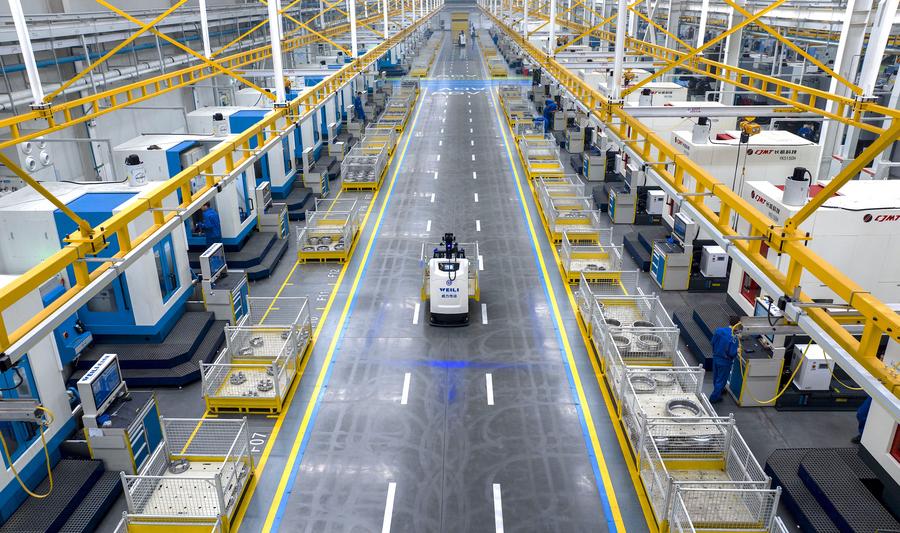
Today, Chinese manufacturing has shaken off the stereotype of being “huge but not strong” that has haunted it for decades. While maintaining its competitiveness in clothing, furniture, and home appliances, China has gained an edge on new-energy vehicles, lithium batteries, and photovoltaic products, securing its position in high-end, intelligent, and green production.
Take toilet seat production as an example again, data from the China Household Electrical Appliances Association show that the production of smart toilet seats in China reached 13.72 million units in 2024, leading the world with 72 percent of the global total. Two-thirds (65 percent, or 12.21 million units) of these products were sold in the domestic market, also the largest worldwide.
“The tiered cultivation initiative aims to guide enterprises to enhance their smart manufacturing capabilities step by step, progressing from the basic to the advanced, exceptional, and then pioneering level, before ultimately completing intelligent transformation. In this process, China’s manufacturing industry will build up global competitiveness,” said Wang.
An upgraded version
Today, every step of manufacturing is going smarter. By applying generative AI in the research and development process, the Midea Group can produce thousands of designs for the appearance and internal structure of air conditioners within a short time. This technology also allows it to simulate the performance of different designs in terms of energy saving, noise reduction, and cooling efficiency, significantly shortening the R&D cycle.
At Baosteel’s Zhanjiang base in Guangdong Province, the intelligent-controlled rolling and cooling system adjusts rolling temperatures and speed in real time according to data from over 5,000 sensors, increasing the dimensional accuracy of hot-rolled steel plates from 92 percent to 99.1 percent.
For quality control, Huawei’s Songshan Lake manufacturing base in Dongguan, Guangdong Province, has established an AI-driven “digital prototype + flexible mass production” platform, which has reduced the defect rate to 0.5 ppm (no more than five defected products per 10 million).
For inventory management, Hikvision, a provider of security products and solutions, has deployed a dispatch system managing over 1,500 automated guided vehicles (AGVs) and tens of thousands of stock keeping units (SKUs) in real time. This system supports large-volume, long-time autonomous storage, sorting, and packaging without human intervention. As a result, production efficiency has risen by 19.28 percent and operational costs have fallen by 17.48 percent.
As China is moving from the 14th to the 15th Five-Year Plan period, smart manufacturing is also entering a new stage. Starting in 2024, the MIIT and five other central agencies launched an initiative to cultivate tiered smart factories, aiming to upgrade smart manufacturing.
“China has been promoting smart manufacturing for over a decade and achieved remarkable results in this regard. However, many deep-seated problems and new demands are gradually emerging, such as supply chain optimization, industrial chain coordination, and the integration with new technologies like AI. All these require China to upgrade smart manufacturing. The initiative jointly launched by the six central departments to foster smart factories provides specific guidance for this effort,” said Jiang Baihua, member of the National Smart Manufacturing Expert Committee and Expert Advisory Group for National Smart Manufacturing Standardization.
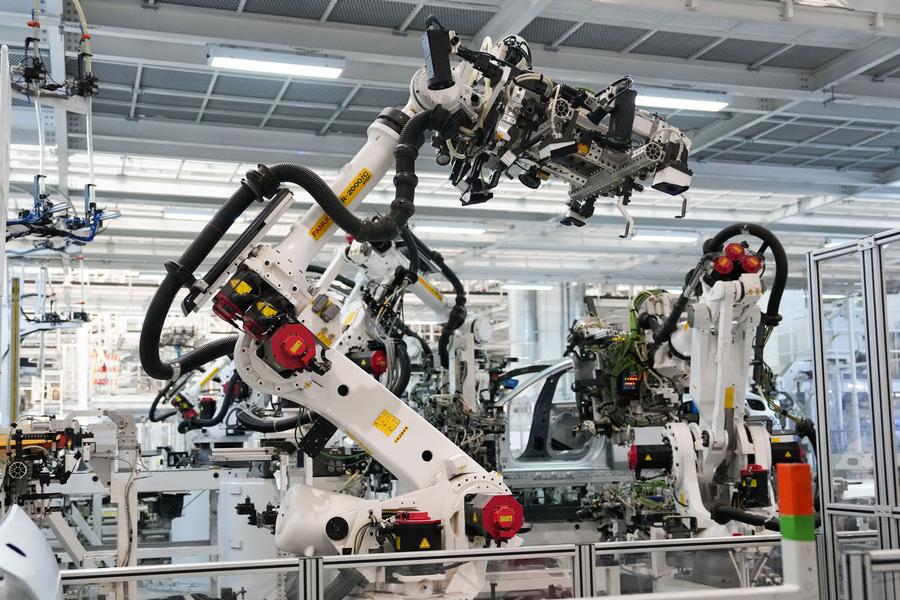
Jiang said that the initiative has two key characteristics. First, it constitutes a complete system, covering top-level design and guidance, support from national think tanks, provincial policies based on local conditions, industry standards, international discourse, technical support (system solutions), and assessments of enterprises’ smart manufacturing capabilities. Second, it outlines clear objectives and pathways for enterprises at different development stages, of varying sizes, and across divergent industries.
Li Muzhai, assistant researcher at the Industrial Policy of China Center for Information Industry Development (CCID), said that, “Smart factories deeply embed the new-generation information technology into all links of manufacturing, making all procedures intelligent and realizing data-driven end-to-end management. Essentially, this represents a transformation of the manufacturing paradigm. The transition to smart factories is not merely about the transformation of individual sites, more crucially, it leads to the transformation of the entire supply chain. This is why we emphasize leveraging the leading and driving role of smart factories.”
A task for all manufacturers
“Smart factories are not exclusive to leading enterprises; they are necessary for all manufacturers,” said Jiang Baihua, echoing a view of many experts. Small and medium-sized enterprises (SMEs), including private ones, are an indispensable and major force in the transformation and upgrading of China’s manufacturing industry, he said.
In the recent past, Jiang has spent most of his time researching SMEs. He admits that transformation and upgrading are challenging for SMEs primarily due to difficulties in three areas.
First, SMEs are often subject to capital and resource constraints. Most SMEs are suppliers of components or intermediate materials for a specific link of the industrial chain, which places them in a relatively passive position on the chain. Having less power over resource coordination, their transformation and upgrading is influenced by both upstream and downstream players in the industrial chain. Additionally, digital transformation requires sustained investment. SMEs often operate on thin profit margins, frequently facing the dilemma between survival and development.
Second, many SMEs face technology and expertise shortages. In most SMEs, there is an insufficient amount of equiment to connect to a network, and their capacity for data collection and analysis is limited, which makes them difficult to support intelligent decision-making. In addition, they are less attractive to high-caliber professionals. Even those who are recruited at high salaries may not stay long.
Third, lean management has not yet been widely adopted. Problems like extensive production modes and disconnected procedures are still common, making standardization hard to achieve.
In response to these problems, the initiative launched by the six central agencies has provided targeted guidance. For instance, SMEs can first achieve basic-level smart manufacturing and then strive for the advanced level. For enterprises already at the exceptional and pioneering levels, they are required to include outreach in their development plans, taking on the responsibility of assisting the transformation of SMEs along their respective industrial chains. The initiative also includes plans on developing smart manufacturing service standards, cultivating a healthy service provider ecosystem, and helping SMEs to use external expertise and resources to achieve intelligent transformation based on their actual conditions.
Jiang believes that compared with overcoming technical difficulties, changing mindsets is more difficult for this transformation. “For SMEs, the transition to smart manufacturing should be a mission of enterprise executives. The leadership must clearly understand that this is a strategic move,” he said.
With the guidance of policies across regions and industries and more effective solutions tailored for them, SMEs are increasingly aware that digital transformation and intelligent upgrading is not only imperative for sustainable development, but also crucial for their survival.
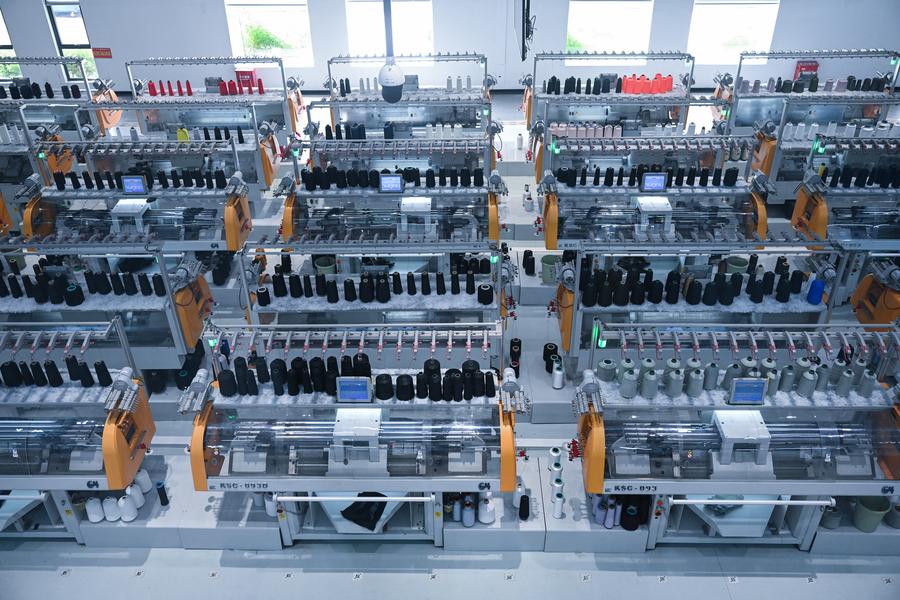
“After digital transformation and intelligent upgrading, many enterprises, big, medium-sized or small, find themselves in an entirely new situation. They have tremendous momentum for sustainable development, with both market competitiveness and efficiency significantly improved,” Jiang said.
But he cautioned that this transformation and upgrading must be tailored to the specific conditions of different enterprises in different industries, at different development stages, and of different sizes. They should not go farther than what is necessary or practical for an enterprise. The focus should be firmly placed on efficient, smooth workflow, business empowerment, and lean management.
AI + manufacturing
“There are a thousand Hamlets in a thousand people’s eyes, just as there are many visions of the smart factory.” Hao Yucheng, a member of the National Smart Manufacturing Expert Committee and deputy director of the Expert Advisory Group for National Smart Manufacturing Standardization, used this analogy to illustrate the complexity of smart manufacturing systems. A key task of the advisory group he works for is to establish standards for smart manufacturing.
So, what are the essential qualities of a smart factory? It is a factory that uses next-generation information technologies like the Internet of Things (IoT), big data, and AI in its entire operational process, including equipment, production, and management. Through human-computer interaction and data-driven process, it establishes a production system capable of self-perception, self-learning, self-decision-making, self-execution, and self-adaptation. Such factories are crucial for achieving intelligent, green, and high-end manufacturing.
Hao believes that manufacturing is an ideal arena for AI application. After AI technology is deeply integrated into various aspects of enterprises, including design, R&D, production, management, and model innovation, it will bring about changes across the board, such as higher efficiency, better quality, cost reduction, and innovation-driven development.
According to the requirements of the six central agencies on the development of smart factories, AI should be applied in at least 20 percent of operational contexts at exceptional-level smart factories; for pioneering-level smart factories, this rate is set at no less than 60 percent. “AI is the main tool to achieve the upgraded version of smart manufacturing. Although it was already a key technology when smart manufacturing was first proposed a decade ago, the current focus is on AI Plus, or deeper integration with AI,” Hao emphasized.
He added that smart manufacturing has not only accelerated the high-quality development of the manufacturing industry, but also generated positive spillover effects. One of them is the increasing number of smart factories in protected agriculture. From potato plantations to pig farming, agricultural production is shifting towards the manufacturing model.
Li Muzhai, assistant researcher at the China Center for Information Industry Development, predicts that in the future, AI-powered robots will collaborate with human workers to complete more complex tasks, significantly reducing labor intensity. AI will enable manufacturers to achieve end-to-end monitoring, real-time error correction, zero-defect production, personalized customization, small-batch, flexible and mixed production, optimized energy allocation, and better emission management. As a result, this will allow them to improve efficiency, become more eco-friendly, and better meet customers’ demands.
Sun Bing & Sun Tingyang are reporters of China Economic Weekly.