Delivering a Better Life
 Facebook
 Twitter
 Linkedin
 Google +
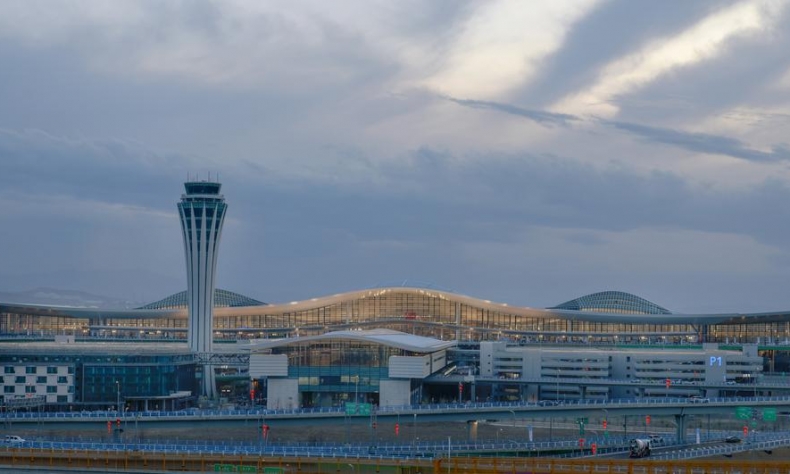
More and more domestic products are being shipped to Central Asia and Europe via Xinjiang, while Xinjiang’s specialty products are entering Eurasian markets through cross-border express services.
Liu Binglin, a fruit merchant from Aksu in Xinjiang, bought a television set online during the annual Double 11 online shopping festival that began this year in October and peaked on November 11. To her immense satisfaction, the shopping experience was different this time. She didn’t have to spend a long time searching for a seller who would provide free delivery, like she did in the past. Today, free delivery is the mode, not an exception in Xinjiang.
Before free delivery became available in Xinjiang, the delivery charge often exceeded the price of the goods themselves due to the long shipping distance, Liu told People.cn. “Now, things are different—most items come with free delivery, making it very cost-effective.”
As major e-commerce platforms in China roll out free delivery services to remote western regions like Xinjiang, more and more consumers are enjoying cheaper goods with convenient express delivery services.
Taobao, the online shopping behemoth, offers free delivery to places like Xinjiang. Pinduoduo, another online marketplace, now covers shipping fees for remote areas like Xizang Autonomous Region, and Gansu and Qinghai provinces. Douyin, the Chinese version of TikTok, has also expanded its logistics network to these areas.
Cheaper, faster, convenient
Due to Xinjiang’s vast area yet sparse population, high shipping costs and long delivery time troubled local consumers while free shipping and easy returns were uncommon.
But in recent years, the upgrade in logistics has improved delivery services to China’s remote areas. Data from the State Post Bureau of China shows that in 2024, the average delivery time for express services in key regions across the country was 53.88 hours, with most packages reaching consumers within three days—nearly three hours faster than in 2023.
The expanding delivery services have made it more convenient for people to buy daily necessities online, and boosted the sales of local products. Yan Qichuan, a courier in Xinjiang, told People.cn that before free shipping was introduced in the region, there were only a few orders for agricultural products from other domestic areas.
“With free shipping services, the number of packages we handle has increased, averaging 100 to 200 pieces per day. My income has also improved,” he said.
While products are delivered into Xinjiang, the region also ships its products out. Thanks to an efficient agricultural supply chain system, Aksu apples and Hami melons from Xinjiang can now reach consumers in other areas across the country within 48 hours.
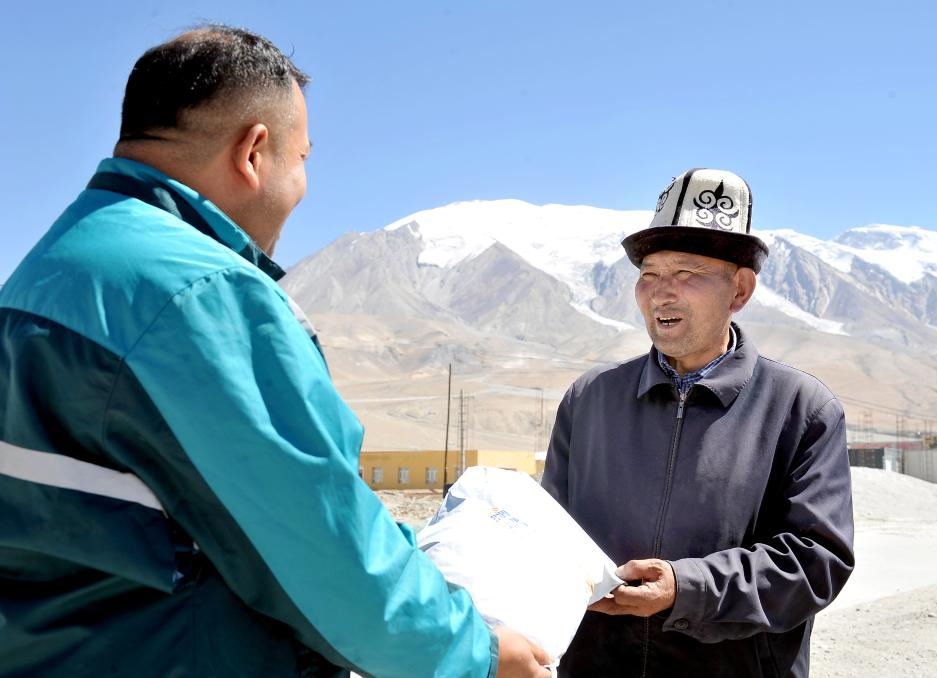
Liu used to sell around 100 apple packages each day. After free shipping was launched, the daily sales have increased to several hundred packages, she said.
444,000 packages a day
China today has the world’s largest postal and express delivery network, and its logistics market scale is expected to top the world for the 10th consecutive year. The expanding free shipping to remote areas and improved transportation are fueling the vibrant growth of regional economy across China.
This year’s Double 11 shopping festival was a hectic time for the postal bureaus in Xinjiang with the staff busy sorting and delivering parcels as free shipping stoked shopping enthusiasm. Yan Jianxin, an employee of the China Post Urumqi Center, told People.cn that the center handled 444,000 packages daily as of October 24.
Anticipating the rush, the center introduced machines such as robotic arms for automated sorting, improving the work efficiency greatly, Yan said.
According to Yan, now a package sent from Urumqi to Yutian County in Hetian Prefecture, over 1,500 km away, reaches the recipient in just one day thanks to the faster logistic services.
A three-tier logistics system has been established, covering counties, townships and villages. Over 96 percent of villages in Xinjiang are now covered by express delivery services. Last year, Xinjiang’s postal bureaus handled 460 million express parcels, a year-on-year increase of 39.2 percent. This was the highest package delivery growth rate in China, according to local authorities.
Today, Xinjiang has built a comprehensive cross-border delivery network including railway, highway and air transportation. In recent years, international logistics has improved as well, enhancing the capacity of the region as an international transportation hub and promoting connectivity between domestic and international markets.
In 2024, Xinjiang’s postal industry saw remarkable growth in its international express delivery volume as well as deliveries to such domestic regions as Hong Kong, Macao and Taiwan. Xinjiang handled 1.87 million parcels, an increase of 850 percent year on year.
As part of the national efforts to build up cities as hubs for postal and express delivery, Xinjiang is improving Urumqi’s role as a core logistics hub. It is also promoting the development of logistics networks in Aksu and Kashi (Kashgar), extending them eastward to all domestic cities and westward to Central Asia and Europe. More and more domestic products are being shipped to Central Asia and Europe via Xinjiang, while Xinjiang’s specialty products are entering Eurasian markets through cross-border express services.