U.S. National Security Strategy 2025: The Pursuit of Primacy Repackaged
 Facebook
 Twitter
 Linkedin
 Google +
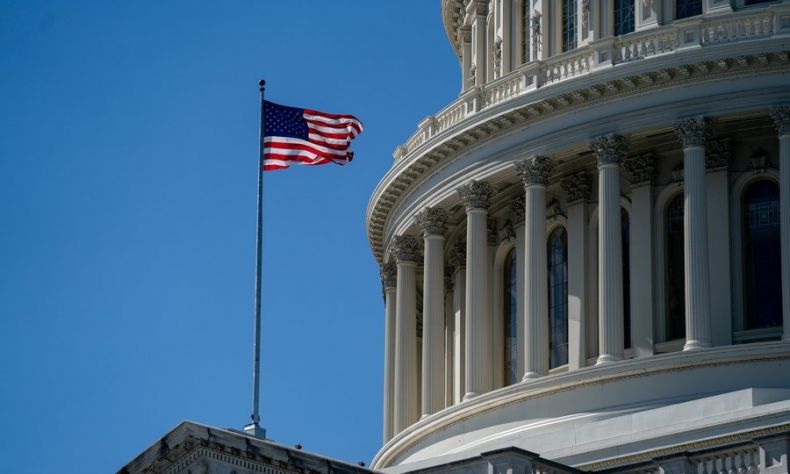
The most recent National Security Strategy outlines the continued pursuit of U.S. primacy worldwide.
The 2025 U.S. National Security Strategy, published on December 4, reaffirms America’s decades-spanning policy of pursuing global domination, emphasizing “burden sharing” in recognition of both the multipolar world’s growing capabilities and the growing limitations of the U.S. itself.
Despite the obvious intentions, the paper expresses, many have mistakenly interpreted it as signaling U.S. abandonment of global primacy, seeking to end confrontation with Russia—and even China.
Some have gone as far as suggesting the U.S. seeks to “shift focus” toward the Western hemisphere, yet even the paper’s introduction dashes this wishful thinking.
Bragging of wars and threats
Trump’s forward includes boasting about U.S. strikes against Iran as well as the build up toward war with Venezuela. He also boasted about the unprecedented $1 trillion recently poured into the U.S. war machine and the vast increase in NATO spending by member states he imposed—investments that would be unnecessary were the U.S. in any way “shifting focus” from continued containment of Russia, Iran and China, toward the Western hemisphere.
The paper discusses “reviving” the U.S. military industrial base to provide “the most capable high-end systems necessary for a conflict with a sophisticated enemy,” a sophisticated enemy that does not exist anywhere in the Western hemisphere—clearly referring to Russia and/or China.
The paper admits the failure of “globalism” as a means of establishing “permanent American domination of the entire world,” yet admits the primary objective of the strategy is to “ensure that America remains the world’s strongest, richest, most powerful and most successful country for decades to come,” or in other words, to ensure continued U.S. primacy over the globe.
This continued primacy requires encroachment upon and the containment of rival powers including both Russia and China. How else could the U.S.—with 25 percent the population of China, smaller industrial base, less-developed infrastructure and millions fewer STEM (Science, Technology, Engineering, Math) graduates per year than China—remain “the world’s strongest, richest, most powerful and most successful country,” without hindering, sabotaging or otherwise setting back rising powers like China?
The rest of the paper is simply a revision of long-standing plans to do exactly that.

What the U.S. wants
The paper outlines what it calls “core, vital national interests,” including a desire to dominate the Western hemisphere under the guise of fighting “narco-terrorists.” However, the paper eventually admits it seeks to prevent Latin America from pursuing independent foreign policies including cooperation with “non-hemispheric competitors” like China and Russia.
Regarding China specifically, the paper reiterates the U.S. seeks to keep “the Indo-Pacific free and open, preserving freedom of navigation in all crucial sea lanes, and maintaining secure and reliable supply chains and access to critical materials.”
Since the vast majority of traffic through these “crucial sea lanes” is coming from or going to China, this translates to the continued U.S. military buildup across the Asia-Pacific region, specifically around the South China Sea and other sea lanes designated as chokepoints the U.S. seeks to economically strangle China with.
The mention of “supply chains” and “access to critical materials” refers to the necessity of decoupling America’s dependency on China for both, allowing a U.S. blockade to cripple China without impacting America’s own economic and industrial power.
In regards to Europe (including Russia), the paper claims the U.S. seeks to “support” allies in “preserving the freedom and security of Europe,” both of which the U.S. itself upended through the overthrow of Ukraine in 2014, the arming of Ukraine under the first Trump administration, and the continued proxy war the U.S. has waged against Russia in Ukraine ever since.
While the paper states a desire to “avoid” America’s “forever wars” fought across the Middle East, it seeks to do so by preventing “an adversarial power from dominating” the region. This means eliminating nations like Iran and organizations like Lebanon-based transnational Shiite Islamist group Hezbollah and to do so by replacing long-term large-scale war with proxy war punctuated by short, intense acts of U.S. military aggression—hence the strikes the Trump administration already launched on Iran earlier this year.
How will the U.S. get what it wants?
Far from withdrawing from its pursuit of global primacy, the U.S. clearly seeks to continue imposing itself worldwide, from Latin America to Eurasia—and everywhere in between.
The means through which it seeks to continue this pursuit—as stated by the paper itself—include the use of economic, financial and military power as well as “soft power” (continued political interference and regime change worldwide).
The paper, however, recognizes U.S. limitations in doing so, requiring a strategy often referred to as “division of labor,” or “burden sharing.”

It explicitly explains: “…the U.S. will organize a burden-sharing network, with our government as convener and supporter. This approach ensures that burdens are shared and that all such efforts benefit from broader legitimacy. The model will be targeted partnerships that use economic tools to align incentives, share burdens with like-minded allies, and insist on reforms that anchor long-term stability. This strategic clarity will allow the U.S. to counter hostile and subversive influences efficiently while avoiding the overextension and diffuse focus that undermined past efforts.”
Thus, far from abandoning its “allies,” the U.S. is instead stitching them into a “burden-sharing network” it can use against designated adversaries (including Russia and especially China) wringing from this network additional resources to pursue U.S. foreign policy objectives, avoiding U.S. “overextension,” all at the expense of the network’s members. It is a strategy the Trump administration already proposed—using Europe to take over greater costs and risk amid the ongoing war in Ukraine against Russia, freeing up U.S. resources toward containing China in the Asia-Pacific.
The paper provides an example of how this network will be used against China too—in the “first island chain” (including China’s island province of Taiwan), or the first string of major Pacific archipelagos out from the East Asian continental mainland coast, explaining: “We will build a military capable of denying aggression anywhere in the ‘first island chain.’ But the American military cannot, and should not have to, do this alone. Our allies must step up and spend—and more importantly do—much more for collective defense. America’s diplomatic efforts should focus on pressing our ‘first island chain’ allies and partners to allow the U.S. military greater access to their ports and other facilities, to spend more on their own defense, and most importantly to invest in capabilities aimed at deterring aggression.”
The most recent National Security Strategy outlines the continued pursuit of U.S. primacy worldwide. It pays lip service to ideas like a “genuinely mutually advantageous economic relationship with Beijing,” while laying out in great detail plans to continue America’s military encroachment and containment of China just beyond its own shores. It claims it seeks an “expeditious cessation of hostilities in Ukraine,” while expanding NATO spending and demanding Europe prepare to defend itself against an unnamed “adversary from dominating Europe” (likely Russia).
Thus, while it may be tempting for some to cherry-pick quotes from the document to indulge in wishful thinking regarding a positive shift in U.S. foreign policy, the paper outlines what has been referred to for decades as the Wolfowitz Doctrine, a U.S. defense strategy blueprint drafted in 1992 during the presidency of George H.W. Bush that basically argued for the conscious and active maintenance of U.S. global primacy by preventing the rise of any rival, bolstered by an unprecedented military buildup, the creation of a “burden-sharing network” and simply resold as “MAGA”—”Make America Great Again.”
The author is a Bangkok-based independent geopolitical analyst and a former U.S. Marine.