Entrepreneurial Spirit Is Propelling New Space Adventures
 Facebook
 Twitter
 Linkedin
 Google +
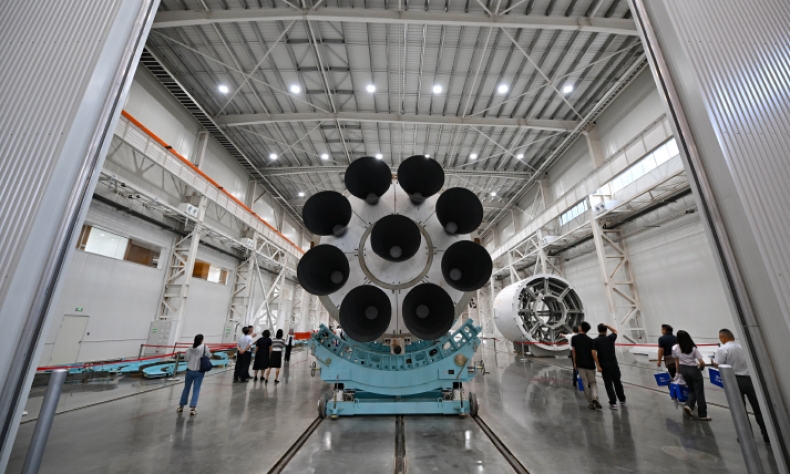
From a regional development perspective, commercial rockets have become a fresh economic growth pole.
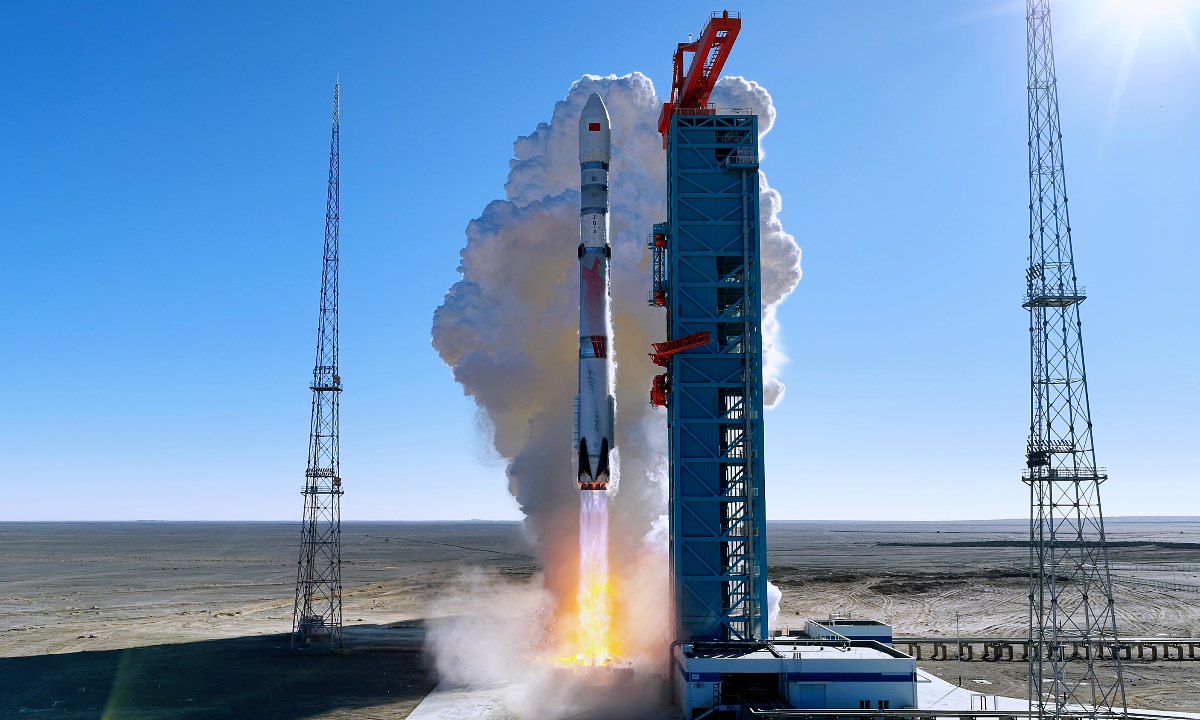
The skies over the Gobi Desert were the stage for a pivotal moment in China’s space industry on December 3: the launch of the Zhuque-3, China’s first reusable rocket. Developed by private firm LandSpace, the mission was a milestone that could redefine the country’s approach to spaceflight.
After propelling its second stage toward orbit, the rocket’s first stage embarked on an audacious return to a landing site over 300 km away—a direct challenge to the traditional “launch and forget” model. The mission aimed to recover and reuse the first stage after its precise journey back to Earth.
A narrow miss
Following ignition and liftoff at the Dongfeng Commercial Space Innovation Pilot Zone in Jiuquan, Gansu Province, the mission proceeded normally at first. Then, approximately 130 seconds into the flight, the rocket’s stages separated, with the second stage continuing its journey to complete the orbital insertion, and the first stage igniting its engines to begin the pioneering return journey.
The first stage was equipped with a reaction control system, grid fins and landing legs so that it can return and be recovered and reused later.
At the landing site, many program staff and onlookers were awaiting the stage’s arrival. While it appeared in the sky right on schedule, an abnormal burn during the final landing hampered its controlled descent and causing it to crash.
The stage one rocket crashed about 40 meters from the targeted center point and experts noted this proximity indicated that had the final landing ignition performed normally, the stage would likely have achieved its goal.
Meanwhile, the second stage flawlessly accomplished its orbital mission, executing a long 1,400-second coast phase.
Discussing the unsuccessful recovery, the mission’s commander, Dai Zheng from LandSpace explained that the landing process required a final landing ignition when it was 3 km above ground—similar to slamming on the brakes. “In our case, that final ‘braking maneuver’ didn’t execute correctly,” Dai said.
Despite ongoing public debate about whether to label the maiden flight a success or a failure, for Dai and his team, the orbital success unequivocally deserves celebration. Moreover, he emphasized that this launch is China’s first attempt to recover the first stage of an orbital-class launch vehicle.
“The primary objective was always achieving orbit, which demonstrates this rocket’s capability to serve satellite clients,” Dai told Xinhua News Agency. “Recovery is a crucial means for a rocket company to reduce costs, but for our customers, the essential requirement is that we deliver their payloads—their satellites—to the required operational orbit.”
Successful orbital insertion was pivotal for the Zhuque-3, and equally vital for China’s pressing need to deploy satellite constellations. Back in 2016, recognizing the prospects of commercial space, LandSpace became one of the earliest private rocket enterprises to obtain full industry access qualifications for commercial aerospace.
The successful orbital insertion of the Zhuque-3 is just one of many recent breakthroughs by China’s commercial launch companies.
Last January, the Gravity-1 rocket, developed by another private firm Orienspace, launched successfully from offshore Haiyang, Shandong Province. It set a global record for lift capacity among solid-propellant rockets at the time and can carry up to 30 satellites in a single mission.
On March 21, the Cerces-1 rocket, developed by Galactic Energy, launched from the Jiuquan Satellite Launch Center in Gansu, deploying six satellites for the Yunyao meteorological constellation into sun-synchronous orbit. This mission was its 18th successful launch, bringing its total number of delivered satellites to 77. The Cerces-1 now holds the top position in China’s private aerospace sector for launch frequency, number of satellites deployed, and mission success rate.
Engines for growth
Since the release of the National Medium- and Long-Term Development Plan for Civil Space Infrastructure (2015-25), in 2015, the Central Government explicitly encouraged private capital to enter the aerospace field, for the first time.
In October of that year, a milestone was achieved: the successful launch of the Jilin-1 satellite constellation, developed by the year-old Chang Guang Satellite Technology Co. Ltd. This event is widely regarded as marking the dawn of China’s commercial space era.
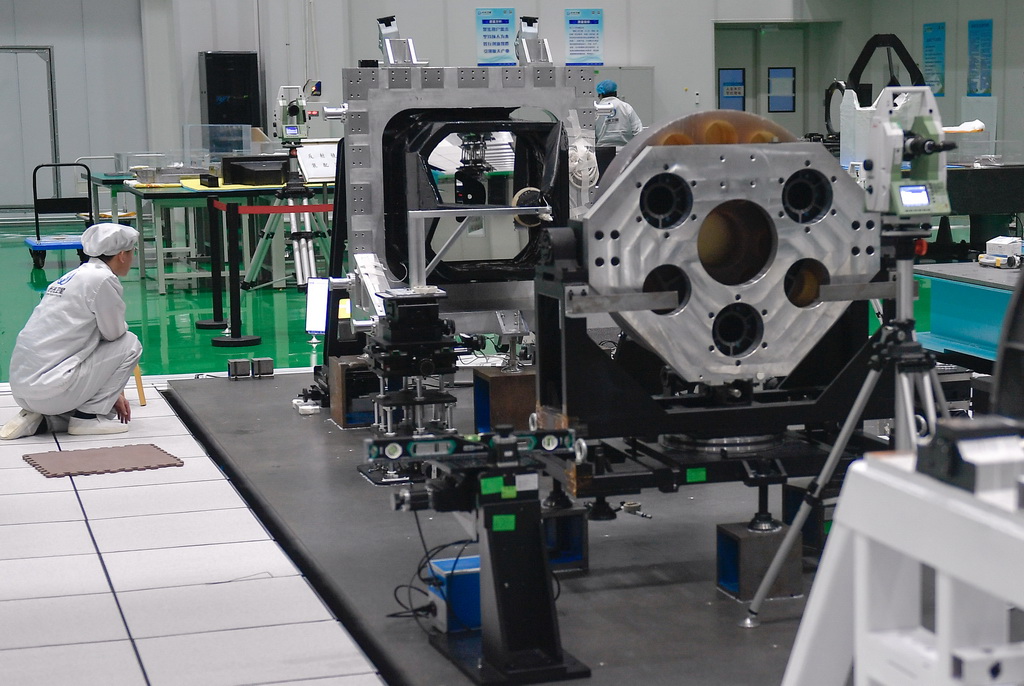
In the wake of this policy shift, some entrepreneurs ventured into the emerging sector. Private enterprises like LandSpace were established. In 2018, LandSpace conducted the country’s first private-sector launch of an orbital carrier rocket.
Rockets, satellites and launch sites are considered the foundational “big three” components of the commercial space industry. With the commissioning of China’s first dedicated Hainan Commercial Space Launch Site in November 2024, the nation’s commercial space sector gained more momentum. The site has since achieved a state of routine, high-frequency launch operations.
In 2024, China’s commercial space sector got another boost. For the first time, commercial aerospace was officially designated a “new growth engine” in the annual Government Work Report. Major hubs like Beijing and Shanghai rolled out dedicated support policies and action plans, vigorously bolstering the industry. This momentum triggered an influx of investment.
The industry’s growth is geographically concentrated. In the Yizhuang area of south Beijing, over 160 aerospace companies are clustered, with firms engaged in rocket development, accounting for 75 percent of the national total. Meanwhile, Haidian District in north Beijing is home to a concentration of companies focused on satellite manufacturing, measurement, control and operations. Together, these two hubs are home to more than 200 major enterprises, representing over half of the country’s core research and development (R&D) units in these fields.
Supporting infrastructure is keeping pace. The Beijing Economic-Technological Development Area is building “Beijing Rocket Street,” a shared R&D and production base, and has established the Reusable Rocket Technology Innovation Center.
From a regional development perspective, commercial rockets have become a fresh economic growth pole. Beyond Beijing’s initiatives, some cities, including Bengbu in Anhui Province, are attracting companies such as Deep Blue Aerospace and Jiuzhou Yunjian, aiming to build an influential commercial aerospace manufacturing base in the Yangtze River Delta region by 2035. In Haiyang, a commercial aerospace industrial ecosystem is taking shape, anchored by a sea launch port and rocket assembly facilities, which are gradually drawing in associated industries.
To date, the number of commercial aerospace enterprises in China has rapidly expanded to over 500, accompanied by a continuous climb in the number of satellites in orbit.
“The next three years will be a golden era for Chinese commercial space,” Zhang Changwu, Founder and CEO of LandSpace, told Xinhua. “The maturation of reusable rocket technology will drastically reduce launch costs. Commercial rockets characterized by rapid response times and low costs are set to become the new workhorses for launching medium and small satellites.”