Harmony Versus Hegemony
 Facebook
 Twitter
 Linkedin
 Google +
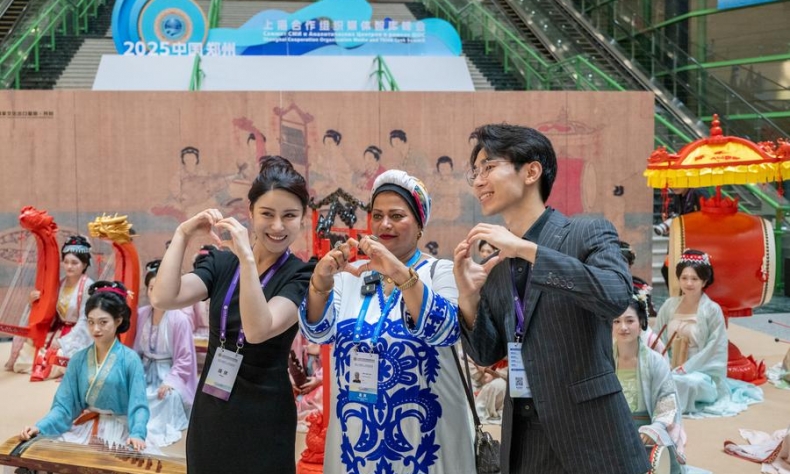
The central concept in Chinese international relations is harmony. Chinese and traditional East Asian visions are of a harmonious international order, the avoidance of conflict through pursuit of shared interests, mutual respect and non-interference.
In January 2017 at the United Nations Office at Geneva, Chinese President Xi Jinping spoke about a community with a shared future for humanity. In that speech, Xi asked five questions: What has happened to the world? How should we respond? Where did we come from? Where are we now? And where are we going?
These important questions derive from the great changes underway in the world today and the great challenges and crises confronting planet Earth and its people. They also reflect an understanding that rapid development of the world’s productive forces necessitates supportive changes in social relations, which are often resisted.
Addressing deficits
In a subsequent speech at the First Belt and Road Forum for International Cooperation, held in Beijing in May 2017, Xi identified the challenges confronting humankind as being three deficits: a deficit of peace, a deficit of development and a deficit of governance. In March 2019, he added a deficit of trust as a central problem in the realm of international relations.
In response to these deficits, which are the basis of many of the most important challenges the world at present confronts, Xi has put forward, on behalf of China, four initiatives that together contribute to the construction of a community with a shared future for humanity: the Global Development Initiative, the Global Security Initiative, the Global Civilizations Initiative and the Global Governance Initiative.
China’s concept of a community with a shared future for humanity embodies what Xi, during the World Economic Forum Virtual Event of the Davos Agenda in January 2021, called the “common values of humanity,” namely, peace, development, equity, justice, democracy and freedom.
In referring to widely shared generic concepts, Xi emphasized the importance of avoiding “ideological prejudice.” Xi was in effect opposing the attempt of Western powers to identify common values with specific Western institutions and to impose them on the rest of the world: Democracy, meaning the rule of the people, can assume a multiplicity of forms, as can national development paths.
Whether a country is or is not a democracy can be judged in the light of whether or not its political order delivers substantive improvements in the lives of all of its people. The positions and proposals that Xi has put forward reflect non-Western ways of addressing international and domestic issues.
In February 2021, then newly appointed U.S. Secretary of State Antony Blinken gave several speeches and interviews in which he repeated the line: “The world doesn’t organize itself. When we’re not engaged, when we don’t lead, then one of two things happens: either some other country tries to take our place, but probably not in a way that advances our interests and values, or no one does, and then you get chaos.”
A fundamental premise of Western liberalism is the view that individual human beings and nations are self-interested actors incapable of agreement on the common good. In that situation, a national state is required to impose domestic order. Internationally the absence of a supranational state leads to a state of anarchy in which powerful nation states seek hegemony to advance their security and interests. Again, the problem is generalization from, and the alleged universality of, specifically Western experience.
A different vision
In the past, a polycentric East Asian gongsheng (symbiosis) system characterized by a set of principles, norms and codes of conduct relating to inter-state relations, in which large and small countries found a proper place, over the course of millennia fostered voluntary and tribute trade, and peaceful coexistence.
The central concept in Chinese international relations is harmony. Chinese and traditional East Asian visions are of a harmonious international order, the avoidance of conflict through pursuit of shared interests, mutual respect and non-interference. These visions are rooted in the Chinese concepts of “all under heaven” (tianxia), relationality (guanxi) and symbiosis.
Symbiosis emphasizes the existence of the self (an individual or nation) in relation to others rather than in isolation. Guanxi emphasizes relations of reciprocity, relational self-interest and ancient philosopher Confucius’ adage: “If you want to establish yourself, help others to establish themselves; if you want to be successful, help others to be successful.” In this light, the Chinese vision of the world is one in which the success of one country can be guaranteed only by the success of all.
In December 1972, when contemplating China’s relationship with the world, Chairman Mao Zedong updated three stratagems recommended to the first emperor of the Ming Dynasty (1368-1644): “Dig deep tunnels, store grain everywhere and never seek hegemony.” In Mao’s updated stratagem, tunnels referred to air raid shelters. Mao drew on a traditional distinction between a king who rules by benevolence and righteousness and a hegemon who rules by power. Mao insisted that China should never seek hegemony and Xi says it never will.
In proposing the four initiatives to address international deficits of peace, development, security and governance, Xi drew on China’s cultural traditions and wisdom in conjunction with Chinese socialism to identify a path centered on peaceful coexistence, mutual respect, non-interference, dialogue, cooperation and shared and equitable development.
In emphasizing the conformity of this vision with the United Nations Charter and with the Five Principles of Peaceful Coexistence [proposed by China and inaugurated in 1954, namely, mutual respect for each other’s sovereignty and territorial integrity, mutual non-aggression, non-interference in each other’s internal affairs, equality and mutual benefit—Ed.], Xi noted that these values are in fact widely shared, if not practiced.
In repeatedly insisting that China does not seek hegemony, Xi is also saying that the world does not need a hegemon (a global Leviathan) and indeed that the domination of one country by another is in fact an obstacle to world peace, global development and international order.
The author is an emeritus professor at the School of Global Studies, University of Sussex, the United Kingdom.