Rolling Out a Technocentric Rural Development Blueprint
 Facebook
 Twitter
 Linkedin
 Google +
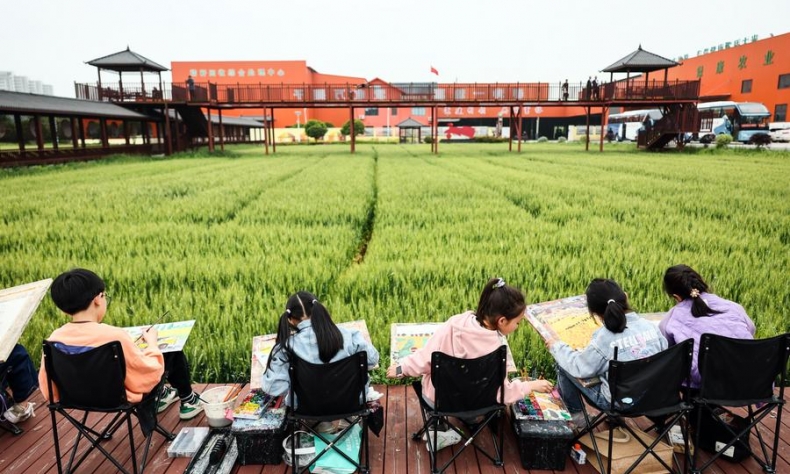
Through industrial upgrading, attraction of skilled personnel, cultural preservation, ecological improvement, and governance optimization, China is striving to build a more prosperous and beautiful countryside.
In China, issues relating to agriculture, rural areas, and rural residents have always been a priority in national development. At its fourth plenary session held in October 2025, the 20th Central Committee of the Communist Party of China (CPC) once again emphasized the need to accelerate agricultural and rural modernization, and advance all-around rural revitalization over the next five years.
China’s rural revitalization strategy delivered remarkable results during the 14th Five-Year Plan period (2021–2025), leading to significant improvement in both development quality and efficiency. Having come to a new starting point, the country is entering a period of both challenges and opportunities in which accelerating rural revitalization will become a central issue for Chinese modernization.
Achievements over the past five years
Rural China has undergone profound changes over the past years, mainly reflected in the following aspects:
Rural industries continued to grow, the diversified food supply system was further improved, and the foundation for food security was consolidated to an unprecedented level. In 2024, China’s grain output set a historical record of 700 million metric tons, an increase of 3.46 percent compared with 2021. This means 0.5 metric tons per person in China, above the international food security standard of 400 kg per person. On this basis, rural industries have flourished and agriculture is no longer all about crop farming. In 2024, the scale of agricultural industries with unique strengths reached RMB 9.7 trillion.
Agricultural modernization reached a much higher level, with technology emerging as the core driver of agricultural development. In 2024, the contribution of scientific and technological progress to agricultural development exceeded 63 percent, and the rate of mechanization in crop plowing, planting, and harvesting rose to 74 percent. Under the strong growth of emerging industries and new business forms in rural areas, the ratio of the value of agricultural product processing industry to total agricultural output increased from 2.48:1 to 2.61:1 between 2021 and 2024, indicating the extension of the agricultural industry chain and growing diversity of the rural economy.
Employment and entrepreneurship showed positive movement, attracting more professionals to return to rural areas to work or start businesses. In 2024, more than 13 million people returned to their rural hometowns for work or to open startups, more than double the figure of 2021.
Meanwhile, the living conditions of rural residents and state of rural environment saw substantial improvement. In 2024, up to 76 percent of rural toilets met sanitary standards, over 45 percent of domestic sewage was treated, and more than 90 percent of natural villages (historical residential communities) had access to domestic waste collection, transport, and disposal services. These improvements not only make the countryside more livable but also turn the ecological value into economic benefits. As of 2024, nearly 1,400 villages had been designated key destinations for rural tourism, proving that lucid waters and lush mountains are truly invaluable assets.
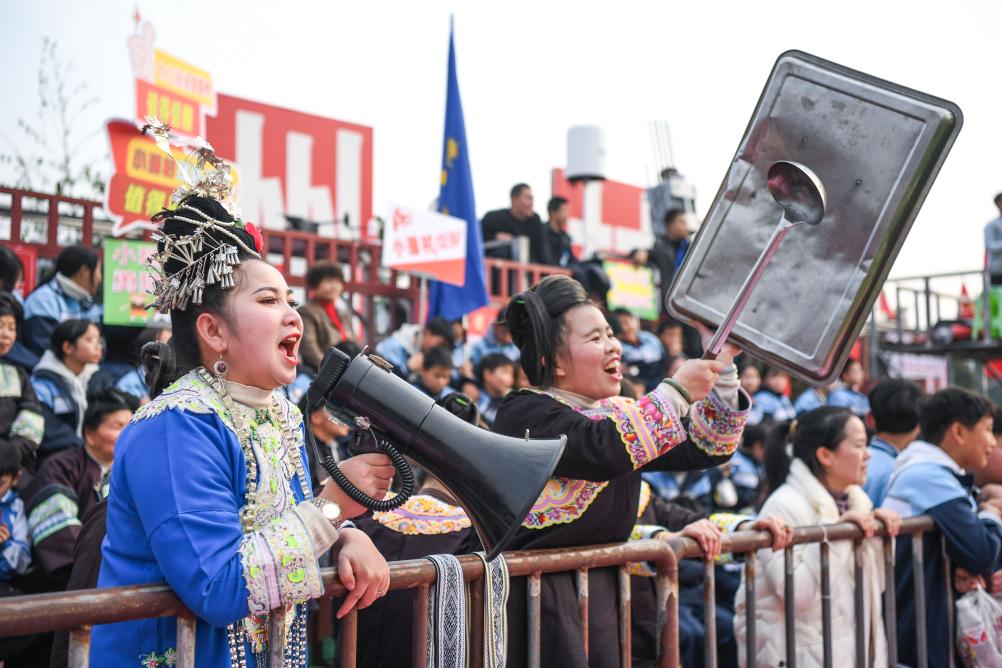
Cultural activities flourished, and rural governance became more effective. The soaring popularity of local sports events like the Village Super League and Village BA over the past few years has sparked cultural vitality in rural China. China has also achieved promising results in the protection of intangible cultural heritage, with 44 items inscribed on UNESCO lists and more than 100,000 representative items recognized at the national and regional levels, many based in rural areas. The preservation of such heritage not only keeps China’s cultural roots alive but also creates substantial jobs.
Challenges in the upcoming five years
Despite the above achievements, rural revitalization remains a long, arduous process. The further China advances along this path, the more complex the difficulties and challenges become. During the 15th Five-Year Plan period, China needs to address several major issues in rural development:
The first is insufficient industrial competitiveness. Some rural industries are hampered by the problems of severe homogenization, incomplete industrial chains, and low value-added. In the agricultural product processing industry China still has much catching up to do with developed countries. In 2024, the ratio of the output value of China’s agricultural product processing industry to its agricultural output value was 2.61:1, well below the 4:1 in developed countries. The low processing rate means rural industries lack the resilience to withstand market fluctuations.
The second is brain drain and population aging. The outflow of young adults and accelerated aging are putting dual pressures on rural areas. In 2024, the total number of migrant workers in China approached 300 million, indicating a massive movement of skilled workers toward cities and towns. As a result, the proportion of the population aged 60 and above in rural areas reached 26.5 percent in 2023. A shortage of expertise and demographic aging are impeding the upgrading of rural industries and the provision of public services.
The third is the impact on cultural traditions. In the process of modernization and urbanization, traditional culture and the distinctive character of some villages are being threatened. Protecting the diversity of regional cultures from excessive commercial development is an issue that must be addressed to achieve rural revitalization.
The fourth is risks to ecological systems. Although the idea of green development has been widely embraced across the country, agricultural pollution remains an issue to be solved. For example, chemical fertilizers and pesticides should be more efficiently used, as their overuse poses potential threats to soil and water systems. China will face the challenging task of ensuring food security and economic development, while protecting the rural environment over a prolonged period.
The fifth is weakness in governance capacity. The evolving structure of rural society and the increasingly diverse needs of rural residents pose new challenges for traditional rural governance models. Their solution calls for new governance methods that can effectively balance the interests of all parties and meet rural population’s new expectations for a better life.
Innovation for a new period
To overcome the aforementioned challenges, China has proposed fostering new quality productive forces in agriculture, based on local conditions. The purpose of developing such productive forces is to pursue high-tech, high-efficiency, and high-quality development driven by technological innovation. In the agricultural sector, it means leveraging disruptive technologies and innovative business models to create strong momentum for rural revitalization on all fronts.
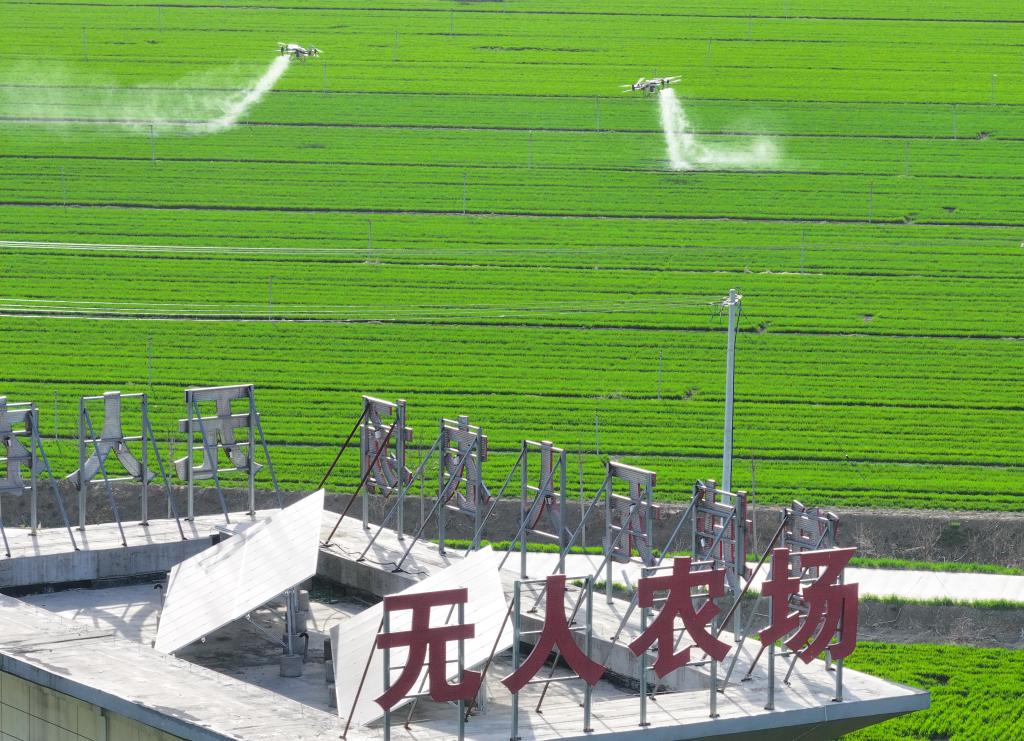
New quality productive forces will reshape rural industries through new technology and new business formats. First, the application of technologies such as big data, the Internet of Things, and artificial intelligence will promote the transition of agricultural production toward greater intelligence and precision, lower costs, and higher quality. Second, it will extend the agricultural industry chain on both ends, boosting development in deep processing of agricultural products, brand marketing, and cold chain logistics to increase value-added products.
Skills development is a key factor in fostering new quality productive forces. The future of rural areas depends on a new type of farmer who can master advanced technologies and modern management expertise. To meet this need, China will, on the one hand, strengthen training of local farmers on digital skills, such as how to operate smart agricultural machinery and drones. On the other hand, the state will provide more favorable policies and improve the rural living environment to attract more professionals like university graduates, technical personnel, and entrepreneurs to work in the countryside. These people will bring with them new knowledge, ideas, and resources.
New quality productive forces provide new means for the preservation and revival of traditional culture. Digital technologies such as virtual reality and augmented reality can vividly recreate historical scenes, restore cultural heritage sites, and establish digital museums. Modern communication tools like social media and short-form videos make China’s rural culture accessible to audiences all over the world. And when integrated with creative industries, rural cultural resources can realize their economic value.
New quality productive forces are inherently green productive forces, and therefore can open up new paths of green development. For example, the development of high-efficiency and low-toxicity biopesticides, biofertilizers, and biodegradable agricultural films can reduce the negative impact on the natural environment at its source.
Digital intelligent technologies are crucial for improving rural governance capacity. Smart rural governance platforms can help the government exercise precise management and provide efficient services, ensure transparency in and due oversight of public affairs, and facilitate villagers’ participation in decision making over community issues.
China’s rural areas are entering a new phase of development where challenges and opportunities coexist. Technological innovation will emerge as a key driver of progress. Through industrial upgrading, attraction of skilled personnel, cultural preservation, ecological improvement, and governance optimization, China is striving to build a more prosperous and beautiful countryside. The success of this initiative is not only vital to the well-being of hundreds of millions of rural residents but also an essential part of China’s modernization drive.
Zhong Yu is a researcher with the Institute of Agricultural Economics and Development, Chinese Academy of Agricultural Sciences.