Why China’s Recent Gains Matter for the Global South
 Facebook
 Twitter
 Linkedin
 Google +
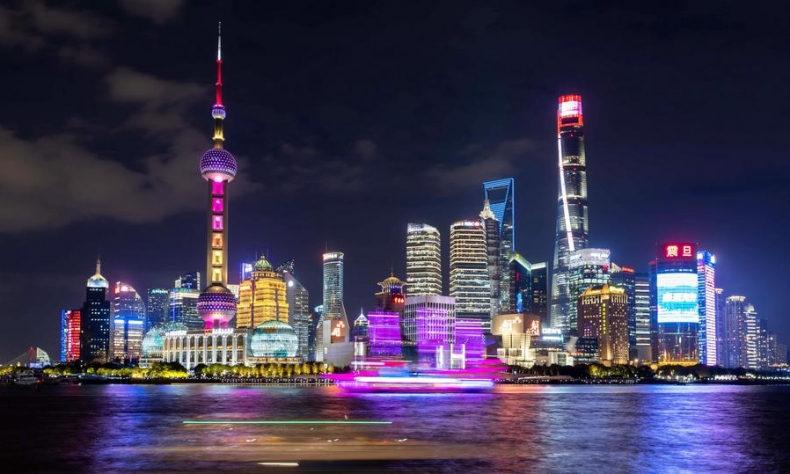
At a time of fragmentation and uncertainty, China’s trajectory over the past five years offers a counter-narrative.
On New Year’s Eve, Chinese President Xi Jinping delivered his 2026 New Year message via China Media Group and online platforms. The address signals China’s continued support for the aspirations of the Global South, offering political and moral backing at a time of heightened global uncertainty. Xi’s remarks reflected a growing confidence among developing countries, which are increasingly coordinated, more influential on the world stage, and more assertive in calling for a fairer role in global governance.
China’s achievements over the past five years in economic development, scientific and technological advancement, national defence, and overall national strength merit far greater recognition especially given today’s increasingly segmented global environment. This period has been defined less by cooperation than by disruption: free trade has been eroded, tariffs openly weaponized, technological barriers erected to suppress competitors, and regional conflicts allowed to fester. Under such conditions, sustained development is the exception rather than the rule. Yet China has not only endured; it has continued to advance.
What distinguishes China’s performance is its ability to withstand external pressure without abandoning long-term strategic objectives. While some major economies have turned inward or resorted to protectionism to secure short-term advantages, China has remained focused on innovation, industrial upgrading, and national resilience. Its steady progress in science and technology, infrastructure, and defence capacity reflects a development model that prioritizes stability, self-reliance, strategic resolve and endurance over confrontation.
Equally significant is the fact that China’s development has not come at the expense of others. At a time when many advanced economies have narrowed market access, politicized trade, and imposed discriminatory measures, China has moved in the opposite direction by expanding openness toward the developing world. Its decision to grant zero-tariff treatment to least developed countries is not merely symbolic; it is a concrete policy choice that directly supports growth, industrialization, and export capacity across the Global South. Few major economies have taken comparable steps.
Beyond trade, China’s openness is increasingly evident in its approach to technology. By promoting open-source cooperation in areas such as artificial intelligence and sharing technological applications with partner countries, China is challenging the prevailing logic of technological monopolization. This commitment to technological inclusiveness reinforces China’s vision of a shared future in which innovation is not wielded as a tool of exclusion but deployed as a driver of collective development.
China’s role in strengthening Global South cooperation through mechanisms such as BRICS and the Shanghai Cooperation Organization further underscores this commitment to a more balanced international system. These platforms provide developing countries with greater policy coordination, financial cooperation, and strategic autonomy in a global order where traditional institutions often reflect outdated power structures. For many countries, such mechanisms are no longer optional alternatives but essential platforms for safeguarding development interests.
China’s progress in advancing high-quality development through innovation is particularly striking. The speed and scale with which technology has been integrated into industry are unprecedented, and the results of this innovation drive are emerging rapidly. In several key areas, China’s advances are increasingly challenging the innovation dominance of developed economies, where technologies are often tightly guarded for profit or strategic leverage. By contrast, China is making a growing share of its innovations especially in digital technologies more openly available, generating benefits that extend beyond its own borders.
Competition in large artificial intelligence models has intensified, with Chinese firms and research institutions achieving notable breakthroughs. At the same time, advances in independently developed chips have strengthened technological self-reliance under sustained external pressure. Together, these developments have positioned China as one of the world’s fastest-rising innovation-driven economies, reshaping global innovation dynamics.

President Xi Jinping’s proposal this year to advance the Global Governance Initiative reinforces this broader vision. It conveys a clear and timely message: an international order shaped by historical inequalities and selective rule-making can no longer accommodate the realities of a multipolar world. Reforming global governance is not overturning the existing system, but correcting its imbalances making it more inclusive, more representative, and more responsive to the legitimate aspirations of all nations, regardless of size or power.
At a time of fragmentation and uncertainty, China’s trajectory over the past five years offers a counter-narrative. It demonstrates that sustained development, openness to the world, especially to the Global South, and advocacy for fairer global governance are not only possible, but necessary. The central question facing the world is whether the international community is willing to move beyond zero-sum mentality and acknowledge the realities of a changing global landscape.
For the Global South, China’s success is increasingly understood as a collective gain, a validation that development outside Western-dominated models is achievable, and that a more balanced global order is within reach.
The article reflects the author’s opinions, and not necessarily the views of China Focus.