Fresh Arrival
 Facebook
 Twitter
 Linkedin
 Google +
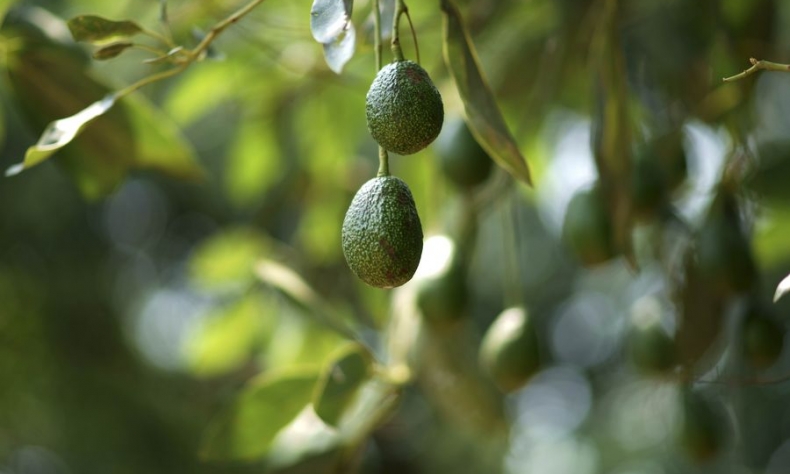
Rwanda-China avocado export protocol is a milestone in growing agricultural partnership.
Rwanda secured access to one of the world’s most lucrative agricultural markets this month when it finalised a trade protocol allowing fresh avocado exports to China, a deal that could fundamentally alter the trajectory of the country’s trade.
The Protocol on Inspection, Quarantine, and Sanitary Requirements for the Export of Fresh Avocados from Rwanda to China was signed on 12 November 2025, marking the culmination of years of negotiations between Kigali and Beijing.
For Rwanda’s avocado farmers, the agreement represents more than regulatory approval; it offers entry into a market where China’s appetite for fresh produce, especially premium fruits like avocados, has surged in recent years, driven by a fast-growing middle class with evolving dietary preferences.
The protocol is the latest milestone in a bilateral relationship that has flourished since Rwanda first participated in the China International Import Expo (CIIE) in 2018. Since then, Rwanda’s exports to China have surged from $35 million in 2019 to $160.6 million in 2024, with agricultural products increasingly driving this growth.
Strategic gateway
According to data from the Chinese Ministry of Foreign Affairs, bilateral trade between the two countries reached $669 million in 2024, marking a remarkable 21.4 percent year-on-year increase.
Economic analyst Teddy Kaberuka said the avocado export protocol represents far more than market access; it signals a fundamental evolution in how African nations can leverage strategic partnerships for agricultural transformation.
“Exporting avocados to China will be a strategic gateway that positions Rwanda’s avocados in one of the world’s most dynamic consumer markets,” Kaberuka told ChinAfrica. “This deal will diversify Rwanda’s export portfolio beyond traditional commodities such as coffee and tea. It’s a model for value-added agricultural trade that other African nations should study closely.”
Kaberuka sees the protocol as emblematic of China’s evolving relationship with African agricultural producers. Regarding the broader implications for Africa-China cooperation, this protocol demonstrates how partnerships can be structured to benefit smallholder farmers while meeting the quality standards of sophisticated markets. “It is shared prosperity in action: when Chinese consumers enjoy Rwandan avocados, they’re supporting entire value chains and rural communities in Rwanda.”
He added that Rwanda’s avocado exports have experienced exponential growth, rising from a modest $440,000 in 2013 to $6.3 million in 2023, a 14-fold increase in just a decade. With the government aiming to raise exports to 31,000 tonnes by 2029, the potential of the Chinese market cannot be overstated.
Strategic importance
Angel Uwantege, founder and proprietor of Bahage Foods Ltd., whose company made history as the first Rwandan woman-led business and the fourth company overall to export a full container of 22 tonnes of Hass avocados, says that the China protocol represents the culmination of years of hard work and strategic positioning.
“Exporting Rwanda’s avocados to China will significantly enhance our exports,” Uwantege told reporters in Kigali, her voice conveying both excitement and determination. “We are optimistic about the growth potential and look forward to working with Chinese partners. This isn’t just about our company; it’s about proving that Rwandan women can lead in international agribusiness.”
“We have confidence in the Chinese market, and the zero-tariff policy has indeed made it easier for us to export Rwandan products to China. It reduces costs and makes our products more competitive,” she explained. “We anticipate more trade agreements, investments and cultural exchanges. My company is eager to explore platforms like the CIIE to showcase Rwandan products, especially avocados, to the Chinese market.”
As chairman of the Horticulture Exporters Association of Rwanda and managing director of Almond Green Farm Ltd., Robert Rukundo provided a strategic, industry-wide perspective on the China protocol’s significance. His organisation represents the collective interests of Rwanda’s horticultural exporters, and he sees the China agreement as potentially transformative for the entire sector.
“The Chinese market could become one of the biggest destinations for Rwandan avocados,” Rukundo said during the launch of the protocol, emphasising the strategic importance of market diversification.
“This is a vital shift for an export sector that has so far relied heavily on Dubai and parts of Europe. When you concentrate your exports in a few markets, you’re vulnerable to price fluctuations, changing regulations, or economic downturns in those regions,” Rukundo said.
Rukundo’s experience in scaling avocado exports and leading supply contracts of 200-plus tonnes monthly gives him unique insight into the operational challenges and opportunities ahead. “The Chinese market offers volume, consistency, and the potential for long-term partnerships that can help us to plan investments more strategically.”
“We thank the government for supporting market expansion to China and other destinations,” Rukundo stated. “But we also need to ensure we have the infrastructure, quality-control systems, and farmer-support networks to meet Chinese standards consistently. This protocol is an opportunity, but it requires collective effort to fully capitalise on it.”
“We currently export varieties like Hass and Fuerte to Dubai. Prices there change frequently, around $7-8 per 4 kg box of avocados,” said Christian Mugunga, managing director of MCS Star, an avocado-exporting firm based in Gasabo District in Kigali.
“Entering the Chinese market might help exporters navigate these price fluctuations. When you have multiple markets, you can balance supply and remain stable. If one market experiences a downturn or price pressure, you have alternatives,” he added.
Rwanda’s success with chilli exports offers a template for the avocado sector. At the CIIE in 2018, Rwanda secured a $2 million chilli oil order, laying the groundwork for it to become Africa’s first nation to export dried chillies to China in 2021.