Hainan Free Trade Port: Going Above and Beyond
 Facebook
 Twitter
 Linkedin
 Google +
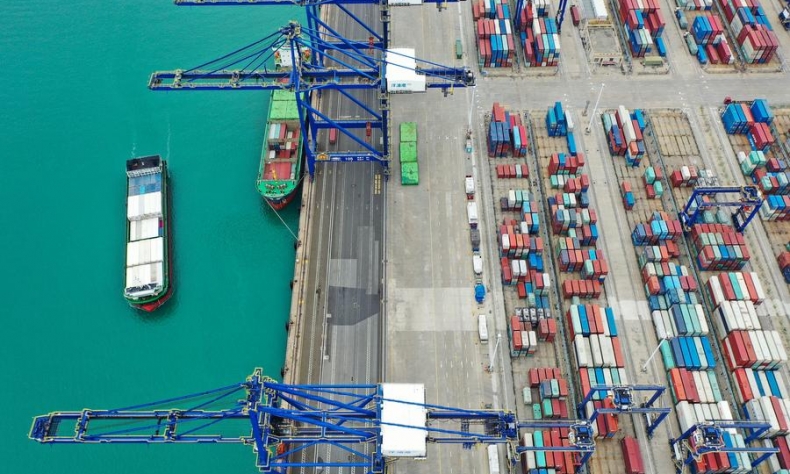
For China, it creates a strategic junction for domestic and international economic circulation, boosting high-level openness to drive domestic reform and providing a pivotal platform for China’s deeper participation in Asia-Pacific economic integration.
As it provides a vital new model for China’s international trade and logistics, the Hainan Free Trade Port (Hainan FTP) stands out from similar opening-up initiatives. The Hainan FTP changes the structure of China trade with its innovative free trade policies, efficient customs procedures, and integration with Belt and Road Initiative processes. Holistically, it signifies a milestone in China’s efforts to navigate the next phase of its global engagement.
Why the Hainan FTP matters
At a time when globalization faces strong headwinds amid rising geopolitical risks, the strategic significance of the Hainan FTP cannot be underestimated. The Hainan FTP functions as a special customs area, enabling deeper institutional reforms with its broad zero-tariff policies and a value-added processing policy that allows qualifying products to enter the Chinese mainland duty-free.
These initiatives are combined with freer cross-border capital flows through block chain application and certification. This improves the efficiency of cross-border trade and reduces risks in trade settlement. The strategic objective is for Hainan to engage in free trade with the international community, with tariff-free goods circulating freely within the island.
The central message being sent to international investors and multinational corporations is that China is advancing deep, self-driven institutional reforms to build a rules-based and high-standard business environment. The transition from flow-based approach to institutional openness reflects China’s move from a global factory to a global market.
Geographical scale matters. Hainan Island’s land area is more than 70 times the combined area of China’s 156 bonded zones, which provides ample room for expansion. The Hainan FTP model simultaneously activates goods, capital, people and data flows, providing unprecedented access and flexibility for international companies.
These policies boost China’s eligibility for entry into the Comprehensive and Progressive Agreement for Trans-Pacific Partnership (CPTPP). The new model confirms that China can meet the bloc’s high standards for trade and investment openness.
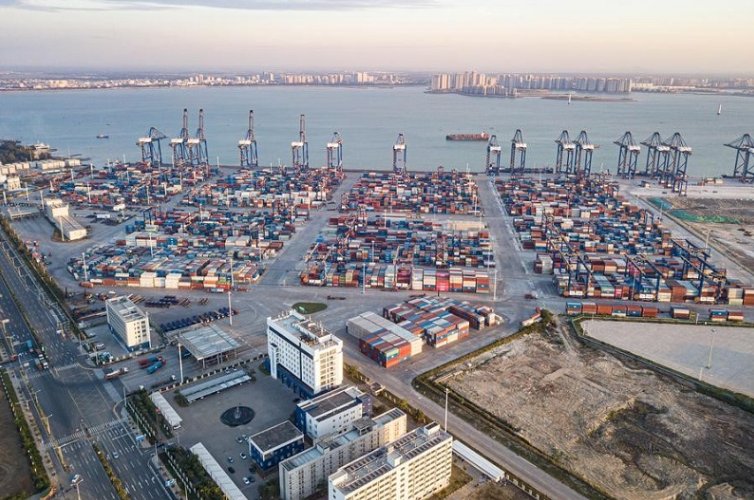
China has 22 free trade zones, but Hainan represents a fundamentally different level of openness, with business engagement aimed at participation in the international investment economy. Most FTZs are limited to specific urban areas and focus on upgrading local industries. The Hainan FTP model transforms the entire island into a unified free trade port. This makes the Hainan FTP unique as a reliable safe harbor for global economic and trade activities.
The model includes substantial zero-tariff expansion with around 74 percent of goods eligible for zero tariffs. Companies importing machinery and materials could reduce tax costs by around 20 percent.
Products processed in Hainan with their value increased by at least 30 percent locally can enter the Chinese mainland duty-free. The Hainan FTP model hence rewards companies for local assembly, manufacturing, processing, and supply-chain development.
Capping corporate income tax for eligible businesses at 15 percent, compared with 25 percent on the mainland and 16.5 percent in Hong Kong, provides a competitive advantage. Personal income tax for eligible individuals is also capped at 15 percent, compared with a top rate of 45 percent on the mainland.
Aligning rules and enhancing the business environment
Historically, China’s successful trade and development zone policies were primarily driven by land and tax incentives. Often referred to as factor-based opening-up, they played an important role in China’s historical opening-up progress. The Hainan FTP model is instead structured around institutional opening-up where the administrative structure of the trade and investment environment plays a more prominent role in development. Rules are better aligned with international standards, and tangible policy benefits are found in areas including negative list management, cross-border data flows, and intellectual property protection.
The Hainan FTP has the shortest negative list for foreign investment of any entry port in China. The shorter list gives greater certainty to importers and creates a more efficient trade and logistics environment. Meanwhile, the Hainan International Trade Single Window, an integrated service platform, enables efficient investment in the region, linking it with a modern trade management system.
A world-class free trade port requires not only “hardware” but also an internationally-aligned “software” environment, including the rule of law, regulatory frameworks, and efficient services. The Hainan FTP model is a testing ground for China’s alignment with international trade agreements, which is necessary in a world challenged by trade disruptions. The advanced application of block chain digital customs clearances, coupled with the integration with Belt and Road Initiative standards for cross-border trade clearances and trade settlement, provides a road map for China’s deeper integration into the global economy.
The launch of an island-wide special customs operation confirms China’s commitment to opening-up. Under its two-tiered customs framework, the Hainan FTP model allows China to test reforms in sensitive areas, including offshore finance, cross-border data flows and internationalized medical services.
The Hainan FTP implements measures of financial opening-up through cross-border financing and foreign exchange facilitation. These advanced financial measures accelerate cross border transactions and trade settlements. More importantly, they also reduce counter-party risk because block chain settlements are virtually instantaneous, eliminating currency risk. These measures therefore reduce the overall risk of doing business in the Hainan FTP.
Although still at the early stage, the Hainan FTP model has shown substantial progress in establishing a law-based, internationalized, and convenient business environment. The official commencement of the new administrative arrangements have ignited interest across the region, with logistics companies examining the potential for new routes and expanding capacity.
To fully win the trust of the international community, the Hainan FTP must maintain consistency in the application of new administrative and trade regulations. In addition, it should remain flexible and open to changes dictated by a deteriorating international trade environment.
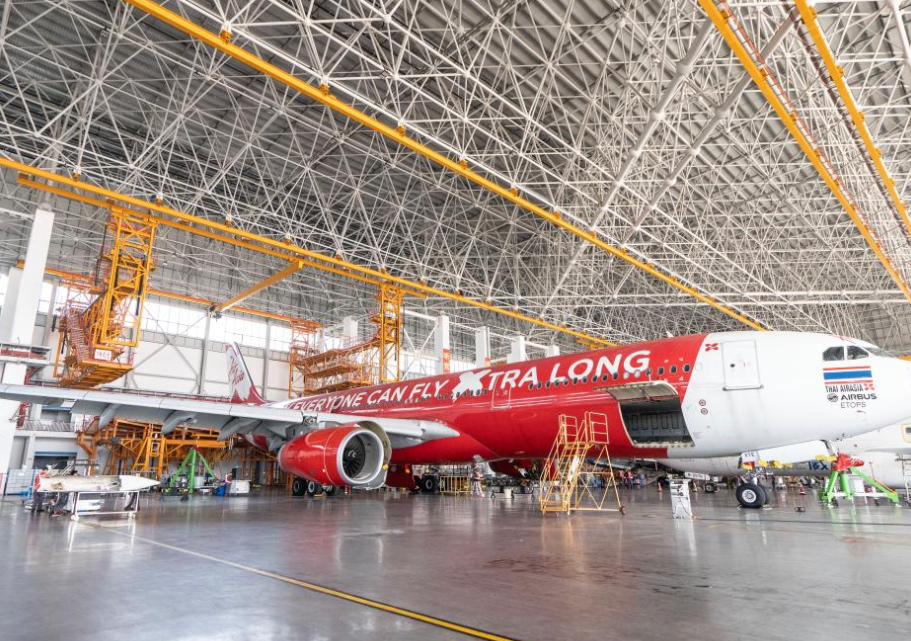
Supply chains, industries, and shared benefits
As global supply chains are experiencing a profound restructuring, the Hainan FTP will influence their alignment, particularly in the Asia-Pacific region. The port has the long-term potential to become a new logistics hub and center for high-end manufacturing that thrive within the customs and tariff environment.
Over the long term, Hainan has the potential to become a strategic logistics hub, serving southwestern and central-western regions, saving an average of almost 10 days compared to eastern coastal ports.
The Hainan FTP’s direct competitor is Singapore’s transshipment model. Some Indonesian cargo ships are already saving up to 32 percent in costs by sailing directly to Hainan’s Yangpu Port instead of Singapore. Hainan’s customs clearance efficiency, which enables the processing of e-declarations within an hour, is also attracting cargo to Hainan that was previously transshipped or warehoused in Singapore.
PSA International, formerly the Port of Singapore Authority, has signed agreements with Hainan to operate direct shipping routes. Observers predict that the Asia-Pacific shipping network may move from the Singapore “hub-and-spoke” model to a “multi-nodal network” one which includes Hainan. Hainan’s special customs operation provides global supply chains with a competitive link to the Chinese market.
In these ways, the Hainan FTP is reshaping the China-ASEAN supply chain. Hainan has evolved into an institutional hub, ready to become a preferred transit and processing base for ASEAN raw materials and agricultural products entering China, and for Chinese manufactured goods bound for ASEAN.
The new regulatory environment in Hainan means that shipping from Singapore and Malaysia now has new logistics alternatives. Regional ports like Darwin in the north of Australia are already looking to develop new trade routes to improve shipping time and delivery.
The integration with Belt and Road Initiative operating standards provides an additional seamless entry point for BRI partners. These efficiencies will transform trade flows in the Asia-Pacic region.
Meanwhile, Hainan is also focusing on developing tourism, modern services, and hi-tech industries. For multinationals in high-end manufacturing, biopharmaceuticals, and green tech sectors, Hainan offers policy incentives. Policies prioritizing future-focused industries, such as the planting industry, deep-sea technology, and aerospace, will enhance Hainan’s institutional alignment with high-standard international trade regulations.
For multinational corporations, Hainan offers a consistent and transparent environment for evaluating long-term engagement with the Chinese market. Policies promoting cross-border capital flows, offshore finance, and simplified foreign exchange management are intended to encourage foreign banks, insurance companies and other financial institutions to provide financial services in the Hainan FTP. These financial measures will enhance the international use of the Chinese currency and strengthen China’s integration into global financial systems.
International companies and investors can seize the Hainan opportunity by quickly integrating it into their global development strategies. The island-wide customs environment of the Hainan FTP provides a guarantee of stability amidst rising anti-globalization trends.
For China, it creates a strategic junction for domestic and international economic circulation, boosting high-level openness to drive domestic reform and providing a pivotal platform for China’s deeper participation in Asia-Pacific economic integration.
It offers multinationals a new option to optimize Asia-Pacific and global production footprints, by expanding supply chain diversity and resilience.
All in all, the Hainan FTP is a game changer and those who seize the opportunities it offers early will reap substantial benefits.