Hainan FTP Launches Special Customs Operations
 Facebook
 Twitter
 Linkedin
 Google +
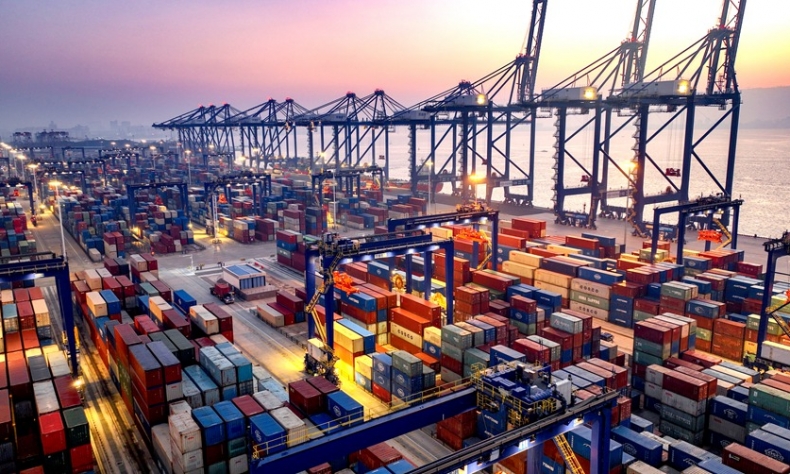
Hainan is becoming a new frontier for China’s opening-up, a new hub for regional mutually beneficial cooperation, and a new engine driving globalization.
The Hainan Free Trade Port (FTP) officially launched island-wide special customs operations on Dec. 18, 2025. One month in, a reporting team from China International Communications Group (CICG) conducted an exclusive interview with Feng Fei, secretary of the Hainan Provincial Committee of the Communist Party of China (CPC) and chairman of the Standing Committee of the Hainan Provincial People’s Congress. Drawing on early results and the policy benefits already taking shape, Feng shared insights into Hainan’s core strengths, development potential and the opportunities it offers to the world.
CICG: Island-wide special customs operations have been described as a critical milestone for Hainan. In your view, how will this move promote China’s interaction with the global economy? And how will it redefine Hainan’s role in global trade networks?
Feng Fei: As General Secretary Xi Jinping noted, the official launch of island-wide special customs operations in the Hainan FTP on Dec. 18, 2025 is a landmark step in China’s unwavering commitment to expanding high-level opening-up and advancing an open world economy. It will be of significant and far-reaching importance both domestically and internationally.
Special customs operations do not mean closing off the island. On the contrary, they represent a higher level of openness. The strategic goal of building the Hainan FTP is to create a key gateway for China’s opening-up in the new era. It is designed to support the development of a new nationwide development pattern in which domestic and international economic cycles reinforce each other and operate efficiently, ensuring smoother and more robust connections between China and the global trading system. This will create new opportunities for the improvement and development of global trade networks.
Under special customs operations, the Hainan FTP will play a leading role in advancing high-level opening-up. Centered on a policy framework featuring zero tariffs, low tax rates and a simplified tax system, as well as free and convenient trade, investment, cross-border capital flows, personnel mobility and transportation, and the secure and orderly flow of data, Hainan will connect on one end with China’s enormous unified national market and on the other with international markets. It will serve as a frontier for China’s deeper integration into the global economy — promoting not only the freer flow of goods and production factors but also steady progress in institutional opening-up. By aligning with international rules, regulations, management practices and standards, Hainan is positioning itself as a strategic hub where domestic and international economic cycles converge.
To this end, we are accelerating the development of “two bases, two hubs and two networks.” The two bases are a headquarters base for Chinese enterprises expanding into international markets and a headquarters base for foreign enterprises entering the Chinese market. The two hubs are an international shipping hub for the New Western Land-Sea Corridor and a regional aviation gateway to the Pacific and Indian Oceans. The two networks focus on international economic and trade cooperation and people-to-people exchanges and cooperation, respectively. These measures are designed to transform Hainan from a regional trade node into a comprehensive trade hub that links domestic and international markets, with a focus on Southeast Asia and beyond.
At present, our priority is to strengthen three forms of connectivity. First is industrial-chain connectivity. By fully leveraging the FTP’s policy advantages, we are facilitating cross-border flows of production factors and acting as a connector between domestic and international industrial and supply chains. The Hainan FTP offers a high-level platform through which investors can attract global factors and allocate global resources more competitively. Second is regional connectivity. We are actively integrating into and contributing to the development of China’s unified national market, deepening coordinated development with Guangdong, strengthening linkages with the Guangdong-Hong Kong-Macao Greater Bay Area, and furthering cooperation with major regional clusters such as the Beijing-Tianjin-Hebei region, the Yangtze River Delta and the Yangtze Economic Belt. Third is international connectivity. We are deeply engaged in Belt and Road cooperation, enhancing collaboration across trade, investment, industry, finance, education and people-to-people exchanges. In particular, we are pursuing deeper cooperation with Southeast Asian countries in areas such as tropical agriculture, green energy and digital trade.
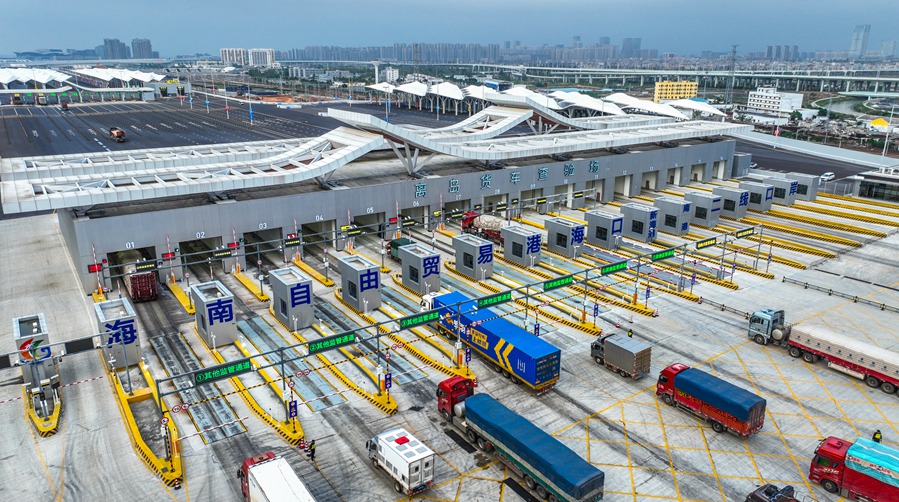
CICG: During the first month of island-wide special customs operations, what key data or concrete examples best demonstrate how the system is working in practice? What have been the biggest challenges, and how has Hainan addressed them?
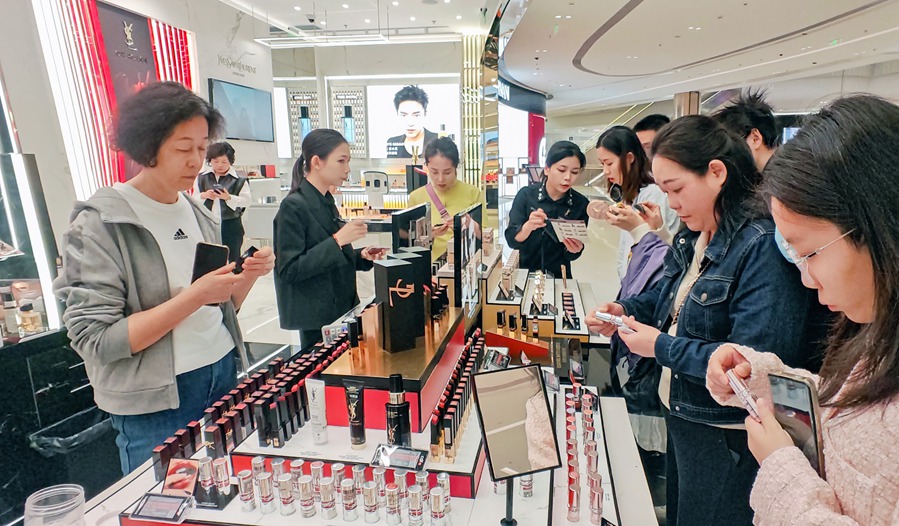
Feng Fei: Based on feedback from all sides, the island-wide special customs operations have run smoothly and in an orderly manner, with an encouraging start. Results are evident in the smooth flow of goods, the facilitation of personnel mobility and the aggregation of factors. First, policy dividends have been effectively unleashed. In the first month from Dec. 18 to Jan. 17, the number of entities benefiting from the “zero tariff” policy increased by over 10,000, maintaining steady growth. The value of imported goods reached 750 million yuan ($107.62 million), a year-on-year increase of 38.9%. Local enterprises, hospitals and research institutions in Hainan have also begun using zero-tariff goods and equipment. Enterprises in such sectors as tourism and transportation can also enjoy “zero tariff” benefits on aircraft, vessels, and vehicles used for operational purposes. A number of key policies have been rolled out, including those concerning the accumulation of value-added processing, value-added processing using locally produced Hainan inputs, “overseas-to-overseas” bonded maintenance and repair and the list of prohibited and restricted import and export goods and items. These measures have encouraged Hainan-based enterprises to extend their industrial chains and move up the value ladder. The duty-free sales supervised by customs reached 4.86 billion yuan, up 46.8% year on year, and the number of shoppers rose 30.2% year on year to 745,000. Second, the appeal of opening-up has grown significantly. The island province completed 32,800 flight take-offs and landings, a month-on-month increase of 9.8%. Inbound and outbound passenger trips through Hainan’s “first-line ports” reached 289,000, a year-on-year increase of 31.3%. Of those, 82,000 were visa-free entries, up 64% year on year. Additionally, the entry and exit of international vessels saw a year-on-year growth of 19.6%. The province has seen 26,800 new business entities, with the proportion of new enterprises in the total increasing from 42% before the start of special customs operations to nearly 80%. New foreign-invested enterprises grew by 13% year on year, and over 5,100 new foreign trade enterprises were registered, reflecting a further optimization of the economic structure. Siemens Energy has established its first gas turbine assembly base and service center in Hainan. Boao Fulong Cardiovascular Hospital, the first wholly foreign-owned hospital, has been approved to operate. Kazakhstan’s SCAT Airlines launched the country’s first seventh-freedom air route, connecting Sanya to Prague. An increasing number of companies are choosing Hainan for their operations, and the momentum of “developing in Hainan” remains strong. Third, internal and external conditions continue to improve. As the benefits of Hainan’s special customs operations take effect, duty-free shopping, trade, and cultural and sports tourism have become hot topics in domestic and international media and among the public. Areas of public concern, such as anti-smuggling and environmental protection, are also operating smoothly. Moving forward, the focus will shift from “establishing systems” to “optimizing systems for tangible results.”
Under special customs operations, the Hainan FTP operates on a framework of “opening the first line, controlling the second line and allowing free flow within the island.” Opening the “first line” refers to implementing a series of measures for free and convenient entry and exit between Hainan FTP and other countries and overseas regions. Controlling the “second line” refers to precise regulation of entry and exit between Hainan FTP and other regions on the Chinese mainland. Here, precise controls are applied to manage what has been liberalized at the “first line.” Within the island, goods and other factors of production can flow relatively freely. At present, the biggest challenge is how to implement efficient and precise control at the “second line,” ensuring security while maintaining convenient customs clearance. To address this, we are focused on achieving both flexibility and effective management. We are improving our regulatory service system through one-stop customs clearance, smart supervision, and credit management, while cracking down on smuggling, terrorism, online fraud, illegal gambling, drugs and other crimes. Our primary goal is to create a safe, stable, transparent and predictable development environment, giving global investors confidence and ensuring security for their investments and growth in Hainan.
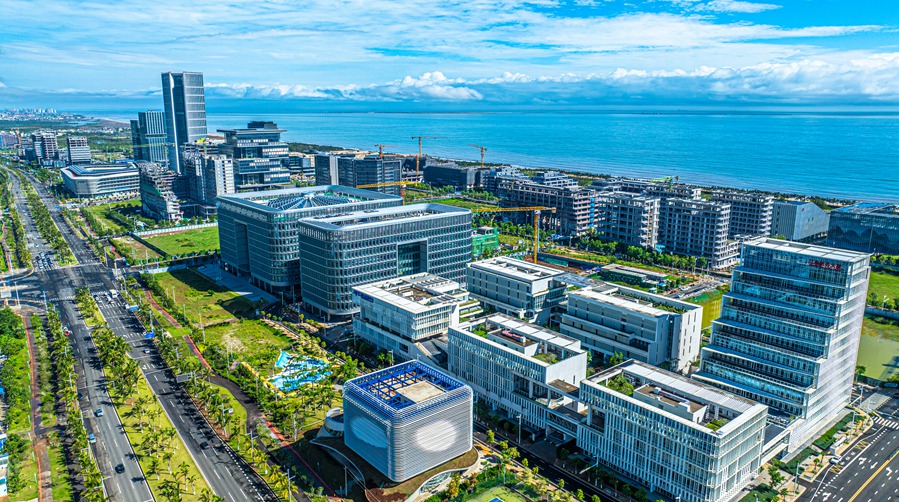
CICG: Strong intellectual property protection is a major concern for foreign investors. What specific measures has Hainan implemented to align with international trade rules and protect IP?
Feng Fei: Effective IP protection is a major factor in attracting foreign investment. In recent years, Hainan has been working to establish itself as a leader in IP protection, ensuring equal treatment for all business entities and rigorously combating infringement. In 2025, Hainan recorded the highest growth nationwide in its IP development index. On the legal front, the Hainan Free Trade Port Law of the People’s Republic of China includes specific provisions for IP protection in Article 23. Hainan has also enacted supporting regulations and established a dedicated IP court, providing strong legal safeguards. Regarding platform development, Hainan is focusing on key sectors such as the Nanfan seed industry, deep-sea technology, commercial aerospace, biomedicine and equipment manufacturing. We have established the Yazhou Bay Science and Technology City IP Special Zone and comprehensive IP service demonstration areas in Sanya and Haikou, as well as two sub-centers for overseas IP dispute resolution. In terms of international cooperation, Hainan is leveraging platforms such as the Yazhou Bay IP Special Zone and the Boao Forum for Asia to facilitate international IP exchanges. We are also strengthening collaboration with the World Intellectual Property Organization on IP protection, talent development and green, low-carbon development. Hainan is proactively aligning with high-standard trade rules, introducing 20 action measures under the Regional Comprehensive Economic Partnership (RCEP) and 16 measures for deepening cooperation with RCEP member states. We are also piloting alignment with rules under the Comprehensive and Progressive Agreement for Trans-Pacific Partnership (CPTPP), accelerating the development of internationally compatible frameworks in areas such as IP protection and fair competition. Protecting IP in accordance with the law is a key priority and firm commitment of the Hainan FTP. We will continue working diligently to do even better.
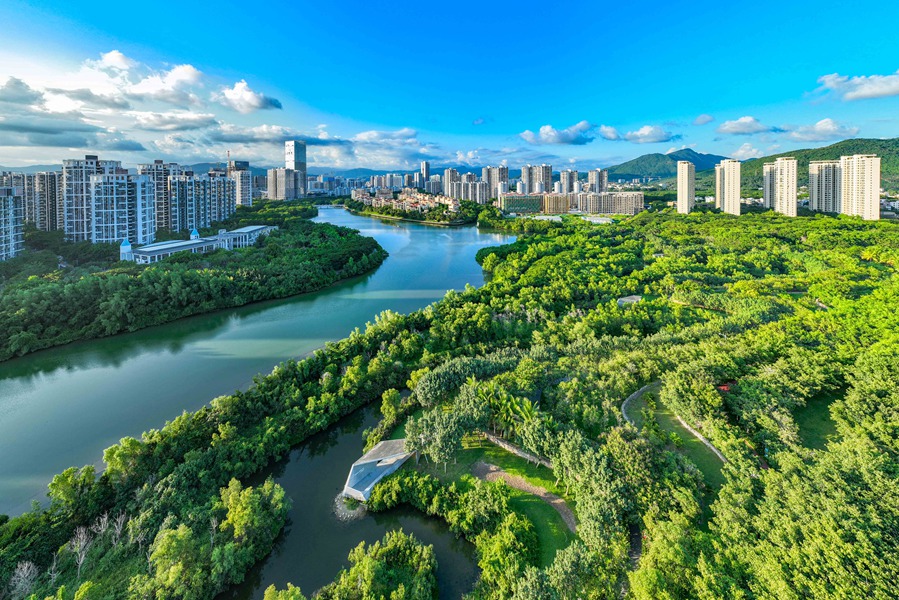
CICG: How can Hainan protect its unique ecological environment while pursuing rapid development? How does it strike a balance between maintaining ecological conservation above the specified redline and sustaining economic growth?
Feng Fei: Hainan is our country’s tropical treasure island. It is a year-round garden for the Chinese nation and a premier holiday destination for visitors from around the world. We remain firmly committed to building Hainan into an ecologically advanced province, advancing ecological protection, green development and improvements in people’s livelihoods in a coordinated manner. Our efforts are focused on three key areas. First, we are committed to ensuring that Hainan’s ecological environment only improves, never deteriorates. We have made it our goal to maintain top-tier environmental quality nationwide. The annual average PM2.5 concentration has remained stable at 12 micrograms per cubic meter for three consecutive years, while 99.7% of our nearshore waters boast excellent or good quality. We place strong emphasis on preserving the authenticity and integrity of ecosystems, with targeted protection and restoration efforts covering tropical rainforests, mangroves, coral reefs, seagrass beds and other representative ecosystems. Hainan took the lead nationally by issuing and implementing a provincial-level biodiversity conservation strategy and action plan (2023-2030) and ranks among the top in species diversity and endemic species. Second, we are steadily advancing the “2+N” landmark projects under the National Ecological Civilization Pilot Zone. These flagship initiatives serve as key drivers for enhancing both the quality and effectiveness of the pilot zone’s development. The Hainan Tropical Rainforest National Park contains China’s most concentrated, diverse, well-preserved and largest contiguous area of continental island-type tropical rainforest. With a biodiversity index of 6.28, it is comparable to the Amazon rainforest in Brazil. The population of the Hainan gibbon, the world’s most endangered primate and a flagship species, has rebounded from four groups totaling 30 individuals to seven groups with 42. We are accelerating the development of a low-carbon island. Clean energy now accounts for 70.4% of the island’s total power generation and 87.2% of its installed capacity. Hainan is pioneering a nationwide plan to phase out sales of fuel-powered vehicles by 2030. It currently ranks first nationwide in new energy vehicle market penetration and second in ownership share. We have established the Boao Zero-Carbon Demonstration Zone and launched new landmark initiatives such as the Zero-Waste Island program and the China-EU (Baoting) Green and Digital Innovation Zone. Third, we are steadily promoting the transformation of “lucid waters and lush mountains” into invaluable assets while advancing our dual-carbon goals. Our overarching objective is to decouple high-quality economic growth from carbon emissions, ensuring that Hainan’s products and services have a strong international competitiveness in terms of their carbon footprint. Our approach can be summarized as “three sets of three”: integrating the world’s most advanced green and low-carbon technologies, best practices and the most effective policy and institutional frameworks; coordinating environmental, social and economic objectives; and balancing the economic costs and benefits for enterprises, households and the government. In terms of implementation, we are accelerating the greening of industries and fostering eco-friendly industries. We are improving pilot mechanisms for realizing the value of ecological products and expanding pathways for translating “lucid waters and lush mountains” into tangible benefits. We are strengthening the role of the national park as a reservoir of water, food, wealth and carbon sink, enabling local communities to generate income through green industries and tourism and turning natural advantages into real gains. We are developing integrated systems for optimizing industrial carbon efficiency, reducing emissions in livable communities, enhancing carbon sinks and sequestration. We are also strengthening smart carbon management and establishing a long-term carbon governance framework. In addition, we are advancing research, practice and international cooperation on blue carbon standards, accelerating the green and low-carbon transition across all areas of economic and social development.
Hainan belongs not only to its local residents but also to all the Chinese people and the wider world. We regard a sound ecological environment as our greatest strength and most valuable asset, and we protect it as carefully as we protect our own eyes. By advancing high-quality development alongside high-level ecological protection, we are working to build Hainan an important showcase for the world, demonstrating the tangible achievements of putting Xi Jinping Thought on Ecological Civilization into practice.
CICG: How do opening-up policies directly benefit ordinary residents of Hainan? What measures has the government taken to ensure that people’s well-being keeps pace with the process of opening up, particularly in terms of prices, employment and consumer choices?
Feng Fei: The Hainan FTP with Chinese characteristics is one that is jointly built and shared, and that advances common prosperity. Whether people genuinely feel a sense of gain is a key measure of the Hainan FTP’s success. We adhere to a people-centered approach, doing our utmost within our means to safeguard and improve people’s livelihoods through development. Our goal is to ensure that residents enjoy tangible benefits from the construction of the Hainan FTP. Take income growth, for example. Approximately 80% of Hainan’s land is rural, about 40% of its permanent residents live in rural areas, and agriculture contributes around 20% of its GDP. Addressing issues related to agriculture, rural areas and farmers — particularly increasing farmers’ incomes — is a major priority in building the Hainan FTP. By leveraging the port’s opening-up policies alongside policies to strengthen agriculture, benefit farmers and enrich rural areas, we have achieved growth in disposable income for both urban and rural residents that has exceeded GDP growth for several consecutive years. Rural residents’ income growth has outpaced that of urban residents, and per capita income growth for the rural population lifted out of poverty has surpassed that of the general rural population. The urban-rural income ratio has narrowed to below 2-to-1, significantly better than the national average for the same period. In terms of employment, the port’s opening-up policies and favorable investment climate have attracted a significant number of high-quality enterprises to Hainan, generating quality job opportunities. We have intensified efforts to enhance employment quality. In the first three quarters of 2025, new urban employment in the province increased 8.4% year on year, maintaining a stable and positive trend. Regarding prices, we have established a balancing mechanism covering the production, transportation, sales and storage of essential commodities. We are strengthening the production and supply of vegetables and grains, enhancing cross-regional distribution of daily necessities and facilitating direct connections between municipal and county-level “vegetable basket” groups and local growers. This has kept essential goods prices at reasonable levels. On the consumption front, we are accelerating the development of an international tourism and consumption center. We have successfully hosted five sessions of the China International Consumer Products Expo, implemented successive trade-in policies for consumer goods and continuously advanced three key consumption areas: duty-free shopping, health care and education. For island residents specifically, we have optimized the offshore duty-free shopping policy and accelerated the implementation of a zero-tariff policy on imported goods for personal use. These efforts enable Hainan residents to access premium global products and high-quality services right at their doorsteps, ensuring that the benefits of opening-up directly improve their lives.
CICG: For international investors and entrepreneurs still observing and assessing the situation, what is the core message you want to convey?
Feng Fei: As mentioned, within less than a month of launching island-wide special customs operations, we have achieved notable results: goods are flowing smoothly, people are moving conveniently and business activity is concentrating. Currently, 22 Fortune Global 500 foreign-invested enterprises have established operations in Hainan. To date, 131 headquarters or regional headquarters have been established here, with investment from 180 countries and regions. Both the total volume and growth rate of foreign direct investment in Hainan rank among the highest nationwide. We genuinely sense that Hainan is becoming a new frontier for China’s opening-up, a new hub for regional mutually beneficial cooperation, and a new engine driving globalization.
Choosing Hainan means choosing opportunity; investing in Hainan means investing in the future. This is well-founded. First, the scale of opening-up is unprecedented. The Hainan FTP is designed to align with the world’s highest levels of openness, implementing trade and investment liberalization and facilitation policies that meet international standards. The zero-tariff policy has been significantly expanded, now covering 6,637 tariff lines — 74% of all lines. The port operates under China’s shortest negative list for foreign investment access and has pioneered the nation’s first negative list for cross-border trade in services. It has introduced 22 special measures to ease market access and taken the lead in opening sectors such as value-added telecommunications, education, health care and legal services to foreign investment. Second, the foundation for industrial development is solid. Drawing on Hainan’s opening-up policies, natural resources and trends in technological and industrial transformation, we are strengthening, extending and upgrading four leading industries: tourism, modern services, the high-tech sector and tropical high-efficiency agriculture. We are also developing strategic emerging industries such as seed industry, deep-sea exploration, commercial aerospace, green and low-carbon initiatives and the digital economy. At the same time, we are cultivating future industries including biomanufacturing, hydrogen energy, brain-computer interfaces and embodied intelligence. The goal is to build a modern industrial system that is advanced, distinctive and well-structured. The investment opportunities are vast. Third, the business environment continues to improve. We are accelerating the development of a first-rate business environment that is market-oriented, law-based, and internationalized. Dedicated government agencies have been set up to oversee its daily advancement, ensuring equal treatment and fair competition for both domestic and international investors. We have also established a one-stop international commercial dispute resolution mechanism integrating mediation, arbitration and litigation. Efforts to build a safe and peaceful island are being deepened as well.
Finally, we sincerely invite investors from around the world to invest and do business in Hainan. We are committed to providing full support and services to ensure your ventures succeed, you find the talent you need, and your businesses thrive. Let us share in the opportunities of this era as we build an open world economy together.