An Inclusive Partnership
 Facebook
 Twitter
 Linkedin
 Google +
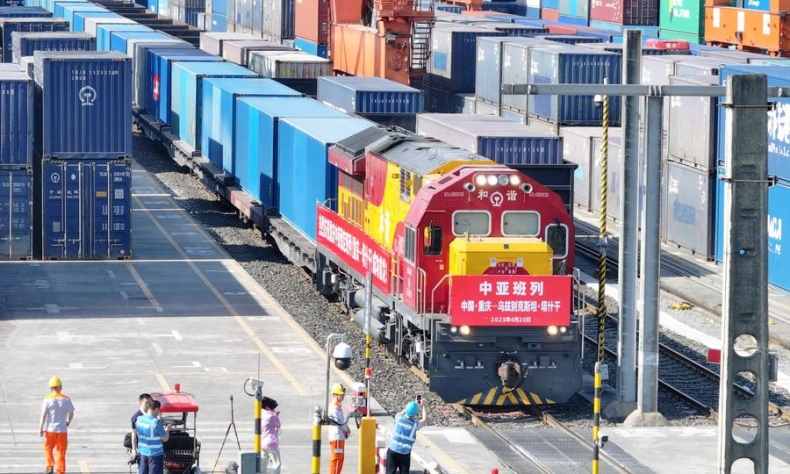
Against the backdrop of rising global trade protectionism and rampant unilateralism, the rapid growth of trade between China and Central Asia presents another possibility—a regional cooperation model based on equality, mutual benefit, openness and inclusiveness.
The latest official statistics show that in 2025, the total volume of trade in goods between China and Central Asian countries (Kazakhstan, Kyrgyzstan, Tajikistan, Uzbekistan and Turkmenistan) exceeded $100 billion for the first time. Also for the first time, China became the largest trading partner of all the five countries. This milestone in economic and trade relations is a result of intensified cooperation under the Belt and Road Initiative and is a sign of the health of China-Central Asia relations.
The trade volume between China and Central Asian countries has more than doubled in just 12 years since 2013 when the Belt and Road Initiative was first put forward. Improved infrastructure connectivity between China and Central Asian countries has created conditions for trade growth. The development of the China Railway Express—an international intermodal container train service between China and Europe and countries along the Belt and Road route, the China-Central Asia natural gas pipelines, and cross-border highway and railway networks have significantly reduced transaction costs and improved trade efficiency. Over 70 percent of China Railway Express trains bound for Europe now pass through Central Asian routes, transforming the region into a main artery for transcontinental trade.
Technologies such as cross-border e-commerce, digital payments and smart logistics are growing rapidly in Central Asia, reducing trade barriers for small and medium-sized enterprises. Together with these technologies, China’s well-developed digital economy model and Central Asia’s vast market potential are giving rise to new growth points for trade.
The trade structure between China and Central Asia has also undergone profound changes. In the past, China’s exports to Central Asia were mainly the products of light industry, while imports were primarily energy and minerals. Today, machinery and electric products, hi-tech products and electric vehicles have become important categories of China’s exports to Central Asia, while Central Asia’s exports of farm products, processed food and chemical products to China have increased remarkably, making the trade structure more diverse and balanced.
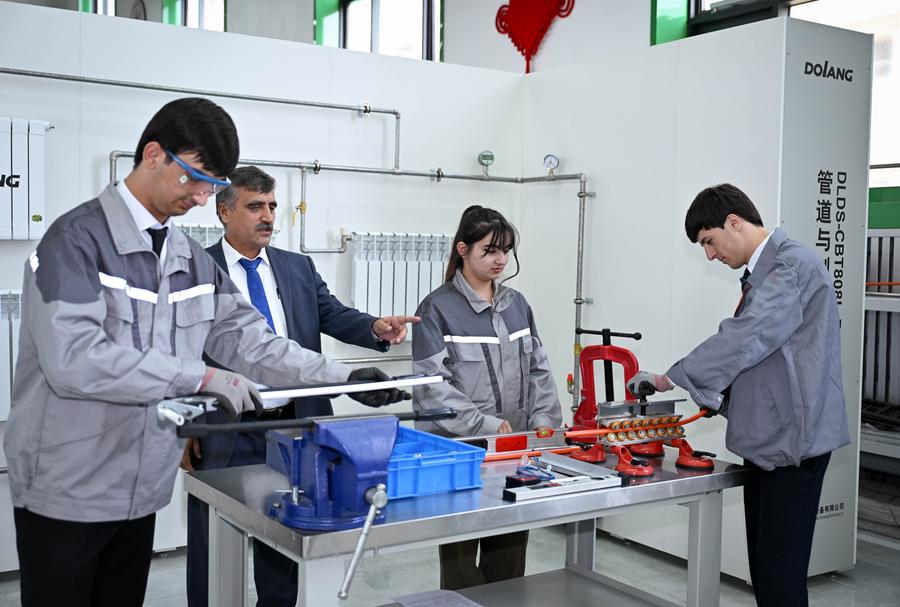
Historically, Central Asia has been most closely connected economically with Russia and Europe, but now, the shift eastward has become an irreversible trend. This change is not only reflected in trade data, but also in the restructuring of regional value chains and the convergence of development philosophies. China is now at a crucial stage in upgrading its industries and consumption, with a continuously growing demand for high-quality agricultural products and energy resources. Central Asian countries are in a period of accelerated industrialization and urbanization, with an urgent need for infrastructure construction, production capacity cooperation and technology transfer. This complementarity will provide lasting momentum for trade growth.
Economic integration is the cornerstone of regional stability. The deepening economic and trade relations between China and Central Asia have provided solid economic foundations for long-term peace and security in the region. Through the path of common development, cooperation among countries in areas such as counter-terrorism, de-radicalization and combating transnational crimes has been strengthened, forming a virtuous cycle in which development promotes security and security guarantees development. Cooperation between China and Central Asia has gone beyond traditional economic and trade exchange, and is forming a three-dimensional framework of a development community, a security community and a cultural community.
Against the backdrop of rising global trade protectionism and rampant unilateralism, the rapid growth of trade between China and Central Asia presents another possibility—a regional cooperation model based on equality, mutual benefit, openness and inclusiveness. This model does not target any third party, nor does it seek exclusivity. Instead, it aims to achieve win-win results by fostering incremental growth, so as to provide diverse options for the global trading system.
Reaching the $100-billion milestone is a validation of this cooperation model. It demonstrates that countries with different systems and cultures and at different stages of development can achieve common development through equal dialogue and mutually beneficial cooperation.