What Can Europe Learn from a More Open China?
 Facebook
 Twitter
 Linkedin
 Google +
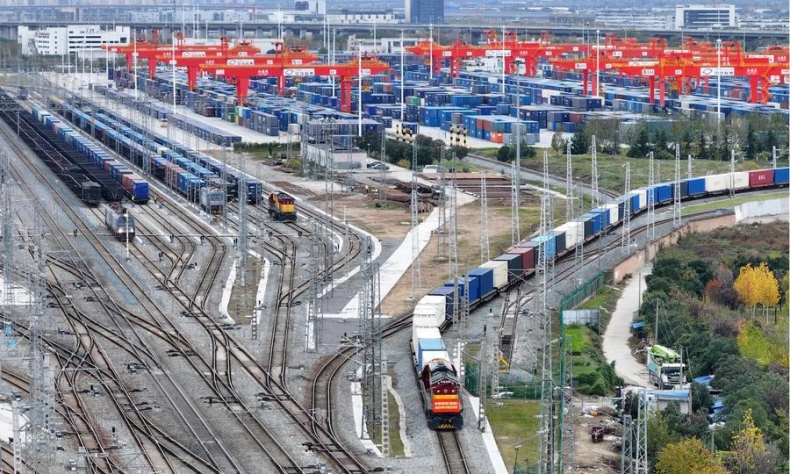
In an interconnected world, resilience is not found behind thicker walls, but in building more and stronger bridges. For the sake of European prosperity, it is a lesson worth heeding.
In medical practice, a wise doctor does not treat a fever by plunging the patient into an ice bath. The sudden shock may lower the temperature, but it risks systemic collapse. Instead, the proper treatment should support the body’s own resilience, combat the infection, and restore balanced health. Today, Europe faces a similar diagnostic challenge in its economic policy. Confronted with global instability, sluggish growth, and the so-called “strategic rivalry,” the dominant prescription in Brussels has been “de-risking” and “de-coupling” from Asian, and more specifically, Chinese supply chains. But is this truly the remedy of a wise economic advisor?
At the other end of the Eurasian continent, policymakers are drawing different conclusions from their analysis of the world’s economic outlook. China recently unveiled the Recommendations for its 15th Five-Year Plan (FYP) for 2026-2030, offering a radically different remedy for navigating a fragmented world. While Europe debates how much to decouple, China’s plan commits to deeper coupling. They call it “high-standard opening up.” For the European reader, understanding this strategy is not an exercise in geopolitical endorsement, but a crucial lesson in long-term economic logic. It compels us to examine our own choices: in the interest of European prosperity, security, and future well-being, is de-risking through disengagement really the wisest path?
Chinese policymakers see protectionism as a systemic pathology
The Recommendations for the15th FYP opens with a clear-eyed diagnosis of the global economy, one that any European economist would recognize: “Unilateralism and protectionism are on the rise…the international economic and trade order is facing grave challenges.” Thus, Chinese policymakers identify the same symptoms afflicting the world economy as we Europeans do: volatility, weaponized interdependence, and unfair competition.
Yet, the prescribed treatment diverges radically. Europe’s response, embodied in the European Economic Security Strategy, focuses heavily on defending the European market: screening inbound investment, tightening export controls, and raising tariffs on Chinese imports. We are trying to avoid economic “contagion” by staying at home and closing our doors.
China’s plan, conversely, argues that the pathogen is protectionism itself. The remedy, therefore, is not more of the same poison, but a strengthened immune system built through deeper, smarter integration. The Recommendations states, “Opening up and cooperation for mutual benefit are integral to Chinese modernization.” This reveals the strategic importance Chinese policymakers place on economic openness. For them, it is clearly tied to their highest priority: comprehensive national development. While Europe often frames openness as a vulnerability to be managed, China frames it as the very source of strength, innovation, and security for its 1.4 billion people.
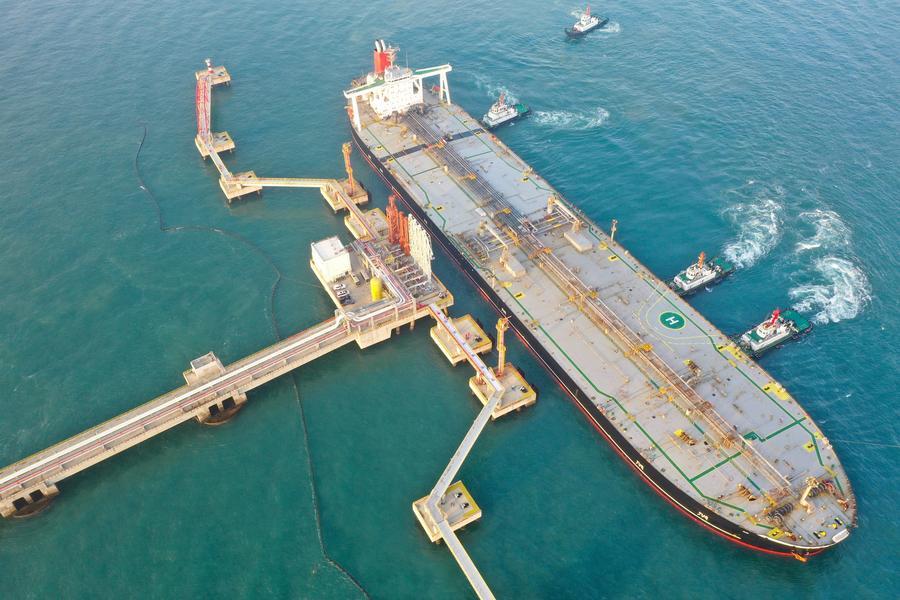
Institutional openness as resilience therapy
So, what does “high-standard opening up” actually entail? It is a shift from simply trading goods to integrating systems. The plan emphasizes “alignment with high-standard international economic and trade rules.” They may include those in the Comprehensive and Progressive Agreement for Trans-Pacific Partnership (CPTPP) and Digital Economy Partnership Agreement (DEPA) that China seeks to join. This means creating a “market-oriented, law-based, and internationalized business environment.”
For Europe, this is a critical lesson. China is betting that long-term security comes not from controlling every link in the supply chain within its borders, which is an impossible task, but from being an indispensable, rule-abiding node in the global network. By making its markets predictable and its rules compatible, it makes economic de-coupling from China a more costly and less sensible choice for its foreign partners, including those in Europe.
The data supports this theory. Despite geopolitical tensions, European industrial giants like Siemens, Airbus, and IKEA are not retreating from China. On the contrary, they are deepening their roots. At the 2025 China International Import Expo (CIIE), companies like Kärcher showcased how China’s dynamic market acts as a rapid innovation lab for global products. IKEA has built its entire value chain in the country, including production, development, and retail. As the World Openness Report 2025 released at the 8th Hongqiao International Economic Forum in Shanghai noted, China’s openness index has risen consistently for decades. These businesses are voting with their investments, testifying that resilience comes from diversified presence, not retreat.
Lessons for the European economy
Europe’s de-risking agenda confuses symptoms for causes. The symptom is a perceived over-dependence on a single supplier for a critical input. The cause, however, is not trade itself, but a lack of diversified, rules-based trade. The Chinese plan prescribes a different cure: treat the issue by expanding and institutionalizing connections, not severing them.
A patient cannot heal by withdrawing into isolation or limiting his diet to a single type of food. Health requires diverse nutrition and social connections. Likewise, China is pursuing economic health by positioning itself as a reliable, high-quality supplier, upgrading its institutional quality controls and expanding market access, including the removal of all foreign investment restrictions in manufacturing.
Europeans must understand that strategic autonomy cannot be achieved alone. True autonomy is the capacity to shape rules and thrive within interconnected systems. An isolated fortress may feel secure, but it is a road to stagnation. By contrast, China’s Recommendations for its 15th FYP posits, “It’s essential for us to consolidate security in the course of development and pursue development in a secure environment.” Chinese policymakers dare to see security and openness as synergistic. Do we dare to do the same?
The vital question for European citizens
This brings us to the core interest of the European citizen: What serves their long-term well-being?
Jobs & Growth: Decoupling rhetoric often overlooks the European livelihoods tied to complex supply chains that involve China. From German auto workers to French aerospace engineers, prosperity depends on integrated production. The Chinese market supports over 1.4 million EU jobs directly. A policy of closure invites a painful economic contraction.
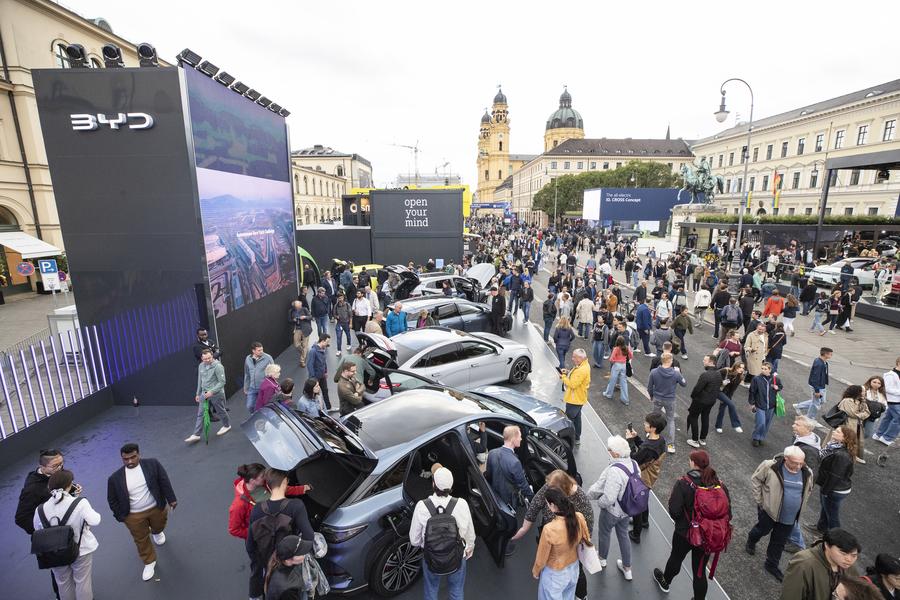
Innovation & Green Transition: Europe’s climate goals are enormously costly. Achieving them requires affordable technology and rapid innovation – areas where China leads as the world’s largest producer and market for solar panels, batteries, and EVs. Cutting off collaboration and trade in these sectors doesn’t de-risk Europe’s transition; rather, it jeopardizes it. Going it alone risks slowing progress and raising costs for European taxpayers and consumers.
Inflation & Living Standards: Disrupting functional supply chains is a sure path to inflation. Reshoring production to higher-cost regions or limiting import options raises prices for everything from electronics to clothing. Protectionist tariffs don’t make us richer; rather, they erode our purchasing power as prices rise.
China’s 15th FYP, in its unwavering commitment to openness, implicitly holds up a mirror to Europe. It shows that the most confident, forward-looking response to uncertainty is not to hide, but to engage on your own terms, with clear rules, and from a position of strength built on integration.
The suggestion for Europe is not to copy China’s model, but to understand its strategic logic. The path to long-term economic resilience may lie not in greater insulation, but in a more assured, rules-based, and forward-looking openness. This means working through multilateral trade systems like the WTO to make rules transparent and fair for all. It also means finalizing strategic trade agreements and engaging in robust institutional dialogue with partners to manage competition. In short, it means competing by upgrading, not by walling off.
The fever of geopolitical tension is real. But before we accept the chilling treatment of de-coupling, we must ask: Are we treating the patient, or making him sicker? China’s Recommendations for its 15th FYP, a document of rational strategic calculus, suggest that in an interconnected world, resilience is not found behind thicker walls, but in building more and stronger bridges. For the sake of European prosperity, it is a lesson worth heeding.
Thomas Karlsson is a researcher with the Belt & Road Institute in Sweden.