ICE Under Fire
 Facebook
 Twitter
 Linkedin
 Google +
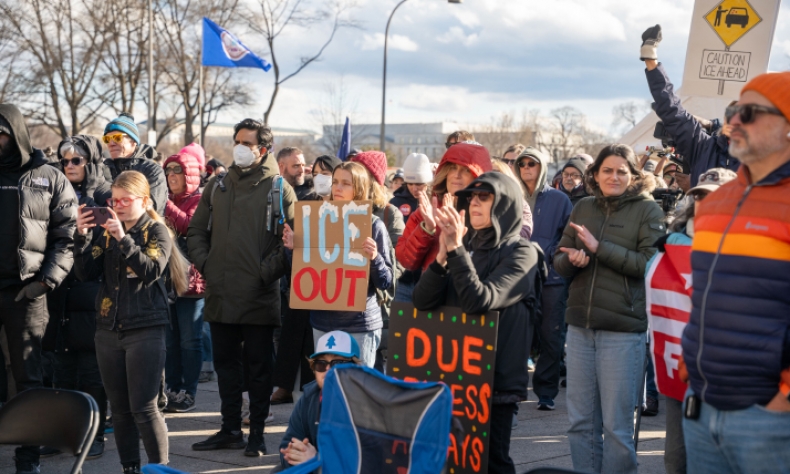
Americans are mobilizing more and more to defend beleaguered immigrant communities and restore constitutional protections and civil liberties that the American system of government has traditionally striven to uphold.
On January 19, Martin Luther King Jr. Day, a holiday commemorating Dr. King’s contribution to the civil rights movement, activists in Brooklyn, New York, marched across the Brooklyn Bridge into Manhattan in protest against Immigration and Customs Enforcement (ICE), the U.S. federal agency tasked with enforcing the country’s immigration laws.
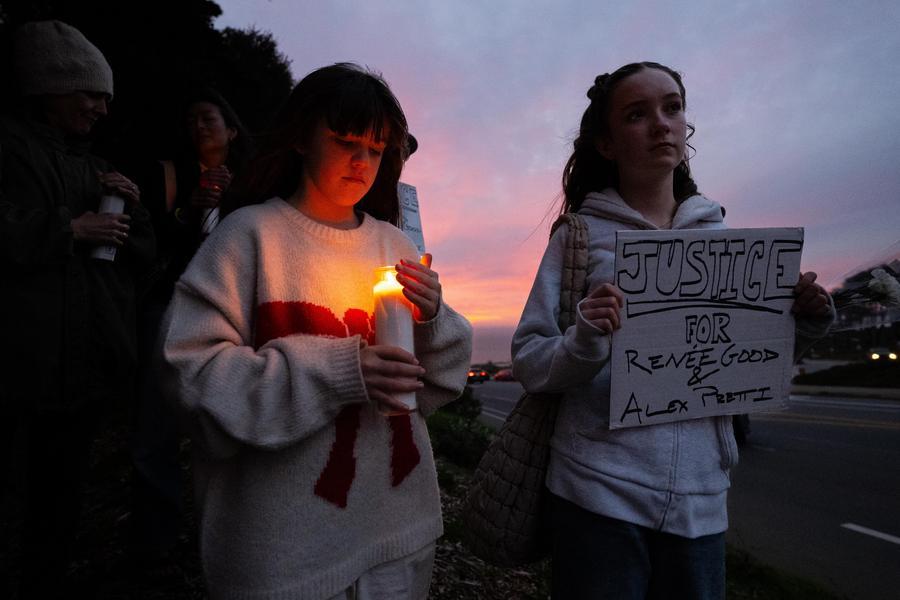
The protestors chanted the name Renee Good, a 37-year-old Minneapolis woman who was fatally shot by ICE officer Jonathan Ross two weeks ago.
A former dental assistant and writer who was the mother of three children, Good was shot as she attempted to drive away from ICE agents who had ordered her to get out of her vehicle.
Federal law enforcement officials and President Donald Trump defended the shooting, saying that Ross acted in self-defense and that Good ran him over with her car.
Video footage, however, contradicts that assessment, showing that the ICE agents who were trying to get Good out of the vehicle were not at risk of any physical harm.
Afterward, thousands of people protested Good’s killing in Minneapolis and in cities across the U.S. as Minneapolis Mayor Jacob Frey and Minnesota Governor Tim Walz called on ICE to end their presence in the city.
Good’s killing was the ninth time across five states that ICE agents had opened fire on people since September 2025, with four other people having been killed during federal deportation operations.
One of the ICE victims, Silverio Villegas-González was a father, originally from Mexico, who worked as a cook. He was shot and killed by ICE officers after he tried to flee from them in his car in a suburb of Chicago, Illinois. Like Good, González was unarmed.
ICE was first established in 2002 under the Homeland Security Act of 2002, which was introduced in the wake of the September 11 terrorist attacks of 2001. The agency has been increasingly involved in violent confrontations as a result of the Trump administration’s sweeping deportation efforts and shift in immigration enforcement to more aggressive “showy sweeps” over targeted arrests.
Protests broke out last spring after ICE agents were shown on video kidnapping a Tufts University Ph.D. student, Rumeysa Ozturk, a Turkish national who had a valid student visa. Ozturk was targeted by ICE because she had written an op-ed in the Tufts University newspaper advocating for the university to divest from Israeli companies and take a stronger stance against the war in Gaza. After terminating Ozturk’s visa, Secretary of State Marco Rubio called her a “lunatic” and asserted that the federal government had a “responsibility to deport any international students in the U.S. who participated in disruptive protest behavior on campus.”
Ozturk had, in fact, not been involved in any student protests and her detention followed a pattern affecting international students across the country.
On January 9, Jake Johnson wrote on independent, non-profit news platform Common Dreams that since Trump began his second term in January 2025, ICE has been carrying out a “reign of terror” in American city streets, “racking up an appalling record of abuses and alleged crimes, including kidnapping, beatings and murder.”
According to Johnson, “seemingly nowhere is safe; ICE has raided houses of worship, schools, hotels, restaurants, farms, and retail stores.”
Immigrants detained by ICE have accused agents of horrific abuse, including sexual assault.
One teenager held at Fort Bliss, the largest immigration detention center in the U.S., alleged that an ICE officer broke his tooth and “crushed” his testicles while another “forced his fingers deep into my ears,” causing lasting damage.
Those who have turned out in the streets to protest ICE’s activities—and those who have tried to stop agent abuses—have also been subject to attacks, including with tear gas.
Some of the worst ICE abuses have occurred in Minnesota. The focus of an intensified ICE drive dubbed “Metro Surge” targeted the state’s Somalian community, which Trump accused of being responsible for fraud in government programs.
ICE agents have arrested more than 2,400 people in Minneapolis since late November 2025, according to the Department of Homeland Security.
The Immigrant Law Center of Minnesota reported that “communities across the state have been terrorized by masked, armed agents who are indiscriminately and aggressively harassing and kidnapping individuals at school, at work, on the streets, and in their homes.”
On the same day as Good’s killing, ICE conducted a raid at a nearby Minneapolis high school. One local resident who witnessed the raid said she saw “one teacher get tackled” as educators and other school employees tried to keep the agents away from students.
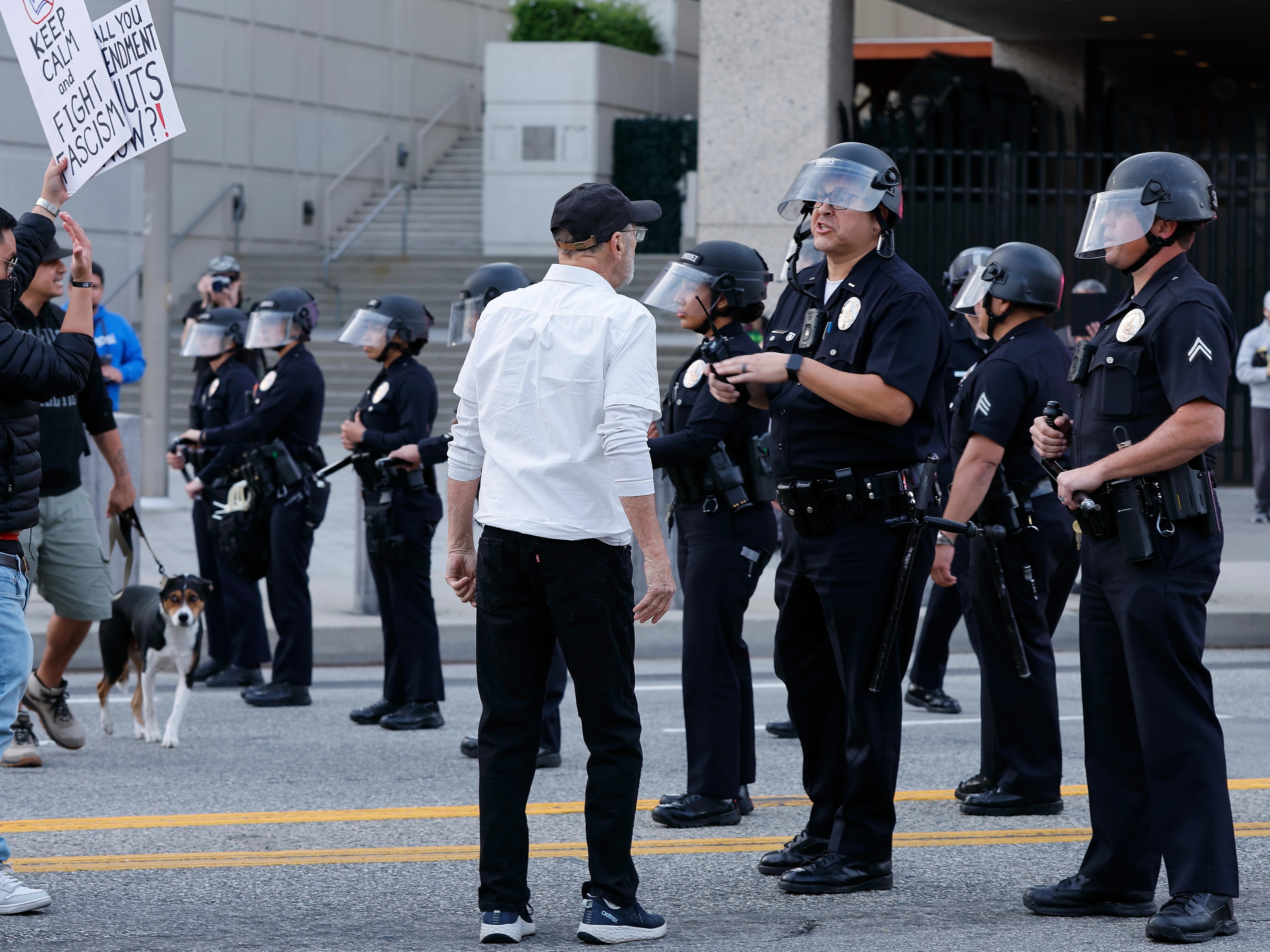
These and many other abuses committed by ICE exemplify the turn toward greater authoritarianism under the Trump administration and advent of a full-fledged police state in the U.S.
The situation would have surely horrified the U.S. founding fathers, who placed a primacy on civil liberties and warned of the dangers of having a large standing army on American soil that could compromise the people’s freedom.
Rather than being a functioning democracy, the U.S. is today an oligarchy run by billionaires who buy off politicians.
During the 2024 election cycle, Trump received a king’s ransom from wealthy individuals and corporations that benefit from his ability to channel popular anger at the rising inequality into the scapegoating of immigrants and minority groups whom Trump and others in the Make America Great Again (MAGA) movement blame for America’s social problems.
This latter political strategy is similar to one adopted by German Fascists in the 1930s led by Adolph Hitler, who blamed liberals and Jews for Germany’s humiliation in World War I and at the Versailles Treaty and for causing the Great Depression that devastated Germany’s economy.
Many of Trump’s political donors directly profit from the federal government contracts going to ICE and other law enforcement agencies that have been generously subsidized, not only by Trump but also by the previous Biden administration.
While Trump and his supporters double down in trying to defend ICE’s conduct, the popular pushback shows that Trump has overreached in his authority and that the public cannot be intimidated into submission.
Americans are mobilizing more and more to defend beleaguered immigrant communities and restore constitutional protections and civil liberties that the American system of government has traditionally striven to uphold.
The likely outcome of this mobilization is a scaling back of ICE’s operations—particularly after the Democrats reclaim Congress in the 2028 mid-term elections—and eventual return to the pre-Trump norm where immigrants faced persecution in the U.S. but not to the same extent that they are facing now.
The author is a professor of history and managing editor of CovertAction Magazine, and also author of eight books on U.S. foreign policy, including Warmonger: How Bill Clinton’s Malign Foreign Policy Shaped the U.S. Trajectory From Bush II to Biden (2024) and Obama’s Unending Wars (2019).