The Perilous Path of Japan’s New Leadership
 Facebook
 Twitter
 Linkedin
 Google +
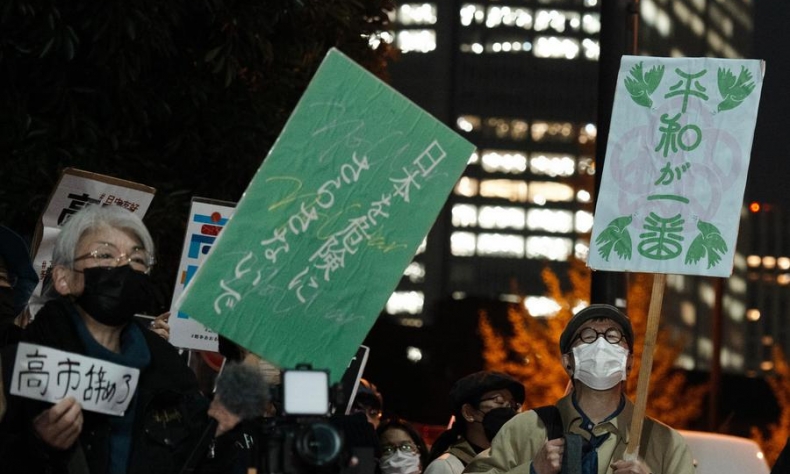
The blowback from Japan’s militaristic turn will be far more extensive—and increasingly painful—for Japan itself.
Back in 1980—a lifetime ago now—I graduated from university and took a position at the Sputnik International Tourism Bureau in the then Soviet city of Irkutsk. I was soon dispatched to the regional branch of the Soviet-Japan Friendship Society, then an organization with considerable clout. The society’s leaders on both sides were war veterans who understood, viscerally, what armed conflict truly means.
In 1966, Irkutsk forged a sister-city partnership with Kanazawa, Japan. Among the driving forces behind this was Shigeki Mori—father of future Prime Minister Yoshiro Mori—born in 1910 and shaped by the experience of war. He became a vocal champion of building friendly ties with the Soviet Union and China. Fast forward to today, the sister-city bond, along with the cultural and economic links it once sustained, has essentially withered away. The reason, I believe, lies partly in how Japan’s younger generation has been raised—steeped in revanchist sentiment, consumed by hubris and self-satisfaction.
Pulling out all the stops
Many young Japanese remain oblivious to the over 3 million Japanese soldiers and civilians who perished in the military adventurism waged by the militarist regime that once ruled their nation. They have no grasp of the atrocities Japanese forces committed across occupied territories, have never heard of the Nanjing Massacre of 1937-38, a period of mass violence and atrocities committed by the Imperial Japanese Army in Nanjing, China, and some even labor under the delusion that it was the Soviet Union, not the U.S., that dropped atomic bombs on Hiroshima and Nagasaki. Japan’s propaganda machinery has pulled out all the stops, leaving an entire generation with no understanding of whom Japan wronged, or why apologies are even warranted.
Today’s young Japanese are being fed a steady diet of aggression and revanchism, creating pent-up hostility that seeks release beyond the nation’s borders. Japanese society still romanticizes the colonial era when Taiwan fell under its militarist rule. Tokyo has never truly abandoned its dream of reasserting influence over what is, in fact, an integral Chinese province. Should Taiwan be reunified with the Chinese mainland, these ambitions will be definitively foreclosed. This explains why Japan, while paying lip service to the one-China principle, actively works to bolster separatist forces. Case in point: Last November, new Prime Minister Sanae Takaichi pledged that Japan would enter the fray militarily should fighting break out across the Taiwan Straits.
This posturing found little international support. Washington reaffirmed its commitment to a peaceful resolution of the Taiwan question, while Russian President Vladimir Putin dealt a preemptive strike against Japan and its new leader—Moscow announced indefinite travel bans on 30 Japanese nationals, delivering a stinging rebuke to Takaichi’s bravado.
Clinging to an illusion
The sharpest reaction, predictably, came from China—and not just from official channels. Ordinary citizens also voiced fury at such brazen provocation from a neighbor whose ties with China are already strained by historical grievances. Chinese leadership had, in good faith, sought to dial down bilateral tensions. When President Xi Jinping met with Takaichi on October 31, 2025, on the sidelines of the 32nd Asia-Pacific Economic Cooperation Economic Leaders’ Meeting in Gyeongju, the Republic of Korea, nothing suggested an imminent rupture.
Yet Takaichi—eager to shore up support among hawkish voters, now drawn predominantly from younger demographics—crossed a red line on the Taiwan question.
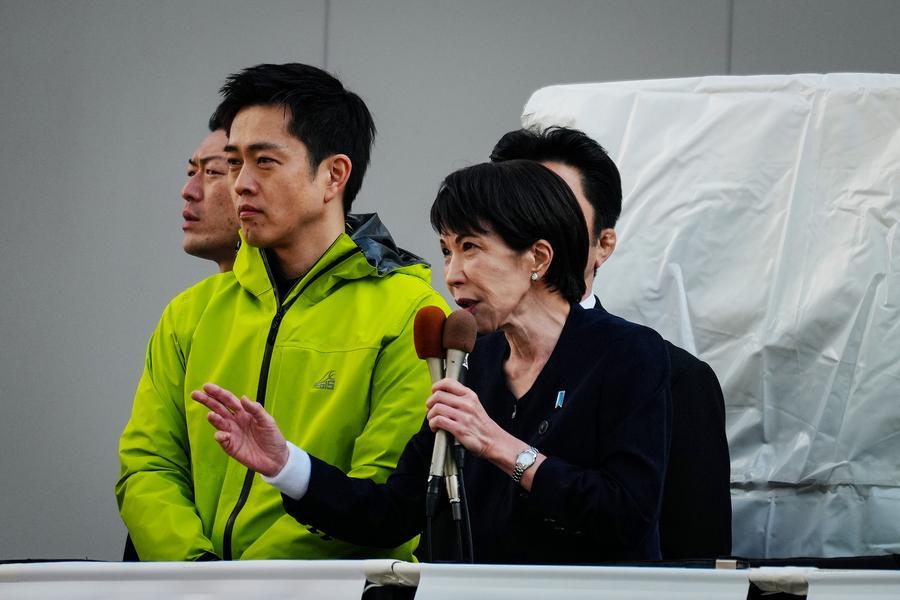
Compounding the provocation, a security adviser in Takaichi’s administration subsequently floated the idea that Japan should develop its own nuclear arsenal rather than merely hosting American warheads on Japanese soil. For China—which suffered over 35 million military and civilian casualties in the war against Japan last century—such rhetoric is unconscionable. Beijing’s insistence that Tokyo account for its wartime atrocities is not about humiliation; it’s about securing ironclad assurance that such aggression will never be repeated. Put simply, China wants Japan to grasp an undeniable truth: A return to militarism would spell Japan’s own ruin.
As noted earlier, I spent years working on sister-city relations with Japan, immersing myself in the country’s culture and history through repeated visits. I also claim some familiarity with China. Here’s what strikes me: The Japanese have internalized their subservience to the Americans and seem entirely at peace with it. The Chinese, by contrast, across millennia of history, have never accepted this kind of deep-seated, psychological subjugation.
This is why nothing is more sacred to China than territorial integrity. This is why Beijing reacts so forcefully to any encroachment on its sovereignty. Now consider, by contrast, what happened to Okinawa. After World War II, it became an American possession in all but name—a military outpost anchoring U.S. power in the Far East. Even when Washington returned administrative control to Tokyo in 1972, the Americans never left. The bases remain to this day.
Japan remains, in effect, under American occupation. Various sources put the number of U.S. facilities on Japanese soil that operate beyond Tokyo’s legal jurisdiction at roughly 100. Imagine such an arrangement in China—it’s inconceivable. Anti-base movements do exist in Japan, but they’re toothless and utterly ineffective. The Japanese rationalize this state of affairs by clinging to the illusion that the Americans are there to keep them safe.
The question is: why?
Yet, one must ask: From whom, exactly, are the Americans protecting Japan? Russia? China? What conceivable motive would Russia have to attack Japan? And why would China—a nation working tirelessly to de-escalate military conflicts; a country staking its prosperity on globalization and international trade; a society eager to see its citizens travel the world safely as tourists while welcoming visitors in return—why would such a nation launch a war?
Chinese tourists have long been Japan’s largest source of visitors. According to the Japan National Tourism Organization, between January and July 2025, travelers from China accounted for the single biggest cohort—5.69 million arrivals. That translates into massive revenue for Japan’s economy. Yet thanks to the new prime minister’s populist saber-rattling, Tokyo now risks losing this cash cow virtually overnight. And that’s merely one casualty of Takaichi’s recklessness. The blowback from Japan’s militaristic turn will be far more extensive—and increasingly painful—for Japan itself.
We in Russia would also prefer friendship with Japan over hostility. Many Russians remain fascinated by the history and culture of the Land of the Rising Sun. But I fear that as long as Japan remains, in practice, an American client state, such hopes are dim.
The author is editor in chief of Russia and China magazine.