Long Vistas, Fruitful Outcomes
 Facebook
 Twitter
 Linkedin
 Google +
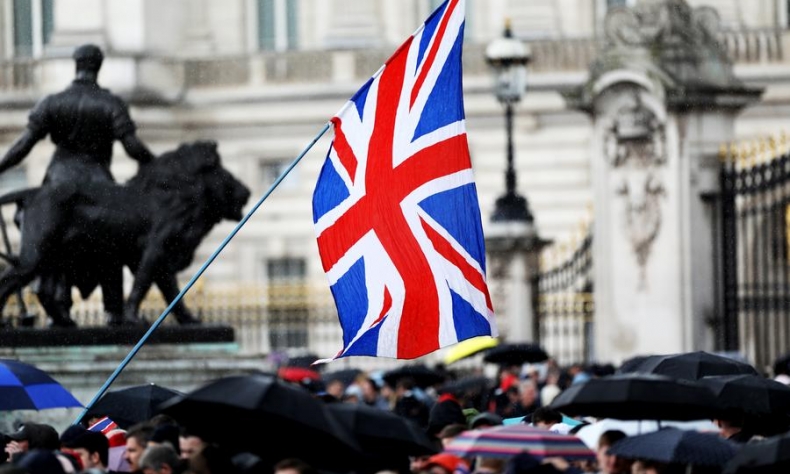
China and the U.K. need to see history from a broader perspective, rise above differences, respect each other, and turn the vast potential of China-U.K. cooperation into real progress.
The China visit by British Prime Minister Keir Starmer has been widely deemed a success, whether viewed from the standpoint of general atmosphere, or “mood music,” or in terms of economic and political outcomes.
Perhaps the greatest success was that it took place at all – and proceeded without any substantive mishaps. As Starmer himself put it, in the last few years the two countries’ bilateral relations had been plunged into an “ice age.” As a result, it had been nearly eight years since a British Prime Minister, Theresa May, had set foot in China. In contrast, French President Emmanuel Macron has made three visits, the most recent in last December, while the leader of Germany has also visited thrice, with a fourth visit scheduled for this month. In addition, Starmer was the third European head of government to visit China this year, being preceded by those of Ireland and Finland, and the second from the Anglophone Five Eyes – an intelligence-sharing alliance among five Anglophone countries: the United States, the United Kingdom, Canada, Australia, and New Zealand, following the visit by his Canadian counterpart. The President of the Republic of Korea, with his January visit, made up the coterie of traditional Washington allies feeling compelled to hedge against the increasingly maverick and unstable behavior of the present occupant of the White House.
Starmer was thus beating an already well-trodden path, and chose to position his approach in terms of pragmatism and common sense. The almost certain grant by China of unilateral visa-free entry for stays of up to 30 days will be welcomed by British tourists and businesspeople alike and will promote people-to-people engagement. The official website of the British government stated that the Prime Minister had “secured billions in exports and investment deals.”
The reduction of tariffs on whisky from 10 percent to 5 percent will be welcomed in Scotland. China is currently the 10th biggest export market for Scotch whisky. Hopefully, Wales’s Penderyn whisky and Northern Ireland’s Bushmills will also leverage the new dispensation in their export drives.
There was good news for Liverpool, with the city being chosen as the first-ever European headquarters for a major Chinese vehicle manufacturer. Chery Commercial Vehicles (CCV) will open a major new facility there, creating large numbers of high-value jobs for local people and positioning Liverpool, where the Ford’s Halewood plant once employed some 14,500 workers, and the wider Merseyside region in the U.K., at the forefront of Europe’s fast growing electric vehicle sector, supporting research, engineering, innovation and commercial development.
Meanwhile, British pharmaceutical giant AstraZeneca has reached an agreement with China, pledging to invest US $15 billion in the country by 2030, to expand its scale of pharmaceutical production along with research and development. According to Starmer, this win-win initiative will reinforce the country’s leading position in the life sciences sector.

Whilst the visit had an almost relentlessly economic focus, everything ultimately rests on a political foundation. Stressing the need for boldness and strategic farsightedness, Chinese President Xi Jinping told his visitor: China and the U.K. need to see history from a broader perspective, rise above differences, respect each other, and turn the vast potential of China-U.K. cooperation into real progress. This will open up new prospects for China-U.K. relations and cooperation, for the good of both peoples and the whole world.
On the eve of his visit, in an interview with the financial news service Bloomberg, Starmer insisted that, whilst he was often called upon to choose between countries, that was not his way, indicating rather an intention to pursue what might be termed a tripod foreign policy embracing the United States, the European Union and China. However, the fact that the legs of this tripod are of different lengths might attest to a certain inherent instability.
Asked what he thought of Starmer trying to forge closer business ties with China, U.S. President Donald Trump said: “Well, it’s very dangerous for them to do that,” adding, “It’s even more dangerous, I think, for Canada to get into business with China.”
Moreover, Starmer’s welcome moves to improve British relations with China also face opposition from powerful quarters at home. The days when government and opposition generally maintained a position of bipartisanship when it came to diplomacy and representing the country abroad, now seem dead and buried. Nigel Farage’s far-right Reform U.K. would generally be considered to have little in common with the Liberal Democrats. But they were almost equally vociferous in excoriating Starmer’s mission.
To face all this down may require not simply common sense and pragmatism but degrees of political skill and courage.
There is, of course, a way forward. Speaking at the closing ceremony of the 2026 U.K.-China Business Council meeting, which formed part of the British Prime Minister’s program, Chinese Premier Li Qiang said that China and Britain should continue to carry forward the “ice-breaking spirit” and tighten their bonds of cooperation. In doing so, the Chinese Premier clearly referred not simply to his British counterpart’s words about an ice age of a few days previously, but more significantly invoked China’s continued respect for the July 1953 ‘Icebreaker Mission’ – the first business delegation of its kind from any Western nation following the founding of New China – that led to the formation of the 48 Group, with its core values, inspired by then Chinese Premier Zhou Enlai, of equality and mutual benefit. If correctly utilized, that historical memory retains a powerful ability to drive a healthy bilateral relationship that will promote both prosperity and peace. That some 60 leaders of business, culture, the arts, and sports accompanied Starmer to Beijing and Shanghai shows that the ice-breaking spirit is alive and well. It needs to be pursued with the same courage and drive as was shown by the pioneers of more than 70 years ago.
Keith Bennett is vice chairman of the U.K.’s 48 Group Club, co-editor of the London-based The Friends of Socialist China, and a veteran China specialist.