U.K. Prime Minister’s China Visit Signals a Pragmatic Turn in Bilateral Relations
 Facebook
 Twitter
 Linkedin
 Google +
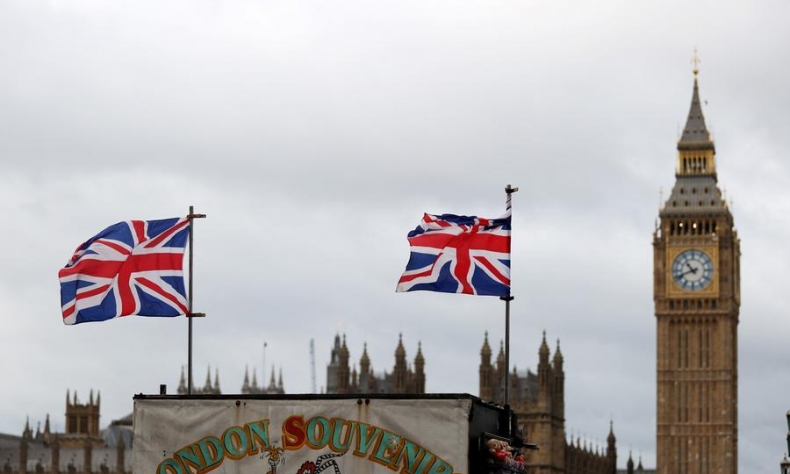
Prime Minister Starmer’s visit to China reflects a clearer alignment between Britain’s foreign policy objectives and its economic realities, as well as recognizes the limits of ideological framing in a complex global environment.
The recent visit of U.K. Prime Minister Keir Starmer to China marks a significant shift of Britain toward a more pragmatic and stability-oriented approach in Sino-British relations. After years of political tensions and limited high-level engagement, this trip underscores London’s intent to rebuild ties based on mutual economic and strategic interests.
This shift does not mean a fundamental change in Britain’s values, nor does it imply a strategic realignment away from its long-standing partners. Rather, it reflects a reassessment on the part of Britain of how it can best pursue its economic and diplomatic interests in a more fragmented and uncertain global environment.
From ideological divisions to pragmatic engagement
Post-Brexit British foreign policy toward China has often been reactive and episodic, shaped as much by domestic political debate as by developments in the bilateral relationship itself. China policy became entangled with broader questions about national identity, alliance politics, and the U.K.’s post-EU role in the world.
Starmer’s visit, however, signals a deliberated effort to foster predictability and coherence. British officials have increasingly emphasized the need for a “pragmatic and rational” China policy – one that clearly delineates areas of cooperation, competition, and disagreement, avoiding the pitfalls of a one-dimensional narrative.
This recalibration is closely linked to Britain’s search for a sustainable definition of “Global Britain.” Outside the European Union, the U.K. faces the practical challenges of securing market access, attracting investment, and maintaining relevance in global economic governance. In this context, disengagement from China has proven neither realistic nor cost-free.
At the same time, Britain is seeking to maintain a careful strategic balance between Washington and Beijing. While the transatlantic alliance remains central to U.K. foreign policy, there is a growing recognition that automatic policy alignment with the United States on China-related issues may constrain Britain’s ability to pursue its own economic interests. A more autonomous, pragmatic posture allows London greater flexibility without undermining its core security commitments.
Economic considerations at the forefront
Economic pragmatism lies at the center of the Prime Minister’s visit. Britain’s domestic economic challenges – modest growth, persistent productivity gaps, and fiscal pressure – have sharpened the government’s focus on trade, investment, and innovation-led growth. From this perspective, China is not merely a strategic issue, but a significant economic reality.
The composition of the British delegation reinforced this emphasis. The prominent presence of business leaders from the sectors of finance, energy, life sciences, and advanced manufacturing underscored the economic priorities of the visit. For many British firms, the Chinese market remains critical, not only in terms of scale, but also as a source of technological collaboration and long-term growth opportunities.
Several areas of cooperation are particularly salient. Green finance and sustainable investment align with Britain’s strengths as an international financial center and China’s expanding role in renewable energy and climate-related infrastructure. In life sciences, opportunities exist for collaboration across research, clinical development, and healthcare delivery, especially as China continues to invest heavily in medical innovation. New energy technologies, including battery storage and hydrogen, are further expanding the scope for mutually beneficial partnerships.
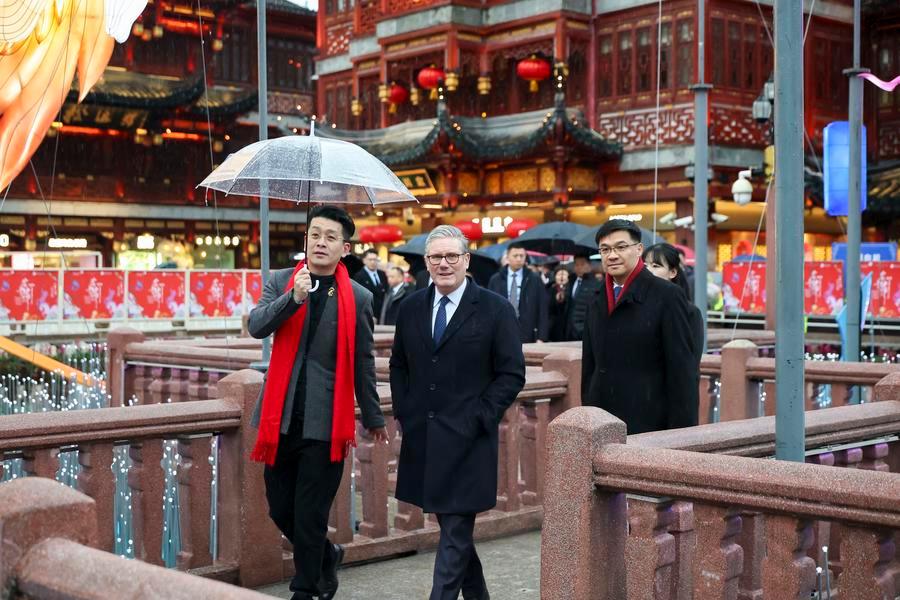
These opportunities coexist with legitimate concerns. British companies continue to raise issues related to regulatory transparency, data governance, and market access. However, sustained engagement – rather than withdrawal – offers a more effective means of addressing these challenges. Institutional dialogue and commercial cooperation can help clarify expectations and reduce uncertainty over time.
A middle-power strategy: hedging risks in a volatile world
Starmer’s emphasis on not “choosing sides” between the U.S. and China reflects a broader trend among middle powers seeking to diversify strategic risks amid geopolitical uncertainty.
This impulse has been reinforced by uncertainty surrounding future U.S. policy. Engagement with China provides Britain with a degree of strategic optionality. It preserves channels of communication, supports economic resilience, and enhances diplomatic flexibility. This approach does not imply neutrality or equivalence between Washington and Beijing, but rather a calibrated effort to safeguard national interests amid competing pressures.
Britain’s approach is consistent with a wider international trend. Recent visits to China by leaders from Canada, Finland, and other advanced economies reflect a shared recognition that sustained engagement with Beijing remains necessary, even as differences persist. In this sense, the U.K.’s recalibration should be seen as part of a broader pattern rather than an exceptional departure.
Beyond the “golden era”: toward sustainable cooperation
Comparisons of these new changes to the Cameron-era “golden era” of Sino-British relations can be misleading. The global context has changed substantially, and expectations on both sides are more restrained. Political, technological, and security considerations now play a more prominent role in shaping bilateral relations.
What is emerging instead is a more normalized form of cooperation – less ambitious in rhetoric, but potentially more durable in practice. The revival of mechanisms such as the U.K.-China CEO Council is significant in this regard. These institutional platforms provide continuity, allow for candid exchange between business leaders and policymakers, and help stabilize economic ties during periods of political uncertainty.
Equally important is the recognition that disagreements will remain, particularly in sensitive areas related to security, technology, and values. The task for both governments is to manage these differences without allowing them to overwhelm areas of shared interest. Any mature relationship is defined not by the absence of disagreement, but by the capacity of two sides to contain it.
A measured reset
Prime Minister Starmer’s visit to China represents a measured reset. It reflects a clearer alignment between Britain’s foreign policy objectives and its economic realities, as well as recognizes the limits of ideological framing in a complex global environment.
For China, the visit signals that engagement with major advanced economies remains possible and valuable. For Britain, it underscores the importance of policy consistency, institutional dialogue, and pragmatic cooperation in navigating an increasingly multipolar world.
If sustained, this more restrained and realistic approach may prove more resilient than earlier phases of the relationship. In moving from episodic enthusiasm to normalized cooperation, both sides have an opportunity to build a more stable foundation for long-term engagement – one grounded not in expectations of convergence, but in pragmatic coexistence.
Dr. John Quelch is American president, executive vice chancellor, and distinguished professor of social science at Duke Kunshan University in China.