China at the Center of a New Global Leadership
 Facebook
 Twitter
 Linkedin
 Google +
The future belongs to those who embrace multilateralism, collaboration, innovation, and strategic foresight, and China is demonstrating how to do so.
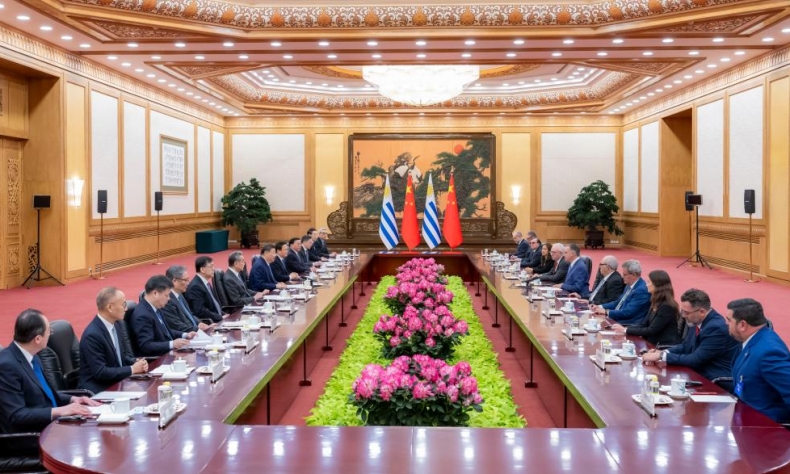
As 2026 begins, China is at the center of a diplomatic surge that could reshape global politics and economics for years to come. A series of high-profile international visits marks the start of this wave, with the UK Prime Minister Keir Starmer most recently in Beijing, and previous visits from French President Emmanuel Macron, South Korean President Lee Jae-Myung, Canadian Prime Minister Mark Carney, Irish Prime Minister Michael Martin, Finnish Prime Minister Pettery Orpo, and currently the President of Uruguay, Yamandu Orsi.
These trips are far more than formalities; they are calculated steps within a rapidly evolving geopolitical landscape, where governments are reassessing alliances, trade partnerships, and strategies for engagement in a multipolar world. The timing is especially important as global leaders wrapped up major economic summits, including Davos 2026, signaling China’s intent to gain a central function in shaping international discourse.
The visits reflect a clear recognition of China’s growing global influence. While Western leaders contend with domestic political pressures and shifting alliances, their trips to Beijing underscore the importance of cultivating strong relationships with a country that is now an important hub for trade, technology, and international governance. In contrast to periods of confrontation or uncertainty in past decades, China is presenting itself as a stable and pragmatic partner. For government officials, business leaders, and global investors, these exchanges with China afford a window into the strategies that will help shape international relations in the coming years.
Polar opposite approach to diplomacy
The current diplomatic momentum stands in sharp contrast to the United States’ posture under President Donald Trump. For decades, the global order, laws, trade agreements, and security alliances were shaped on the basis of the UN and UN Charter, with many countries in partnership with the United States. Nations engaged with the U.S. to secure revenue, investment, and stability. Now, with Trump back in the White House, the world is observing a dramatic shift. From NATO to the UN, the G7, and other longstanding alliances, the U.S. seems intent on remaking or even undermining decades of cooperative structures, commonly under the guise of “national security” but with evident personal and political gain at the center. According to the New York Times, in just the past year, Trump has personally profited at least $1.4 billion, a sharp illustration of the gap between national interests and self-interest in his administration.
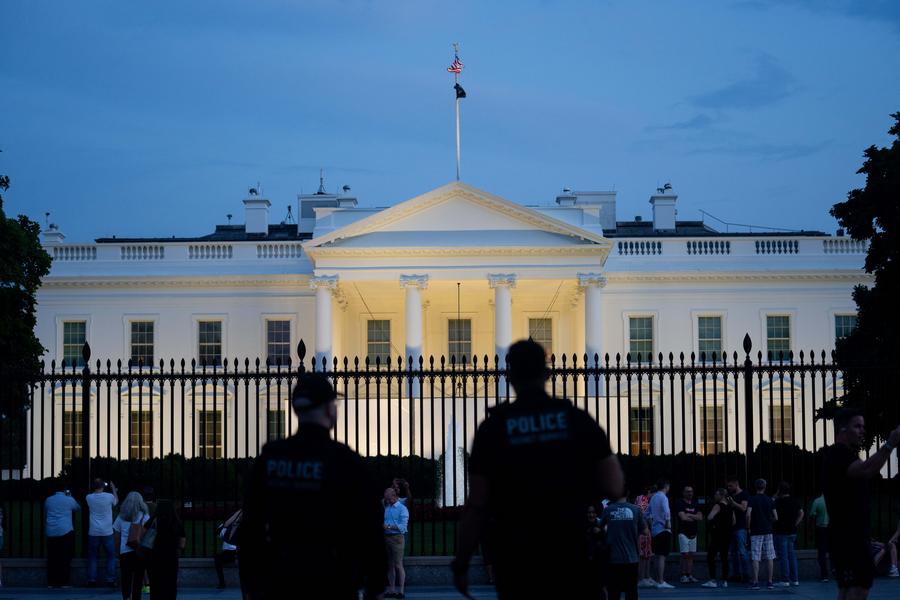
In contrast, Chinese leaders have adopted a clear multilateralism strategy upholding the UN and UN Charter. It is a more strategic and consistent approach. Beijing underscores mutual benefit, long-term partnerships, and the stability of multilateral engagement. European leaders, in particular, have responded favorably to this model, pursuing agreements on trade, green technologies, and digital governance that are designed to yield durable results rather than temporary wins. These deals express a broader philosophy of diplomacy: one that balances national interests with global cooperation, signaling that China is prepared to lead through influence rather than confrontation.
The contrast goes beyond policy to style and tone. Whereas the Trump administration frequently portrayed China as an adversary, current European, Canadian, and Nordic leaders stress collaboration, innovation, and shared challenges. The optics of these interactions convey a subtle but powerful message: in an environment increasingly defined by interdependence, engagement and dialogue offer greater sustainability than disruption and antagonism. Countries that were previously aligned firmly with the U.S. are now making independent decisions to secure trade agreements, favorable visa policies, and technology cooperation with China, and they are doing so wisely.
Economic and strategic implications
The value of these visits goes beyond diplomacy; they carry profound economic effects. In December, France signed multiple trade agreements with China; Canada, South Korea, Ireland, and Finland followed suit. This past week, the UK Prime Minister, Keir Starmer, was in Beijing to secure essential trade deals. These engagements are clear evidence that nations are looking toward China not only as a partner for commerce but also as a source of stability amid the unpredictability of U.S. policy. By actively courting foreign investment and presenting itself as a dependable economic partner, China is presenting itself as a calming force in global markets. For multinational corporations and investors, engagement with China offers immediate opportunities and long-term engagement with emerging international norms.
Strategically, the wave of visits signals subtle shifts in global alliances. Countries that once relied on the United States as the primary driver of international policy are increasingly seeking alternative partnerships. From North American neighbors like Canada to the EU, UK, and ASEAN nations, governments are pursuing deals that prioritize economic security, technological development, and diplomatic reliability. Beijing’s consistent, forward-looking approach supports its role as a central player in forming multilateral frameworks.
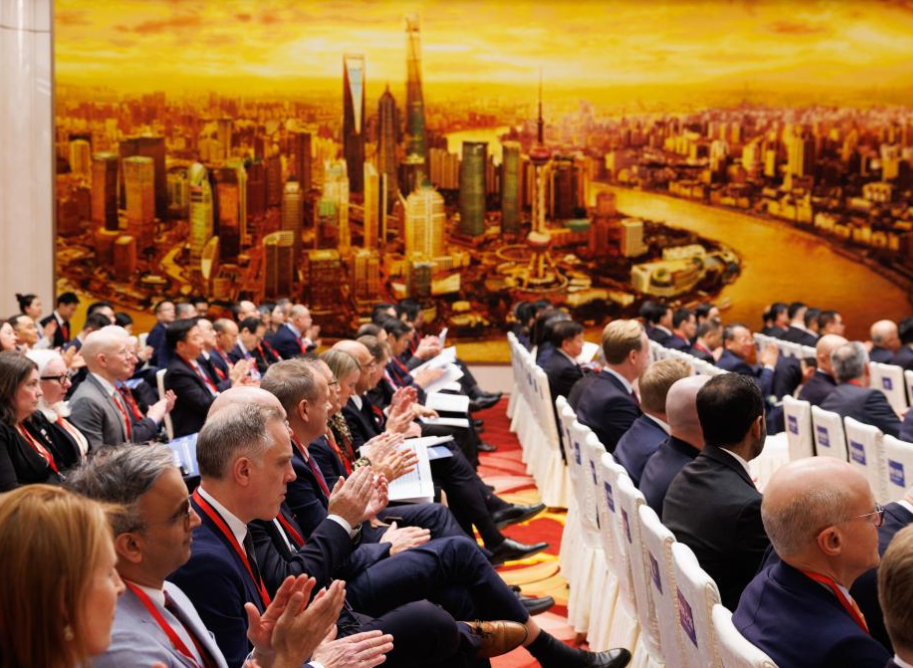
Soft power considerations are equally critical. China is projecting an image of stability, openness, and foresight. Leaders from Europe and North America are not simply negotiating agreements; they are observing a nation capable of directing global economic and political currents. This is particularly striking when contrasted with Trump-era policies, which often emphasize disruption and unilateralism over constructive engagement. As Mark Carney stated at the World Economic Forum in Davos last month, “We know the old order is not coming back. We shouldn’t mourn it. Nostalgia is not a strategy.” Countries now recognize that they must actively seek new partnerships, trade deals, and security guarantees to protect their future, an opportunity China is positioned to lead.
China’s diplomatic strategy is also pragmatic in its timing and presentation. By welcoming multiple leaders in rapid succession, Beijing demonstrates operational efficiency and signaling power: it can host, negotiate, and conclude high-level agreements while preserving a coherent narrative of stability and progress. Each visit reinforces the perception of China as a nation that is simultaneously influential and reliable, capable of guiding global economic and political currents rather than reacting to them. The future increasingly looks positive for nations pursuing partnerships with China, while the United States risks losing influence if it continues prioritizing unilateral interests over global cooperation.
China at the forefront of a new world order
As the wave of global visits continues, it is becoming increasingly clear that China is not simply participating in the international order; it is helping to shape it. By combining strategic perspective, economic pragmatism, and diplomatic consistency, China is building partnerships that stretch far beyond transactional deals, projecting stability and influence for peace and development on the world stage. In contrast, Trump’s aggressive and divisive approach has undermined decades of cooperative progress, leaving the United States increasingly isolated and reactive. Leaders like Mark Carney have emphasized that the old world order is fading, giving way to a new system in which multilateralism, long-term vision, and constructive engagement are paramount. In this emerging landscape, China is placing itself at the forefront, seizing the opportunity to lead an international shift while other powers face challenges adapting.
For governments, businesses, and global observers alike, the lesson is clear: the future belongs to those who embrace multilateralism, collaboration, innovation, and strategic foresight, and China is demonstrating how to do so. By attracting partners once aligned primarily with the United States, China is not only increasing its influence but also developing a model for international relations built on reliability, vision, and mutual benefit for a community with a shared future for humanity. If managed effectively, China has the potential to lead global diplomacy, trade, and security frameworks for decades to come, establishing a new era of governance in a rapidly evolving world.