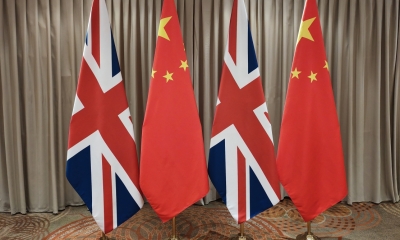
Why America’s Allies Are Quietly Turning to China
 Facebook
 Twitter
 Linkedin
 Google +
In a world where alliances feel transactional and leadership volatile, countries are widening their diplomatic field of vision.
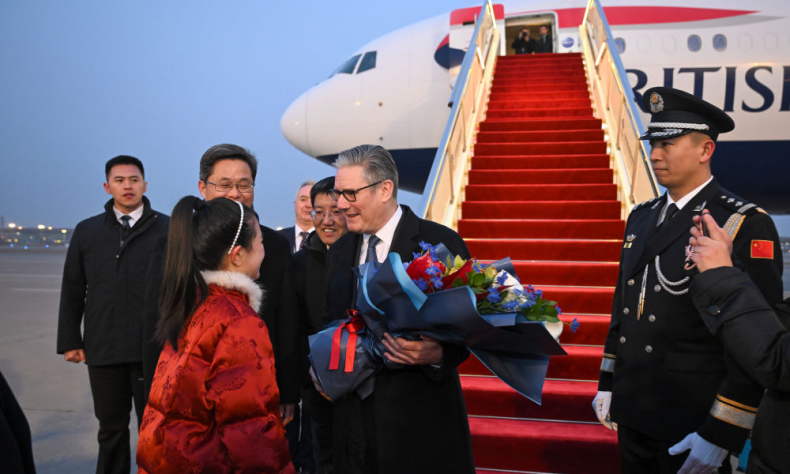
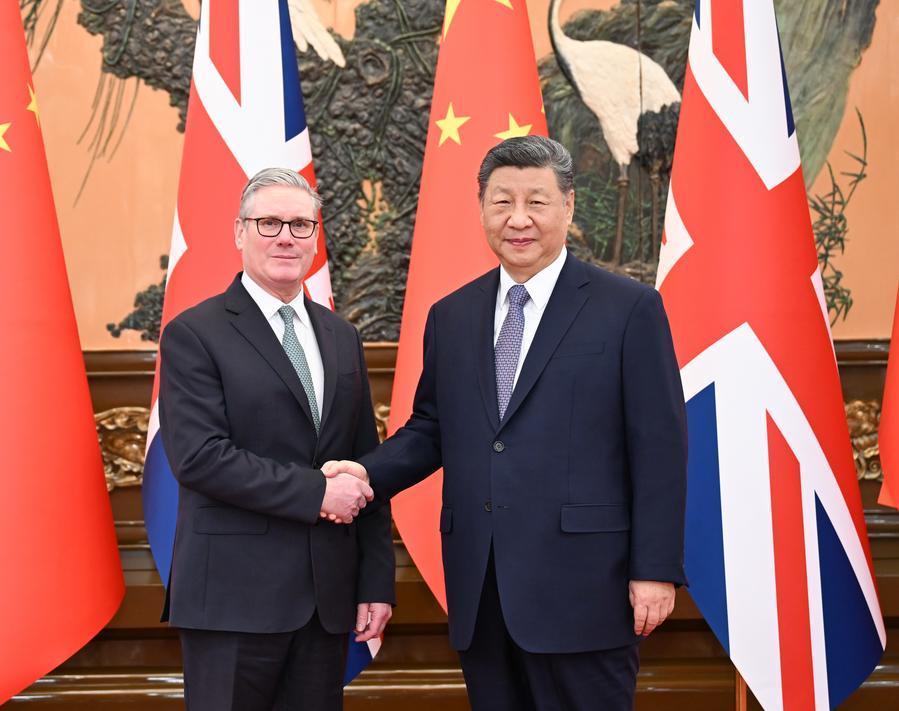
Keir Starmer’s recent visit to China was more than routine diplomacy. After nearly a decade of frosty relations, the trip marked a thaw between London and Beijing – one both Starmer and President Xi Jinping could reasonably call a success. The optics were solid, but the substance was sharper still: progress on whisky tariffs, expanded visa-free travel, and exploratory talks on a bilateral services agreement that could help reshape Britain’s services-led economy. Add to that London quietly approving Beijing’s long-delayed “super-embassy”, and the message was clear – a long-term and stable strategic partnership.
Starmer arrived with a sizeable business delegation, signalling that Britain was serious about engagement over estrangement. During the trip, President Xi invoked a familiar parable, likening Western perceptions of China to blind men encountering an elephant – each grasping only a fragment and mistaking it for the whole. Starmer later echoed the metaphor himself, turning it into a guiding principle for the visit: a nudge that Britain would try, however cautiously, to see China whole rather than through a lens warped by assumption.
For China, the trip was the perfect stage to reinforce a narrative it has been cultivating for years: a stable, reliable actor committed to trade, dialogue, and multilateral cooperation. With global turbulence rising and its economy looking for new stimulus from foreign markets, Beijing has a clear incentive to appear predictable and indispensable. Starmer’s visit broadcast that message – and reminded the world that Western engagement with China has not gone dormant.
Yet Britain is far from alone. France, Finland, South Korea, and soon Germany have all been treading the same path. Taken individually, these visits might seem routine. Taken together, they tell a subtler story: America’s allies are quietly hedging, testing the waters eastward as the rules of the global game shift.
The Trump factor: Volatility at the heart of the alliance
Of course, none of this would be happening in a vacuum. The elephant in the room is the United States – or more precisely, its mercurial leader, Donald Trump. His tenure has been a masterclass in keeping allies on edge: transactional, performative, and often outright volatile.
Trump’s flirtations with Greenland have been a disaster for transatlantic relations. The mere assertion that the U.S. might “get” the island has sent shivers across European capitals, with many warning that an attack could finish the security relationship for good. Trump’s follow-up threats of tariffs against recalcitrant allies only amplified the alarm. Even when he dialled back the rhetoric, the damage was done – transatlantic trust had been exposed as precarious.
Elsewhere, Trump’s actions in Venezuela and his repeated complaints about NATO have been equally eyebrow-raising. His administration’s operation in early 2026 resulted in the capture of Nicolás Maduro, prompting questions about legality, strategy, and the rationale for unilateral action. At the same time, Trump has torn into NATO allies, claiming the U.S. “gets nothing” from the alliance – a jarring statement for countries which served alongside American forces in the aftermath of 9/11.
For middle powers, these episodes are more than embarrassment; they are a structural problem. When the anchor of global stability shakes, even slightly, countries dependent on trade and open institutions start looking elsewhere for ballast.
Middle powers navigating between giants
The UK, like other middle powers, now finds itself in a delicate balancing act. Its prosperity depends on multilateralism, open trade routes, functioning institutions, and predictable global rules. It lacks the strategic heft of a superpower, but it also cannot afford neutrality. Engagement with China, carefully measured, is no longer an ideological gamble – it is risk management.
And that elephant keeps returning. The parable Xi invoked, and Starmer echoed, frames a broader lesson: fragmented understanding will no longer suffice. Western policy towards China has often been partial – dominated by security fears or filtered through moral debates – but partial views are fragile in a world where power is diffusing, and American leadership is less reliable. Allies are being forced to reassess the picture in its entirety.
China, for its part, is keenly aware. By emphasising stability, continuity, and adherence to international norms, Beijing is offering what middle powers crave: mutually-beneficial cooperation and predictability in a turbulent sea. That does not erase caution or disagreements, but it does make engagement a tool rather than a liability.
Starmer’s visit was less a pivot than a signal. Britain is not choosing sides; it is acknowledging reality: the old certainties no longer hold. In a world where alliances feel transactional and leadership volatile, countries are widening their diplomatic field of vision.
If the past decade was defined by rigid narratives and hardened positions, the next may be defined by that ancient parable: the blind men and the elephant. To navigate this new order, allies must see the whole, not mistake a fragment for the entirety. The journey east is not a betrayal of old partners – it is a pragmatic recalibration in a world where the map itself has changed.
The article reflects the author’s opinions, and not necessarily the views of China Focus.