Why Canada Will Never Become the 51st State of the U.S.
 Facebook
 Twitter
 Linkedin
 Google +

Economic interdependence, cultural overlap and political frustration have never erased Canada’s distinct identity. History, institutions, values and collective memory all point in the same direction.
Living next door to a vastly larger and more powerful country inevitably shapes a nation’s sense of self. That reality has defined Canada’s relationship with the U.S. since Confederation and long before. With a population one 10th the size of its neighbor and an economy deeply tied to American capital and markets, Canada has always had reason to be vigilant and protective about its national identity and sovereignty. The U.S. is a global superpower, challenged economically only by the industrial rise of China. Canada is not in that league. Yet this imbalance has never translated into a desire to be absorbed by its neighbor. On the contrary, proximity has reinforced Canada’s determination to remain distinct and separate. For that reason, Canada will never become the 51st American state.
History at different times
Economically, the two countries are deeply intertwined. Since the late 20th century, trade liberalization has bound Canada ever more closely to the American economy. Since the 1988 Canada-U.S. Free Trade Agreement and its expansion into the North American Free Trade Agreement with Mexico in 1993, Canada has been sending close to 80 percent of its exports to the U.S., while importing roughly half of what it needs from the U.S. The automotive and energy sectors became especially integrated, with supply chains straddling the border so seamlessly that automotive parts might cross it several times before final assembly. By any economic measure, Canada depends on American markets.
Yet this integration never produced a collapse of Canadian identity or a weakening of its sense of nation. Canadians may look and sound similar to Americans, and the two nations share a deeply intertwined popular culture, watching the same movies and television shows, streaming the same music, following the same sports and embracing the same technologies, from online shopping platforms to smartphones and social media. But cultural overlap has never translated into cultural surrender. Canadians have always known they were Canadian, not Americans-in-waiting.
Indeed, shared tastes have often sharpened awareness of difference. Over the decades, many Canadians have grown frustrated with U.S. foreign policy, from the Viet Nam War in the 1960s to the invasion of Iraq in the early 2000s, and with American reluctance to take decisive action on climate change and environmental protection. Canadians are generally more internationalist, more inclined to trust multilateral institutions and collective solutions to global problems. These contrasts reinforce the sense that, despite obvious similarities, the two nations rest on different political and moral foundations.
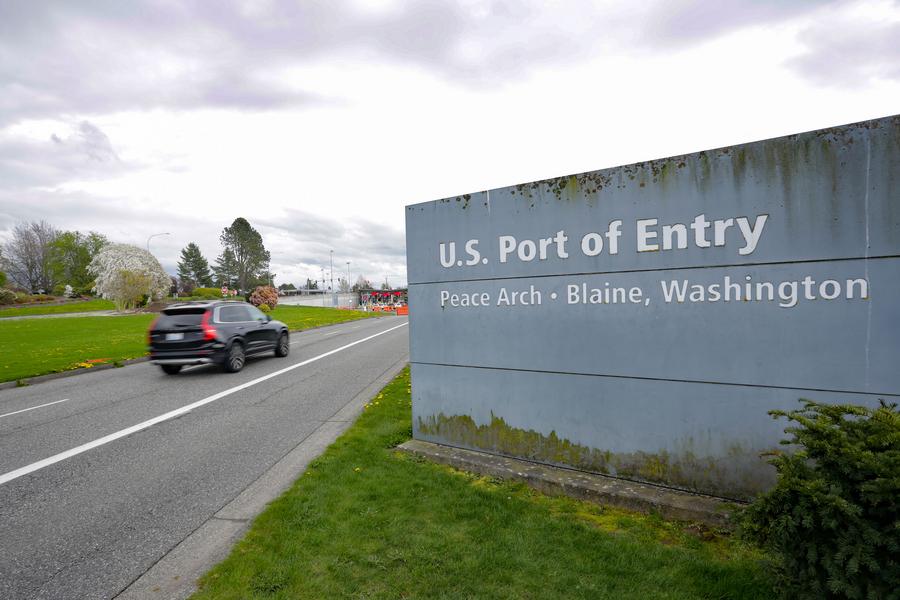
History has also played a decisive role. Canada and the U.S. have coexisted peacefully for more than two centuries and share the longest international border in the world. But Canadians have repeatedly rejected incorporation into the American project. From the earliest days of European settlement, those who would become Canadians understood themselves as different from their neighbors to the south. When the American Revolution erupted in 1776, tens of thousands of settlers, known as Loyalists, refused to break with the British Crown. As many as 80,000 to 100,000 of them fled the new U.S. and resettled in British North America, dramatically reshaping the population and political culture of what would become Canada.
The American revolutionary army’s invasion of Canada in 1775-76 failed precisely because local residents had no interest in joining the rebellion or the new nation. That resistance was reinforced by the Loyalist influx of the 1780s and by the presence of roughly 70,000 French-speaking settlers who remained in Quebec after the British conquest of New France in 1763. Together, these groups helped create a society grounded in gradualism rather than revolution, in compromise rather than absolutism and in pluralism rather than uniformity.
Those values were tested again during the War of 1812, when American forces returned as invaders. The conflict stemmed from a mix of grievances, including British interference with American trade, various maritime disputes and U.S. expansionist ambitions toward British North America. President James Madison assumed Canadians would welcome liberation and throw off their “British yoke.” He was mistaken. English-speaking Loyalists, French Canadians and Indigenous allies fought side by side to defend their territory. Once again, American forces were repelled, and the idea of becoming American was decisively rejected.
In modern times, that war has taken on symbolic importance. When former Prime Minister Stephen Harper announced plans in 2012 to commemorate the conflict, he called it a “battle for Canada,” a formative moment that laid the very foundation of Canada and showed how English, French and Indigenous people could unite to defend their home and build a nation. In turning back the U.S. invasion, Harper argued, early Canadians discovered a shared sense of nationality that set them apart in North America and laid the groundwork for a distinct vision of freedom, democracy and justice.
By the time of Confederation in 1867, Canadian identity was largely formed. From the outset, diversity was not merely tolerated but celebrated, at least rhetorically, as a source of national strength. Canada recognized two official languages, adopted a parliamentary system headed by a prime minister and developed a federal structure that balanced regional autonomy with national cohesion. Over time, Canadians embraced a form of social democracy that prioritized community, equality and shared responsibility. Universal health care, a variety of social security programs, equalization payments to poorer provinces and official multiculturalism became defining features of Canada.

This model stood in contrast to the more individualistic ethos of the U.S. Canadians took pride in a political culture that valued compromise, social solidarity, and valued the virtues of sharing and caring. These differences were not superficial; they reflected distinct historical experiences and philosophical choices. From their earliest days, Canadians understood themselves as a separate people with their own nation, not a northern extension of the American republic.
Even in recent years, when national confidence has wavered, that fundamental separation has endured. During the decade-long tenure of former Prime Minister Justin Trudeau, debates over identity intensified. His assertion in 2015 that Canada had “no core identity, no mainstream” unsettled many, and, by 2024, surveys showed a sharp decline in national pride. For the first time since such questions were asked in opinion surveys in the 1940s, barely more than half of Canadians said they were proud of their country, while more than one in 10 said they were not proud at all.
Yet even this malaise did not translate into interest in joining the U.S. On the contrary, when U.S. President Donald Trump mused aloud about annexing Canada as a potential 51st state, Canadians reacted with a surge of defensive nationalism. The Maple Leaf became a rallying symbol once more, recalling earlier moments—such as the 1860s—when fear of American annexation helped galvanize Canadian unity and create a new nation.
Canada’s future
That reaction was amplified under Prime Minister Mark Carney, a skilled communicator who framed the U.S., and Trump in particular, as an external threat. His warnings that America coveted Canada’s land, resources and water were designed to mobilize public opinion and reinforce sovereignty. “America wants our land, our resources, our water, our country,” Carney warned. “These are not idle threats. President Trump is trying to break us so that America can own us. Our old relationship with the U.S. is over.” The strategy worked in the short term at least: patriotism flared, travel to the U.S. declined and symbolic gestures, from boycotts to “buy Canadian” campaigns, proliferated.
But Canadian identity cannot be sustained by anti-Americanism alone. Long-term nationhood requires positive foundations, not perpetual resentment. Carney’s broader goal has been trade diversification, reducing Canada’s dependence on the U.S. by expanding ties with Europe, Asia and the Middle East. On a global tour in early 2026 that took him from Beijing to Doha to Davos, Carney spoke of a rupture in the world order and argued that the old U.S.-led system was gone. Reengagement with China, despite earlier warnings about security risks, was presented as a pragmatic adaptation to a changing world, in the belief it will free Canada from the economic clutches of the U.S.
Whether or not that strategy succeeds, it underscores a deeper truth: Canada’s future will be shaped by its own choices, not by absorption into another country. Economic interdependence, cultural overlap and political frustration have never erased Canada’s distinct identity. History, institutions, values and collective memory all point in the same direction. Canada may live beside a giant, but it has never wanted to become one of its limbs. For these reasons and rooted in centuries of experience, Canada will never become the 51st state of the U.S.
The author is a professor of history at the University of Regina, Canada, and fellow of the Royal Society of Canada.