Donald Trump Takes the Mask off U.S. Foreign Policy
 Facebook
 Twitter
 Linkedin
 Google +
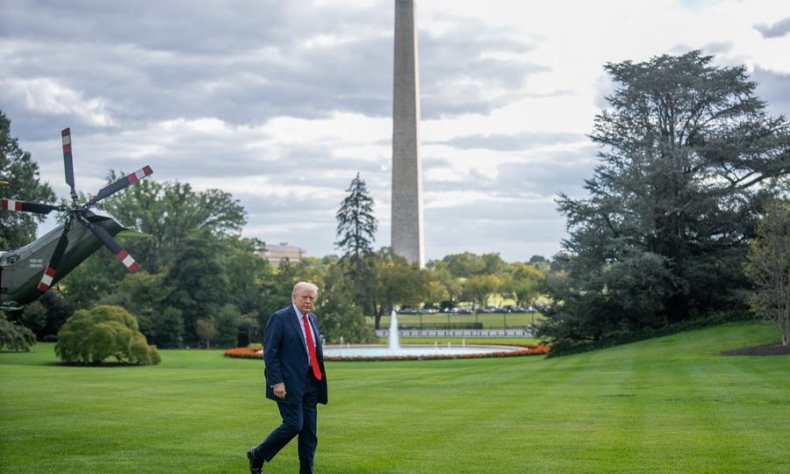
Trump represents a departure from this norm – framing U.S. military intervention in humanitarian terms – by openly celebrating 19th-century imperialists like McKinley and taking the mask off of U.S. foreign policy.
In a speech at the World Economic Forum Annual Meeting on January 21, U.S. President Donald Trump boasted about how great a power the U.S. is—exemplified by its kidnapping of Venezuela’s president two weeks earlier—and vowed that his administration would pursue negotiations with Denmark to take over Greenland.
In justifying this takeover, Trump claimed that Greenland should belong to the U.S. because it is geographically part of North America; that the U.S. set up bases on Greenland for Denmark in World War II and then “gave Greenland back to Denmark,” which he characterized as “stupid”; and that only the U.S. could defend Greenland from China and Russia and unleash its economic potential by effectively exploiting its mineral wealth.
Trump’s speech was characteristic in its open jingoism and flouting of international law and in conveying his intent to reinvigorate a 19th century imperialism that has long been discredited.
U.S. moves in southern hemisphere
On January 20, 2025, in the inaugural address of his second term as president, Trump expressed his admiration for “a great president,” William McKinley—an arch-imperialist who launched the U.S. overseas empire in the late 19th Century, when his administration invaded and colonized the Philippines with genocidal consequences.
While some people dismissed Trump’s statements as mere rhetoric, a year into his second presidential term, it is clear that Trump is intent on actually following in McKinley’s footsteps—to all of our detriment.
In the last few months, the Trump administration has been particularly aggressive in the Southern Hemisphere.
The special forces raid that resulted in the kidnapping of Venezuelan President Nicolás Maduro and killing of 100 people, including at least 20 of Maduro’s Cuban security guards, was preceded by a U.S. naval buildup in the Caribbean, by the seizure of Venezuelan oil tankers and by the destruction of Venezuelan fishing boats that were allegedly trafficking drugs.
Several months before the raid, Trump had announced his authorization of CIA covert operations in Venezuela, which presidents traditionally keep secret.
Trump has also directly threatened Colombia, Mexico and Cuba, backed Argentina’s extreme right wing leader Javier Milei, and interfered in Honduras’ election in support of Nasry Asfura, who plans to open up the Honduran economy to investment by key Trump donors like Peter Thiel.
On November 28, 2025, Trump announced his support for Asfura in the same social media post in which he announced his pardoning of former Honduran President Juan Orlando Hernández, who had been sentenced by a U.S. federal court to 45 years in prison for his role in trafficking more than 400 tons of U.S.-bound cocaine through Honduras between 2004 and 2022.
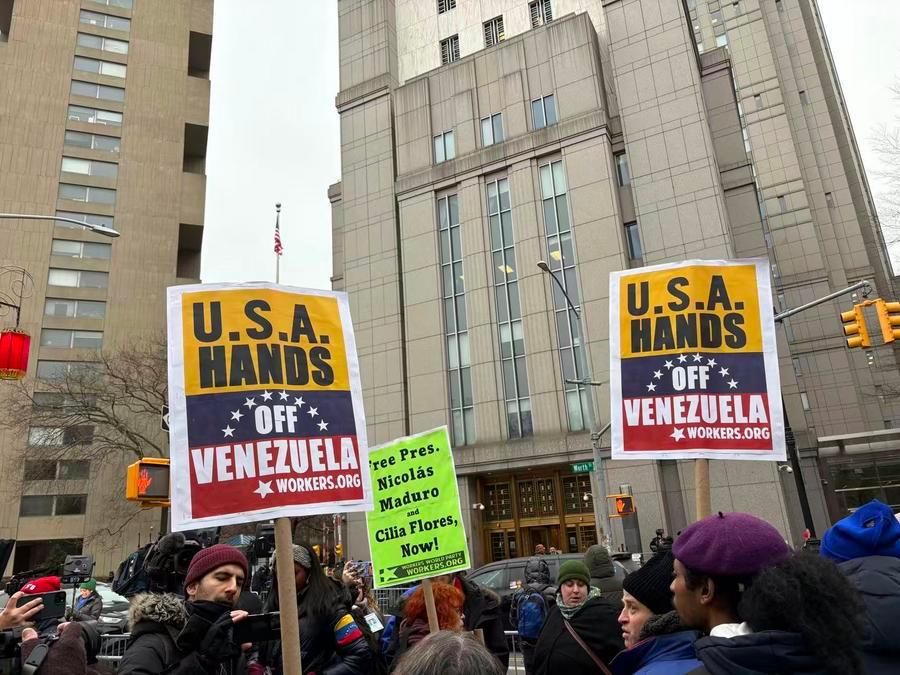
His pardoning of Hernández revealed Trump’s rhetoric about intervening in Venezuela to halt the drug traffic to be completely hollow.
Stephen Miller, one of Trump’s top aides, made clear the Trump administration’s real goal of seizing control over Venezuela’s oil supply, which Maduro’s governments had tried to keep under national control.
Another goal of what some are calling the “Donroe Doctrine” (Donald Trump’s resurrection of the original Monroe Doctrine validating U.S. imperialism in Latin America) is to counter the growing influence of China, which has won a lot of goodwill through its giant infrastructural projects.
Military intentions in Asia-Pacific
The Trump administration has ramped up conflict with China by advancing Sinophobic rhetoric and expanding funding for the Pacific Deterrence Initiative (PDI), a $9-billion program initiated by the Joe Biden administration aiming to enhance American war-making capabilities in the Asia-Pacific.
A key aspect of the PDI has been the revitalization of U.S. military bases in Pacific Islands that have not been used since the Pacific War 80 years ago.
These bases include an airfield on Tinian Island in the Marianas near Guam, which was used as a launch point for the atomic attack over Hiroshima by the Enola Gay bomber and which the U.S. Air Force reclaimed in 2012 under Obama’s “Pivot to Asia” policy.
General Kenneth Wilsbach, Commander of the Pacific Air Forces told Nikkei Asia that the Tinian base “will become an extensive” facility once work has been completed to reclaim it from the jungle that has grown over the base since the last U.S. Army Air Force units abandoned it in 1946.”
In November 2025, Defense Secretary Pete Hegseth announced the creation of a joint military task force that would enable an expansion of U.S. military presence in the Philippines, a move that directly targeted China. The Trump administration has also helped facilitate growing military collaboration between the Philippines and Japan, whose prime minister, Sanae Takaichi, is a “hawk” who is a repeated visitor to the Yasukuni Shrine in Tokyo, which honors World War II-era war criminals, and is intent on reestablishing Japanese continental military supremacy.
In December 2025, the Trump administration announced a massive package of arms sales to China’s island province of Taiwan valued at more than $10 billion that includes medium-range missiles, howitzers and drones.
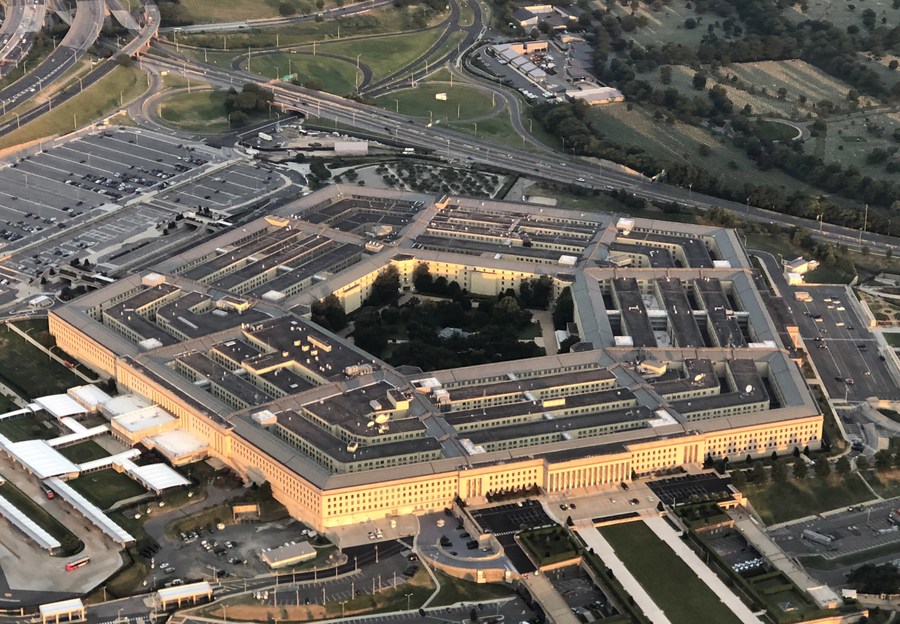
The arms sale is part of a U.S. strategy dating back to the Barack Obama and Biden administrations of supporting separatist elements and turning Taiwan into a heavily armed “porcupine” and a base for U.S. continental subversion, as it had been throughout the Cold War.
Trump’s “peace plan” for Ukraine includes more U.S. troops and intelligence agents in Ukraine, which makes it unpalatable to the Russians who launched their special military operation with the aim of demilitarizing Ukraine.
Trump’s ‘Peace board’
In the Middle East, the Trump administration has ramped up weapons supplies to Israel, and developed a “peace” plan that offers a colonial solution by imposing foreign rule over Gaza after its destruction. Trump’s “peace board” for Gaza includes him and former UK Prime Minister Tony Blair.
Trump has further teamed up with Israel in bombing Iran and is threatening to do so again amid protests there that were triggered in part by U.S.-based NGOs and the National Endowment for Democracy (NED).
Key to achieving regime change in Iran has been Trump’s alliance with Syrian leader Mohammed Al-Jolani, who has a background in Al Qaeda and has helped facilitate ethnic cleansing of Shia Alawites who supported the deposed President Bashar Al-Assad.
During his first term, Trump championed the U.S.-led regime change effort targeting Assad and fomented disinformation about the leader in order to justify U.S. bombing and heightened military intervention in Syria.
Trump’s launching of air strikes in Syria was one of at least seven countries that Trump has bombed (the others are Somalia, Iraq, Yemen, Iran, Venezuela and Nigeria).
With well over 800 overseas military bases, the U.S. has for many years behaved as an imperial power, though most previous presidents tried to hide this fact and frame U.S. military intervention in humanitarian terms.
Trump represents a departure from this norm by openly celebrating 19th-century imperialists like McKinley and taking the mask off of U.S. foreign policy.
What he and his inner circle don’t understand is that the world has changed since the 19th century, and that the age of unipolar Anglo-American world dominance is over.
The author is a professor of history and managing editor of CovertAction Magazine, and also author of eight books on U.S. foreign policy, including Warmonger: How Bill Clinton’s Malign Foreign Policy Shaped the U.S. Trajectory From Bush II to Biden (2024) and Obama’s Unending Wars (2019).