Epstein Files Expose Collapse of American Legitimacy
 Facebook
 Twitter
 Linkedin
 Google +
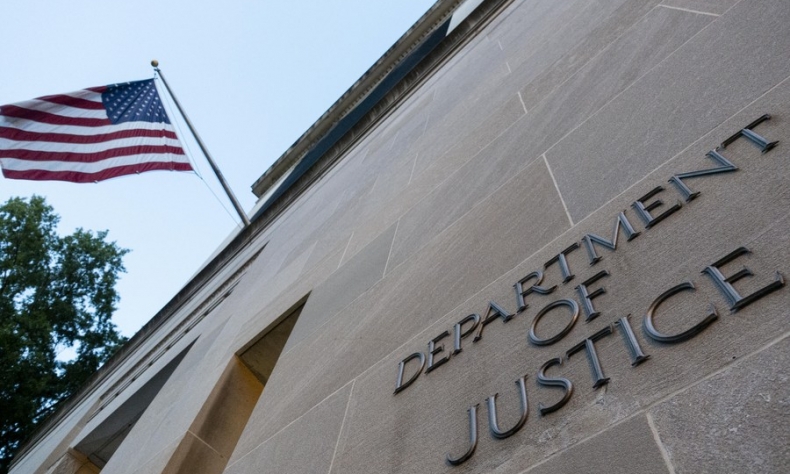
The newly released Epstein documents reveal more than elite depravity. They expose a deeper unraveling of moral order and institutional trust at the height of U.S. global power.
The U.S. Department of Justice released roughly 3.5 million documents related to the late financier and convicted sex trafficker Jeffrey Epstein on Jan. 30. Journalists, academics and independent researchers immediately began combing through the material, many publicly stating that they were “not suicidal” in the event of retaliation. This detail alone should trouble the public. It reflects a widespread expectation that powerful actors can commit grave crimes with impunity and possess the resources to silence those who probe too deeply.
Beyond their immediate legal relevance, the documents illuminate something more unsettling: the moral and institutional condition of Western civilization at the apex of the U.S. global power.
The core crimes associated with Epstein are already established and horrific: thousands of victims, many of them underage girls, subjected to systematic sexual exploitation. One underexamined dimension of this abuse is its geopolitical context. A significant number of Epstein’s victims reportedly came from the former Soviet Union and Eastern Europe, regions destabilized by the abrupt collapse of state structures and the consequent loss of economic opportunity and social cohesion in the 1990s.
Epstein and those around him appeared to have exploited this vacuum: a population rendered vulnerable by shock therapy economics, social disintegration and rising criminal networks. That such exploitation was carried out by members of the American elite, at a moment when the United States styled itself as the moral victor of the Cold War, reveals a deeply regressed elite psychology. It was apparently not enough to impose humiliating economic restructuring on defeated rivals; the most vulnerable among them were also turned into commodities. This represents a direct inversion of the moral order that the West has claimed to uphold for millennia.
The document release has also sparked allegations that go well beyond what has been previously established. Some commentators have interpreted portions of the material as containing apparent admissions via email that Epstein had murdered victims or made them disappear, and that individuals within his network may have been involved in the deaths of federal investigators, potentially across borders. There are also speculative allegations circulating online involving torture and ritualized abuse.
Whether these claims can be corroborated remains uncertain, and intellectual discipline requires restraint. But there is an important datum here that transcends factual verification: a large portion of the public no longer regards such allegations as implausible. That erosion of disbelief is itself evidence of moral exhaustion. When the population can no longer rule out the most grotesque crimes by elites, it signals a profound collapse in institutional trust and moral authority.
The individuals named or referenced across the documents span a wide spectrum: senior figures in American politics, finance, diplomacy and academia; European and Middle Eastern royalty; and, notably, far-right actors in both the U.S. and Europe. This ideological incoherence reinforces a common public perception that there exists a transnational elite class bound not by values, but by mutual protection and practical impunity.

That perception has only been strengthened by official responses. Deputy Attorney General Todd Blanche has stated that no new charges will arise from the release. Meanwhile, Rep. Thomas Massie, who pushed for the documents to be released, has alleged that staff associated with FBI Director Kash Patel threatened his office with a federal investigation if he continued pressing the issue. Massie now faces a well-funded primary challenger and has encountered open hostility within his own state political apparatus. Taken together, these developments reinforce the impression that accountability remains structurally out of reach.
Two broader conclusions follow. First, the U.S. has entered a phase of post-legitimacy governance. Across institutions, the state increasingly relies not on persuasion or consent, but on deception and the expansion of coercive capacity. The rapid growth of the U.S. Immigration and Customs Enforcement (ICE) funding — now exceeding the military budgets of many sovereign states — the construction of large-scale detention infrastructure, and the normalization of extrajudicial violence, even against U.S. citizens, signal a government that no longer feels compelled to justify itself in good faith.
This shift is incompatible with the long-term flourishing of social development or civic order. Systems that abandon legitimacy inevitably rely on force, and force corrodes the very capacities — trust, creativity, productivity — that sustain complex societies.
Second, the Epstein scandal is likely not an outlier but a symptom. While uniquely horrific, it may pale in comparison to corruption occurring at local and regional levels, where federal oversight and investigative journalism have been hollowed out. In my own investigative work in Kentucky, I am encountering patterns that exceed conventional corruption and verge on sovereignty failure — conditions more characteristic of failing states than advanced democracies.
Historically, these dynamics are familiar. They resemble the administrative decay of the Ancien Régime before the French Revolution, or the late Roman state — formally powerful, bureaucratically complex, yet incapable of moral or institutional renewal.
The international response further underscores America’s decline. The Epstein release has already triggered resignations and investigations in countries such as France, Slovakia, Norway and the United Kingdom. In contrast, the U.S. Department of Justice has effectively closed the matter. That reversal is striking. The world’s preeminent constitutional republic, long ruled by lawyers and legalism, no longer appears to lead in defending the rule of law, accountability or public integrity. This is not merely a policy failure, but a collapse of American moral identity.
One final detail is worth recalling. In a private email exchange, Epstein and a wealthy financier reportedly discussed the success of American social engineering — specifically, how mass media dampened public unrest, preventing protests on the scale seen in Sao Paulo in 2013. The contempt implicit in that observation is difficult to ignore.
Yet the absence of mass unrest following the document release may not signal elite victory so much as civilizational fatigue. A population stripped of belief, purpose and moral confidence is easier to manage — but also less productive, less creative and less capable of sustaining power. Elites ultimately depend on the vitality of the societies they dominate.
When people no longer believe in the legitimacy of the order they inhabit, they stop defending it. History suggests that this is not how civilizations stabilize — but how they end in their current form.
Bradley Blankenship is an investigative journalist, columnist, author, political analyst and the founding chairman of the Northern Kentucky Truth & Accountability Project, a local U.S. anti-corruption network and civic oversight body.