Winning Without War?
 Facebook
 Twitter
 Linkedin
 Google +
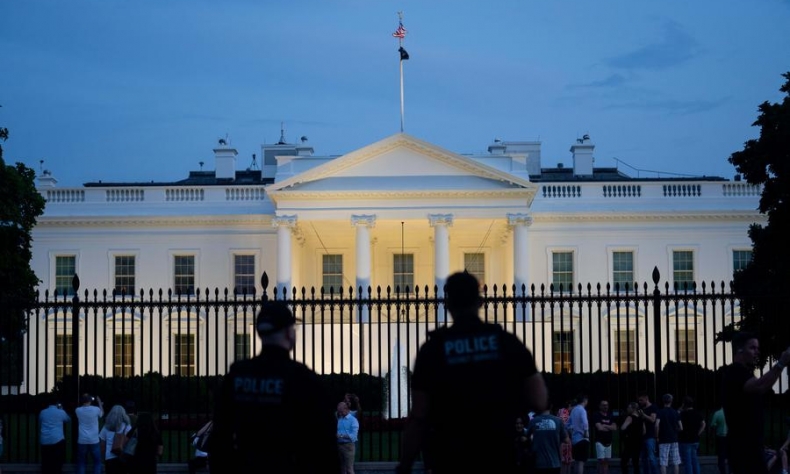
At its core, the U.S.-Iran standoff was a geopolitical game of brinkmanship, one that blended Trump’s ‘art of the deal’ with the darker logic of warcraft.
Late January saw the USS Abraham Lincoln carrier strike group steam into the Middle East as U.S. President Donald Trump threatened military action against Iran. Back home, Washington had just rolled out what it called a textbook “decapitation operation:” Delta Force had extracted Venezuelan President Nicolás Maduro and his wife, flying them to U.S. soil.
It was an operation that reshaped the post-World War II global order. Trump had long styled himself as a master of “the art of the deal,” leaning on an “escalate to de-escalate” strategy: ratchet up maximum pressure, then cut a bargain at the 11th hour. When it came to Venezuela, everyone assumed this was just another sample of Trumpian bluff, that he would ultimately do what he always does: TACO (“Trump Always Chickens Out”). Instead, the U.S. achieved its strategic objectives at minimal cost, a blunt reminder that it remains the world’s undisputed hegemon.
Facing Iran, a long-standing adversary, Washington began 2026 with a conspicuous show of force. It deployed what it called a “massive” naval presence and issued military threats, while also signaling that it was open to talks. Multiple U.S. media outlets, citing informed sources, reported that Washington’s preconditions included a permanent halt to uranium enrichment, the core of Iran’s nuclear program, strict limits on its ballistic missile program, and an end to all support for regional proxies.
For Tehran, those terms were hard to accept. In contrast, Iran announced on February 2 that it would hold a two-day military exercise in Kermanshah Province in the border area.
When no one is going to chicken out, would applying maximum pressure end in a full-scale war?
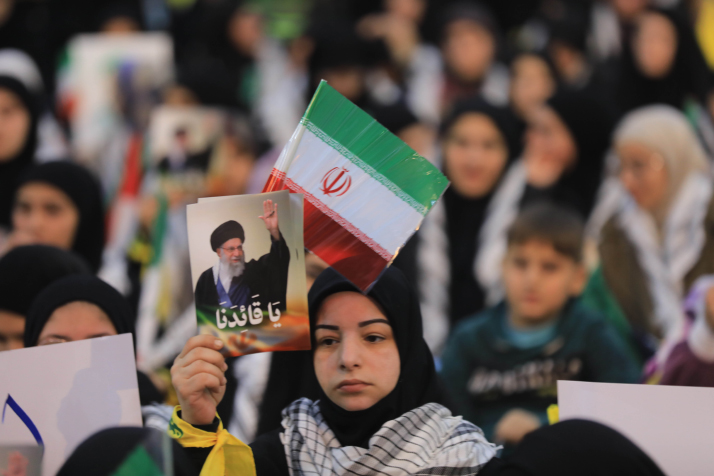
The truth is, U.S.-Iran relations are already at the breaking point. After Washington unilaterally withdrew from the Joint Comprehensive Plan of Action in 2018, it imposed more than 1,500 sanctions spanning finance, energy and other key sectors. The pressure steadily worsened Iran’s economy and eventually became a major trigger for multiple waves of nationwide protests. Iranian officials insisted the U.S. was the hidden hand behind a “color revolution.” Meanwhile, U.S. airstrikes continued. On June 22, 2025, the U.S. launched a large-scale raid on three nuclear facilities inside Iran, dispatching more than 125 aircraft, including seven B-2 stealth bombers.
But from Washington’s perspective, escalating strikes on Iran, let alone putting boots on the ground, hardly looks like the smart thing to do. Since the start of this century, America’s two full-scale wars in the region, in Afghanistan and Iraq, have burned through staggering blood and treasure without delivering the results Washington promised. Republicans still hammer Democrats over the chaotic August 2021 withdrawal from Afghanistan, holding it up as proof that America was humiliated on the world stage. Iran, meanwhile, would be an even harder fight: Brutal terrain, industrial capacity and a dense network of allies, partners and proxy forces that could drag the U.S. into a deeper quagmire than anything it has faced in the region before.
Perhaps more importantly, a full-scale war with Tehran would shatter the Middle East’s already fragile balance and could draw other major countries into the fight. U.S. strategy, set out in the National Security Strategy released last December and reiterated in the recently published 2026 National Defense Strategy, called for scaling back in the Middle East and refocusing on domestic priorities and the Western Hemisphere. Without confidence in a swift and decisive victory over Iran, the Trump administration would likely think twice.
Washington’s ideal outcome would be to strangle Iran economically and reinforce this with overwhelming military deterrence until Tehran’s domestic divisions erupt, or in brief, a “color revolution.” Failing that, maximum pressure might force sweeping concessions out of sheer necessity. The final fallback was shifting costs: Having partners like Israel and Saudi Arabia bear more of the confrontation with Iranian proxies like Hezbollah and the Houthis, thereby limiting America’s direct exposure.
As the ancient Chinese militarist Sun Tzu wrote more than two millennia ago in The Art of War, “To subdue the enemy without fighting is the acme of skill.” In other words, true strategic brilliance lies in avoiding a full-scale war, then using relentless pressure short of war to secure multiple strategic gains.
Make no mistake: The U.S. has never truly given up on global primacy. The Venezuela raid and the military buildup against Iran both followed the same strategic logic, to sever the geostrategic footholds and energy lifelines that underpin competitors including China and Russia. Iran and Venezuela have been central to diversifying China’s energy imports. By driving Tehran to the brink, Washington aimed to disrupt, and potentially choke off, those flows, giving itself a crucial energy-security card in any future bargaining with China. At the same time, it showcased to Beijing and Moscow its willingness and capacity to shape the regional order and force adversaries to bend, with an eye toward leverage on other fronts, from the Ukrainian crisis and Taiwan question to trade talks.
At its core, the U.S.-Iran standoff was a geopolitical game of brinkmanship, one that blended Trump’s “art of the deal” with the darker logic of warcraft. The administration’s aim was straightforward: extract the largest strategic gains at the lowest possible cost. Yet The Art of War carries its own warning: Prudence matters, because once a war begins, it tends to outgrow the intentions of those who started it. An Iran pushed to the edge could gamble on a desperate strike, and other stakeholders would hedge and counter-move to protect their interests, raising the odds of the world sliding into increasing turbulence.