The “Horse Power” of China
 Facebook
 Twitter
 Linkedin
 Google +
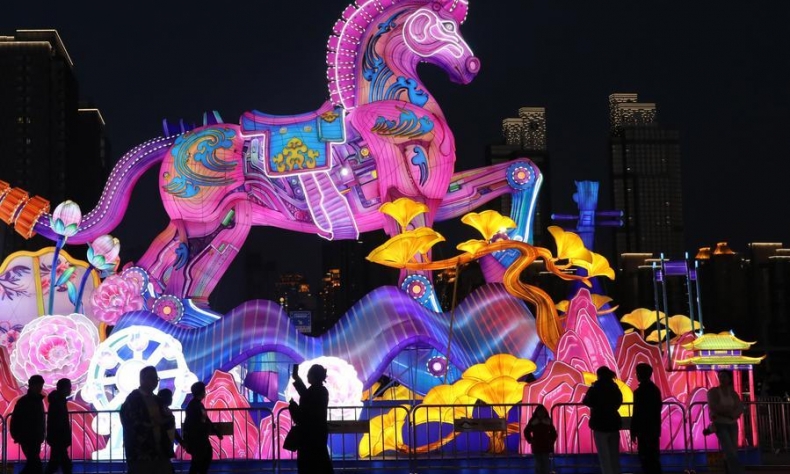
The Spring Festival, with its core messages of family reunion, social harmony, and renewal, touches universal human aspirations for happiness, peace, and prosperity.
In Chinese culture, the horse is a symbol of vigor, strength, and resilience, heralding a future of steady progress and prosperous development, President Xi Jinping said when extending Spring Festival greetings at a reception on February 14 in Beijing to ring in the Chinese New Year – the Year of the Horse. This statement, resonating with the heart of the world’s most populous national celebration, offers a profound lens through which to understand not just a festival, but the pulsating energy of contemporary China.
The horse, a revered icon in Chinese culture, represents far more than speed. It embodies perseverance, an indomitable will to overcome obstacles, and an enduring spirit of endeavor. As 1.4 billion people celebrated the Spring Festival, the Year of the Horse placed this emblematic creature in the global spotlight, its attributes mirroring the national ethos driving China’s journey of modernization.
This spirit is palpable across the nation. Rural entrepreneurs are revitalizing their hometowns through e-commerce, while young scientists are making breakthroughs in laboratories. It is captured in idioms like “yi ma dang xian” (taking the lead) and “long ma jing shen” (the spirit of the dragon-horse, denoting vigorous energy). Amid global uncertainty and profound transformation, China has consistently led in many key areas, from pioneering digital payment ecosystems and massive renewable energy deployment to leading in 5G infrastructure and electric vehicle adoption.
One of China’s core strengths lies in this progressive momentum and commitment to continuous exploration. In 2025, China’s R&D spending exceeded RMB 3.9 trillion, ranking second globally for many consecutive years. Furthermore, China became the first nation to amass over 5 million valid domestic invention patents. As a Bloomberg opinion piece noted in December 2025, one of the year’s most significant takeaways was to “never, ever underestimate China.” These achievements are not coincidental but are the results of persistent efforts of the Chinese people. As the country enters its 15th Five-Year Plan period (2026-2030), this enduring vigor will be instrumental in navigating internal transitions and external challenges, rooted in social stability, bold innovation, and a zeal for cooperation.
The 2026 Spring Festival became a vibrant showcase of this spirit translating into economic vitality. Dubbed the “longest Spring Festival holiday” due to additional days added to the break, it unleashed the country’s huge consumption potential. Travel authorities estimated a record 299 million average daily cross-regional trips. A festive tourism and culture campaign, featuring over 30,000 events and supported by hundreds of millions of RMB in consumption vouchers and subsidies, fueled nationwide participation.
Data revealed a galloping economy. On the first day of the holiday, foot traffic and sales at 78 key commercial districts surged by 23.2 percent and 33.2 percent year-on-year, respectively.
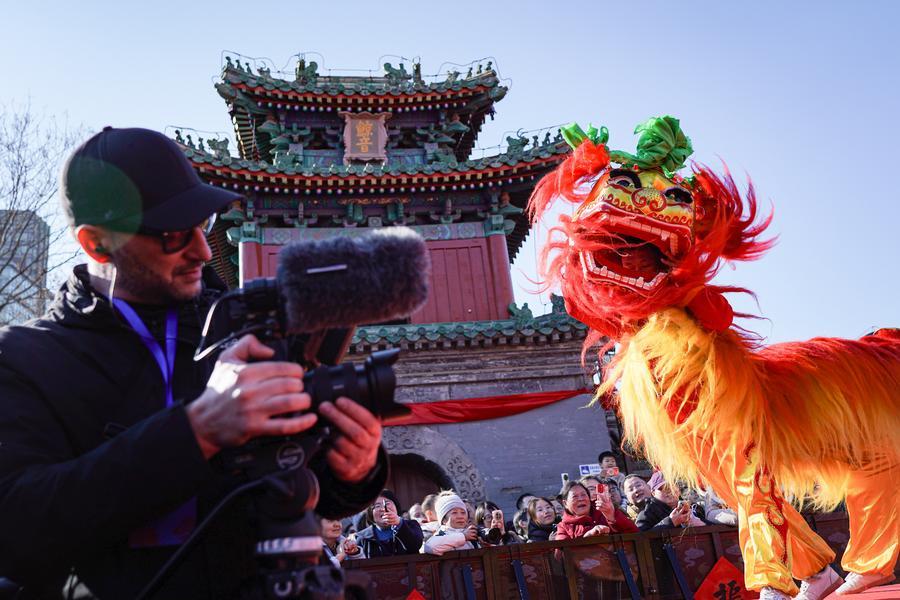
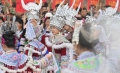
The desire for cultural experience was equally strong. According to travel platform Fliggy, searches for folk activity experiences more than doubled compared to last year, and trips featuring intangible cultural heritage saw searches rise over 60 percent. “This year’s Spring Festival shows how traditional Chinese culture is shaping new consumption trends,” noted Dai Bin, head of the China Tourism Academy, highlighting the popularity of the “China-chic” aesthetic among youth. From the lantern-lit streets of Fujian’s Quanzhou City, where tourists in traditional floral headpieces wandered through ancient streets, to immersive folk-themed treasure hunts in Shanxi’s Xiyang County, the demand for authentic cultural immersion was a key economic driver.
The Spring Festival celebration is one of global resonance. In late 2024, UNESCO inscribed “Spring Festival, social practices of the Chinese people in celebration of the traditional New Year” on its Intangible Cultural Heritage of Humanity list, a formal recognition of its universal cultural value. Today, it is a global spectacle. From the London Eye bathed in red, to dragon dances in Buenos Aires, about one-fifth of the world’s population engages in some form of celebration.
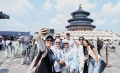
“To truly experience Chinese culture, come for the Spring Festival,” is becoming a travel mantra for international tourists. Visa-free policies, extended to 50 countries, including new additions like Canada and the U.K., have fueled an inbound boom. Data from online travel platform Qunar showed a 20-percent year-on-year increase in domestic flight bookings by non-Chinese passport holders during the holiday, with destinations spanning over 100 Chinese cities. They came not just for sights but for experiences: trying on haipin flower headwear in Quanzhou, watching Yingge dance in Guangdong’s Chaozhou, or marveling at Zigong’s lantern festivals in Sichuan Province.
The global embrace is commercial and cultural. Disneyland California Adventure launched a month-long Lunar New Year celebration. Global brands like Nike released special “Year of the Horse” collections, and Lego introduced festive sets. This is more than marketing; it’s the deep-seated projection of globalization, where an ancient festival finds new expressions in worldwide popular culture.
As UN Secretary-General António Guterres noted in his Chinese New Year message, “As we welcome the Year of the Horse, we celebrate a symbol of energy, success, and the courage to forge ahead – qualities our world urgently needs as we confront conflict, inequality and the climate crisis.” The Spring Festival, with its core messages of family reunion, social harmony, and renewal, touches universal human aspirations for happiness, peace, and prosperity.
Concluding his address at the Spring Festival reception, President Xi said the Bingwu Year of the Horse is a time to “stay confident and motivated, and gallop ahead with drive and determination on the new journey toward Chinese modernization.” The 2026 Spring Festival, powered by the horse’s symbolic vigor, demonstrated precisely this: a nation confidently harnessing its profound cultural heritage, technological prowess, and collective spirit to gallop into a future of shared prosperity, illuminating a path of civilizational harmony for the world.