How China Is Investing the World in the Green Revolution
 Facebook
 Twitter
 Linkedin
 Google +
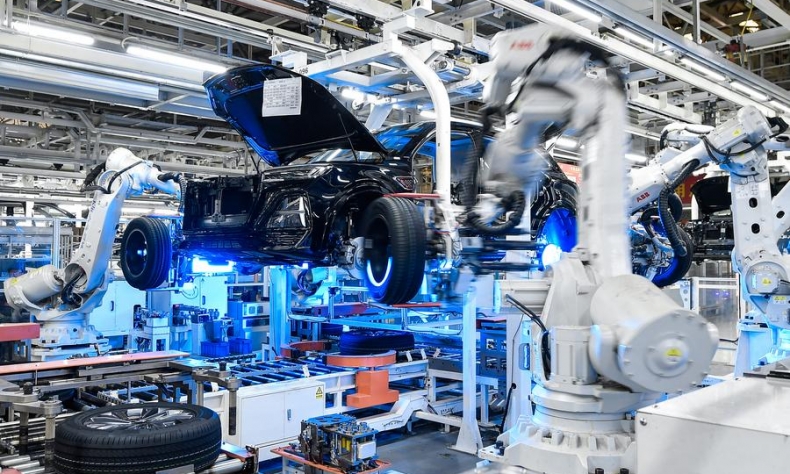
By focusing on high-tech and low-energy consumption sectors, China is positioning itself at the heart of the future global economy.
The global economic landscape is undergoing a quiet but profound transformation. For decades, the story of the world economy was characterized, to a certain extent, by capital flowing into China, transforming a billion-people nation into the world’s factory. Today, that narrative has flipped. We are witnessing the emergence of a new era where China is not only a destination for global investment, but also a primary source of it. This shift is not merely about volume; it represents a qualitative leap into the high-tech and green sectors that will define the twenty-first century.
Recent data underscores this tectonic shift. By the start of 2026, China’s outbound direct investment (ODI) has maintained a position among the top three globally for 13 consecutive years. In 2025, this figure reached $174.38 billion, a 7.1 percent increase over the previous year. With over 52,000 overseas enterprises established across 190 countries and regions, Chinese firms are no longer just exploring foreign markets – they are anchoring them. This is not the result of accidental growth but a deliberate, long-term strategy. As the country prepares its 15th Five-Year Plan (2026–2030), the rational and orderly allocation of industrial and supply chains across borders has become a central pillar of national policy.
This evolution is particularly visible in the transition from traditional manufacturing to high-value-added sectors. The days when Chinese overseas investment was synonymous with simple infrastructure are fading. In their place, the digital economy and green energy have become the new growth drivers. The statistics are telling: in the new energy vehicle (NEV) sector, overseas investment reached $16 billion in 2024, surpassing domestic investment for the first time. By early 2026, Chinese manufacturers are poised to export 3.1 million electric vehicles annually, a 40% year-on-year surge that reflects a fundamental change in global demand.
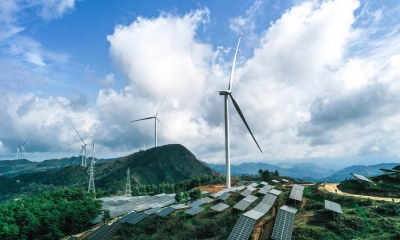
Consider the strategic expansion of the renewable energy and automotive sectors. Large-scale production bases for electric vehicles and battery technology are rising in regions as diverse as Southeast Asia, Latin America, and Europe. By building factories in Thailand, Brazil, Hungary, and Turkiye, Chinese companies are integrating themselves into local economies. This is a sophisticated form of globalization that moves beyond the simple trade of goods. It involves the transfer of technical standards and the creation of regional hubs. In 2025 alone, green energy construction investments under the Belt and Road Initiative grew by nearly 60 percent, reaching $11.8 billion.
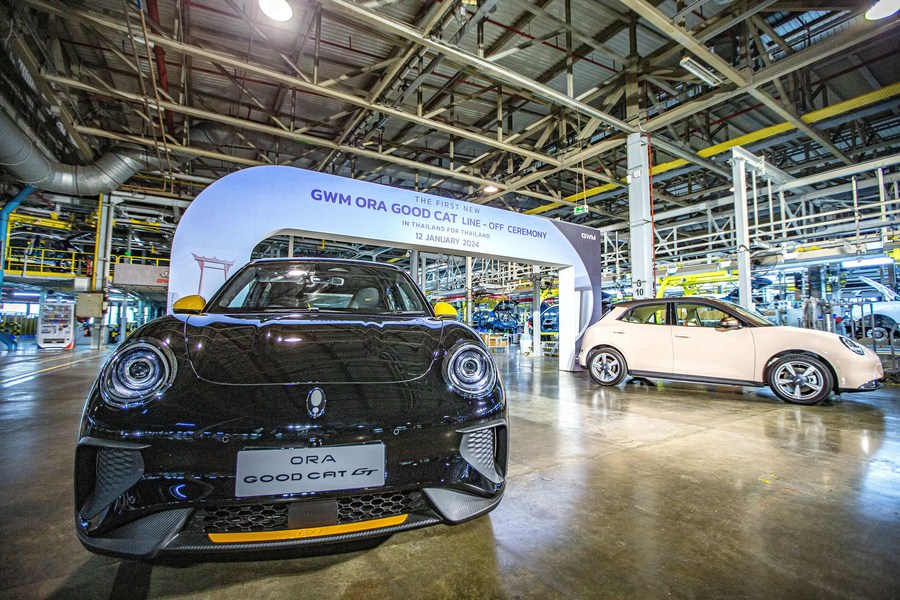
The global context for this expansion is complex. We live in an age of talk about decoupling and de-risking. However, the reality on the ground suggests a different trajectory. The gap between China’s advanced industrial phase and the early industrialization stages of many developing nations creates a natural point of connection. In Southeast Asia, FDI inflows reached $226 billion in 2024, with Chinese high-tech and digital infrastructure playing a critical role. For many countries in the Global South, Chinese investment in photovoltaics, wind power, and lithium batteries – where Chinese firms now command over 80 percent of global cell production capacity – provides a shortcut to modernization without the heavy carbon footprint of the past.
To facilitate this transition, the Chinese government is moving toward a more balanced investment strategy. The focus has shifted toward creating an integrated service platform that assists businesses in navigating the complexities of overseas operations. This platform addresses legal, financial, and logistical needs, aiming to mitigate risk in a world where overseas project cancellation rates can be twice as high as domestic ones. This institutional support reflects a realization of China to continue its growth, it must play an active role in the development of its partners.
This trend is described by international observers as irreversible and unstoppable. It represents a pivot from being a recipient of global capital to becoming a primary source of it. As Chinese firms break through technical bottlenecks – such as mainstream battery energy density reaching 300 Wh/kg – they are reshaping the perception of their industrial capabilities and injecting fresh vitality into a world economy that has often felt stagnant.
In the long run, the scale of China’s outbound investment will continue to exceed the amount of foreign capital it attracts. This transition marks the maturity of the Chinese economy. By focusing on high-tech and low-energy consumption sectors, China is positioning itself at the heart of the future global economy. In a world of profound uncertainties, this tech-focused expansion, based on mutual benefit and partnership, offers a rare path toward stability and integrated growth. The era of “Made in China” is being succeeded by the era of “Created by China, deployed globally.”
The article reflects the author’s opinions, and not necessarily the views of China Focus.