Investing in Health
 Facebook
 Twitter
 Linkedin
 Google +

Safeguarding public health is no longer limited to doctors’ prescriptions. It is now embedded in urban planners’ blueprints and implemented through community-level governance.
A curious trend has recently emerged within social media discourse on the progress of China’s healthcare system: More and more foreign visitors are adding a new item to their travel itineraries in China—seeking medical treatment and wellness therapies. Experiencing acupuncture and massage, purchasing affordable original medicines and health products, or trying out smart healthcare services that can be accessed with just a mobile phone are becoming part of the China experience. This trend is not only an upgrade of the kind of services travelers seek in China but also a reflection of China’s medical services beginning to reach world-leading standards.
While attending a joint group meeting of national political advisors from the Chinese Peasants and Workers Democratic Party, the Jiu San Society, the medical and healthcare sector and the welfare and social security sector, who were attending this year’s session of the 14th National Committee of the Chinese People’s Political Consultative Conference, China’s top political advisory body, in Beijing on March 6, Chinese President Xi Jinping said building a Healthy China by 2035 is a strategic decision made by the Communist Party of China Central Committee. He stressed that the period of the 15th Five-Year Plan (2026-30) is critical for achieving this goal and called for coordinated planning and accelerated implementation.
Wider health
Advancing the Healthy China Initiative is among the strategic priorities specified in the outline of the 15th Five-Year Plan, adopted at this year’s session of the 14th National People’s Congress (NPC), China’s top legislature, which ran from March 5 to 12. The document emphasizes implementing a health-first strategy, calling for a shift from a treatment-centered approach to one that prioritizes prevention. It also highlights key tasks to improve the public health system and build a high-quality, efficient medical service system. The government work report, delivered by Premier Li Qiang at the NPC session, also reiterated the need to “invest in both physical assets and people.” Positioning advancing the Healthy China Initiative as the central arena for investment in people represents not only a compassionate evolution in the nation’s development philosophy but also a strategic choice that directly contributes to the wellbeing of every citizen.
But does having world-class hospitals and advanced technologies alone define a Healthy China? Not quite. While we can take pride in our cutting-edge medical capabilities, we should also remember that the highest ideal of medicine is to “treat disease before it arises.” Saving lives and healing the injured remain essential, but a truly advanced healthcare system ensures people “fall ill less often and visit hospitals less frequently.” Health is not synonymous with medical treatment alone; it is also reflected in the air people breathe, the streets they walk on and the communities where they live.
This shift in thinking is clearly reflected in the new version of management measures and the evaluation standards for advanced cities and towns for public health and wellness, issued by the National Health Commission on February 9. The standards move beyond the traditional model of the health campaign that focuses primarily on sanitation and street cleaning, and instead vigorously promote the principle of “integrating the health-first strategy into all policies.” This also means that safeguarding public health is no longer limited to doctors’ prescriptions. It is now embedded in urban planners’ blueprints and implemented through community-level governance. By improving living environments, expanding green and open spaces, and enhancing slow-traffic systems, both urban and rural areas are gradually being reshaped with the health-first strategy.
Meaningful action
The blueprint is already in place. Yet translating the government commitment to investing in health into a tangible sense of wellbeing for millions of households will require meticulous effort.
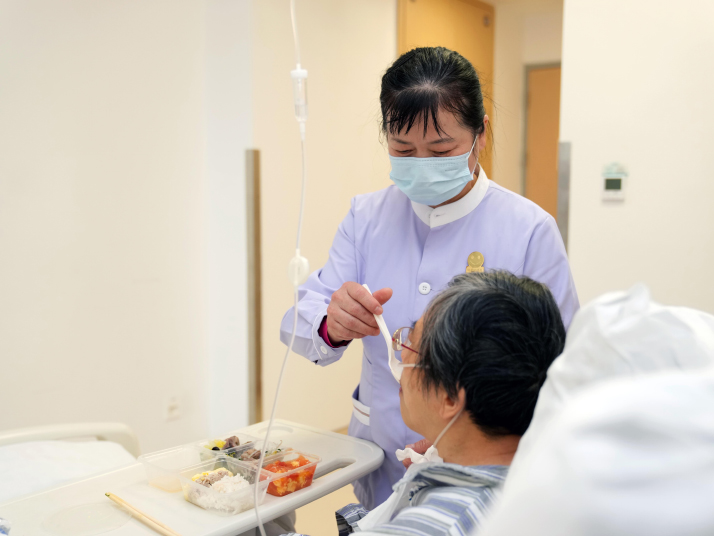
As population aging becomes an irreversible demographic trend, ensuring that the elderly are properly cared for has become a pressing challenge for society as a whole. Long-term care insurance has emerged as a timely support to households facing prolonged care demands due to disability or age-related functional decline. Over the next five years, the goal should be to shift the priority of this system from broad coverage to high-quality services. This requires not only expanding funding channels but also cultivating a professional workforce in rehabilitation and nursing care, while integrating institutional elderly care services with more targeted, community- and home-based models that provide seniors with a stable and dignified later life.
At the same time, the rapid advance of digital technologies is empowering proactive health management in unprecedented ways. From wearable devices capable of monitoring vital signs around the clock to AI models assisting with psychological counseling and even eldercare robots, smart healthcare is entering ordinary households at an accelerating pace. Yet as we embrace the benefits of algorithms, we must remain vigilant about the digital divide, ethical considerations, and the privacy and security of the health data. The future of smart health services must be a seamless integration of “high technology” and “high empathy.”
It is also worth noting that investing in people’s health is not merely a form of public expenditure; it is also a way of cultivating new drivers of economic growth. As public health literacy continues to improve, demand for personalized and high-quality health services is surging. The outline of the 15th Five-Year Plan specifically highlights the need to expand domestic demand and boost consumption. From health management and nutrition improvement services to wellness tourism and smart sports, the vast and dynamic “big health industry” is becoming a new engine for domestic demand. Going forward, market access should be further relaxed to encourage broader participation of private players, fostering a virtuous cycle in which the government ensures basic services, while the market drives diversification. Thus, the health consumption sector can become a powerful force driving high-quality economic development.
“Good health is the foundation of all endeavors.” This old saying remains relevant today. Positioning advancing the Healthy China Initiative as the central arena for investment in people is not only a matter of improving people’s living standards but also a strategic move for the country’s long-term development. Throughout the 15th Five-Year Plan period, by leveraging society-wide efforts and turning the health-first strategy into practice, every investment in health will translate into the happiness of hundreds of millions of people and ultimately into the enduring vitality and strength of the Chinese nation.
The author is an associate researcher at the Institute for Urban Governance and Sustainable Development at Tsinghua University and a senior research fellow at the university’s Institute of Sustainable Urbanization.