China’s Future Industries: Catalysts for National Growth and Global Cooperation
 Facebook
 Twitter
 Linkedin
 Google +
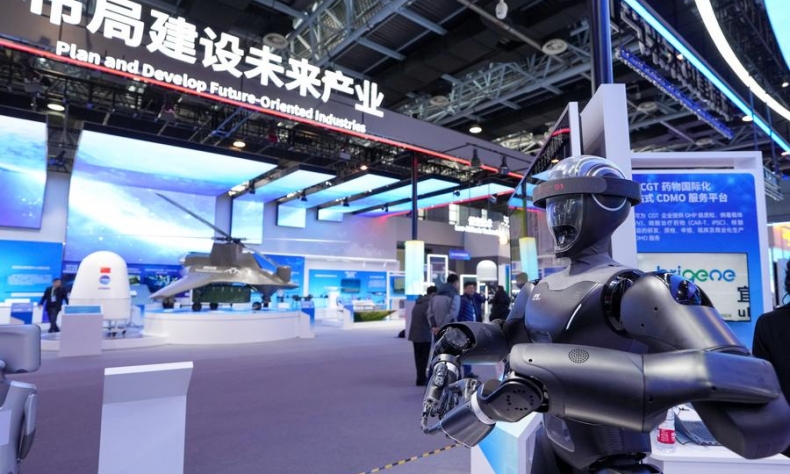
China’s greatest advantage is not just in isolated breakthroughs but in the coherence and depth of its industrial ecosystem.
China’s 15th Five-Year Plan marks a strategic pivot from simply chasing growth to building self-sustaining, technologically sovereign ecosystems, with an emphasis on cultivating “future industries” that will contribute to national rejuvenation and global cooperation.
According to China’s Ministry of Industry and Information Technology (MIIT), the national framework for cultivating future industries is structured around nine core sectors. First, the “manufacturing” sector includes humanoid robots, intelligent bionics, and 3D printing. Second, the “information” sector includes quantum technology, 6G, and brain-computer interfaces (BCI). Third, the “materials” sector includes metamaterials, smart materials, and high-performance nanomaterials. Fourth, the “energy” sector includes nuclear fusion, hydrogen energy, and solid-state batteries. Fifth, the “space” sector includes commercial aerospace, satellite internet, and deep-space exploration. Sixth, the “health” sector includes gene therapy, synthetic biology, and regenerative medicine. Seventh, the “environment” sector includes carbon capture and storage (CCS) and climate engineering. Eight, the “intelligence” sector includes general artificial intelligence (AGI) and embodied intelligence. Ninth relates to “evolving frontiers,” including dynamic sectors like the metaverse.
We will examine the strengths and challenges of this approach, how China is moving to address various challenges to fulfill national development strategies, and the opportunities these efforts present for international partners and global cooperation.
The strengths and challenges of China’s future industries approach
The “future industries” approach has distinct core strengths but also faces significant structural challenges.
China’s greatest advantage is not just in isolated breakthroughs but in the coherence and depth of its industrial ecosystem. The ability to move from design to scale, from pilot to deployment, faster than peers creates a powerful “flywheel” where manufacturing depth, supplier density, and tight feedback loops between producers and users turn industrial upgrading into a cumulative process. This is evident in sectors like renewables and now AI, where China’s strength in hardware manufacturing provides a unique foundation for embodied AI and robotics.
China’s approach also prioritizes the rapid integration of technology into real-world workflows. With AI, for example, the focus is shifting from frontier model competition to creating scalable AI platforms and deploying AI agents in manufacturing, logistics, and content creation to boost productivity. Meanwhile, the rise of models like “robotics-as-a-service” (RaaS) lowers barriers for enterprise adoption, with Chinese companies already leading in projected humanoid robot installations. This pragmatic focus on application and monetization creates a self-reinforcing cycle of investment and real-world data generation.
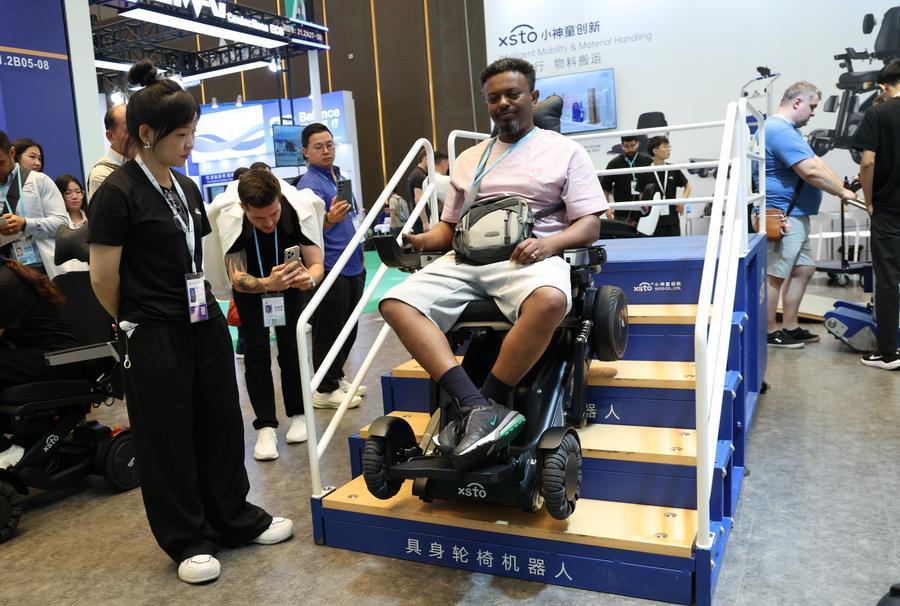
Despite these strengths and others, China does face several serious challenges. First, there is a fundamental imbalance between production and consumption. In short, there is tension between formidable productive capacity and inadequate domestic demand. While the 15th Five Year Plan is putting forward bold reforms to counter deflation and stimulate domestic demand, the export market remains a critical pool to absorb the huge production.
External technology dependencies, and restrictions continue to trouble the approach, largely due to efforts by the United States to erect a broad “technology blockade” against China. Despite progress, challenges persist especially in advanced semiconductors (sub-7nm), EDA software, specialized materials, and bio-design tools. The U.S.-led export controls directly target these vulnerabilities. Meanwhile, in biomanufacturing, experts warn of continued reliance on foreign core technologies like specialized industrial microbial strains.
Additionally, the approach also faces challenges associated with data bottleneck and standardization gap. For example, in data-hungry fields like AI and smart manufacturing, a significant challenge is the gap between raw data collection and the creation of high-quality, usable industrial datasets. Meanwhile, building unified standards and cross-sector data-sharing mechanisms is a major hurdle that requires not just investment, but complex institutional coordination.
Finally, while policy support is robust, the journey from research lab to commercial viability is perilous. Proposals for “laboratory companies” (hybrid R&D entities) aim to bridge this gap, but success is not guaranteed. Furthermore, as sectors mature, the government is signaling a shift from rapid expansion to quality control and market-driven consolidation, as seen in the NEV sector where overcapacity is forcing weaker players out. This transition to market discipline will be a painful but necessary.
Solutions with Chinese characteristics
Here we will examine tactics for addressing challenges facing semiconductor and biomedical-related sectors specifically. Consistent with the 15th Five Year Plan, both sectors will continue to benefit from major shifts towards more integrated, systemic, and proactive state intervention to overcome specific bottlenecks.
The core policy solutions for semiconductors focus on overcoming fragmentation and external technology denials through national-level coordination and a strategic reorientation. Building “China’s ASML:” Top industry executives have urgently called for a national initiative to integrate resources across companies and research institutes. The goal is to create a national champion “integrator” that can unify funding and talent to overcome barriers in EUV lithography, EDA software, and advanced silicon wafers during the 15th Five-Year Plan period.
Scholars have recommend shifting from a “catch-up” mode focused on “chokepoint” technologies to an “active” development strategy. This involves prioritizing breakthroughs in AI and high-performance computing chips while pursuing parallel development paths—refining traditional silicon technologies while fostering new architectures like advanced packaging and open-standard ecosystems (e.g., RISC-V, Chiplet).
In the meantime, China is strengthening supply chain integration through vehicles like the “Big Fund” to connect design, manufacturing, and materials. Simultaneously, it is pursuing a “dual-track” approach: the government-led track and the private sector track, for building domestic self-reliance. Meanwhile, China is expanding technical cooperation with Global South countries via the “Digital Silk Road” to create buffers outside Western-dominated systems.
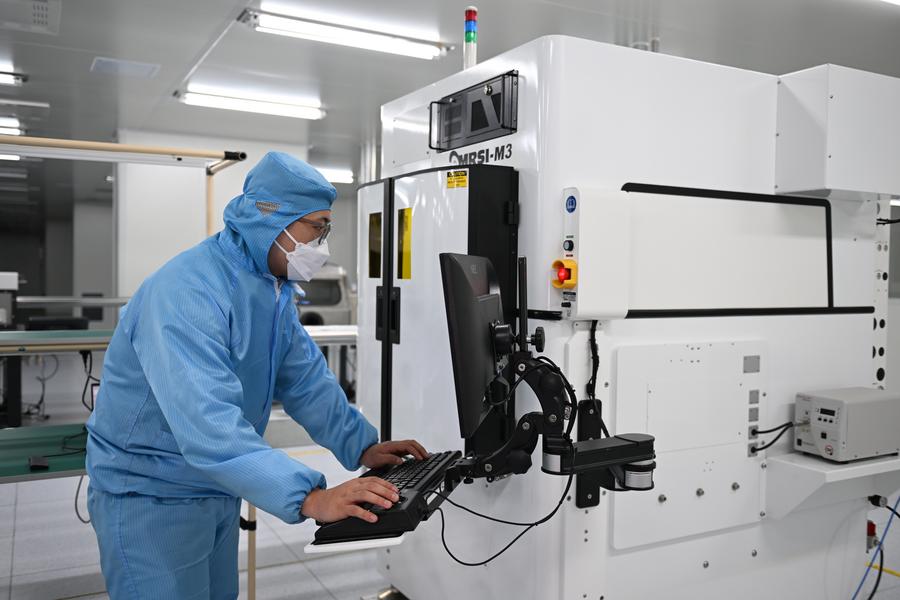
In biomanufacturing, the MIIT and NDRC launched a program to create a national network of specialized pilot-scale platforms in 2025. The goal is to establish over 20 platforms by 2027 to serve 200+ enterprises and incubate 400+ products, covering sectors from biopharmaceuticals to bio-based chemicals.
The first batch of 43 national platforms and 35 “iconic products” has already been designated, showing rapid implementation. Provinces are directed to support these with land, funding, and novel management mechanisms (e.g., streamlined approvals for pilot projects). Platforms are encouraged to operate sustainably by offering fee-based services to the industry. Furthermore, policies explicitly call for “pilot-scale professional” talent development, supporting their inclusion in professional title evaluations. They also promote open innovation by encouraging equipment sharing and collaboration between platforms.
Opportunities for international partners and global cooperation
Multinational companies (MNCs) can leverage newly opened sectors and integrate with China’s mature supply chains. The government has announced pilot programs expanding market access in value-added telecommunications, biotechnology, and wholly foreign-owned hospitals. Shanghai has released 26 new measures to support MNCs’ R&D centers, encouraging deeper involvement in government-led research and closer ties with local universities to transform research into products more efficiently. Foreign manufacturing companies are specifically guided to build high-level research platforms for key industrial chains like integrated circuits and AI.
When it comes to the developing country partners, China is actively building cooperation platforms. Through the BRICS Partnership on New Industrial Revolution Innovation Center, China launched the “Golden Egret” Excellence Scholarship, which has already trained 30 professionals from 22 countries, with a new program on smart manufacturing launching in 2026.
Three areas stand out where mutual benefits are most tangible. First, China offers its “super large scale market” and vast application scenarios. The newly opened sectors—value-added telecom, biotech, and foreign hospitals—represent technology-intensive, knowledge-intensive fields where foreign capital brings internationally recognized technical standards and management practices that will catalyze domestic industry upgrading. This creates win-win opportunities for sophisticated international services providers.
Second, China’s strength in cost-effective production, particularly in renewables (solar, wind, batteries), enables partnerships to deliver accessible technologies globally. China supplies 70 percent of global photovoltaic components and 60 percent of wind power equipment. The China-Latin America cooperation exemplifies this—combining China’s AI expertise with Latin America’s abundant renewable resources (Brazil, Chile) creates complementary partnerships that enhance energy efficiency while providing China’s technology with broad markets and innovation testing grounds.
Third, rather than simply adopting existing rules, China seeks to co-create standards. Through the “Digital Silk Road” and initiatives like the BRICS innovation center, partnerships in AI governance, 6G standard alignment, and digital infrastructure interoperability represent opportunities to shape future technological frameworks together. The “open source plus local deployment” model of Chinese AI platforms (e.g., DeepSeek, Qwen) allows global developers to build on these foundations while maintaining data security.
The most promising potential lies in partnerships where China’s market scale and manufacturing muscle combine with international partners’ technologies and local market knowledge—whether that’s co-developing drone ecosystems in Pakistan, building smart grids in Brazil, or establishing interoperable AI standards that work across borders.
Josef Gregory Mahoney is a professor of politics and international relations and director of the Center for Ecological Civilization at East China Normal University in Shanghai. He is also a senior research fellow with the Institute for the Development of Socialism with Chinese Characteristics at Southeast University in Nanjing.
The article reflects the author’s opinions, and not necessarily the views of China Focus.