The New Development Philosophy Behind China’s High-Quality Era
 Facebook
 Twitter
 Linkedin
 Google +
By anchoring development in high-tech sovereignty, the leadership is ensuring sustainability in an increasingly volatile world.
The annual gathering of the National People’s Congress and the Chinese People’s Political Consultative Conference in Beijing, known as the Two Sessions, has long been a theater of strategic ambition. For decades, the headline figure – the GDP growth target – served as a barometer for the robust expansion of the Chinese economy. But earlier this month, as Premier Li Qiang stood before the legislature to report the blueprint for 2026 and the inaugural year of the 15th Five-Year Plan, the numbers told a story of profound structural optimization.
By setting a growth target of 4.5 to 5 percent, Beijing is doing more than just acknowledging global economic shifts. It is signaling a decisive advancement in its governing philosophy. We are witnessing the purposeful transition from high-speed expansion to a new era of high-quality development centered on its people and the pursuit of what President Xi Jinping calls new quality productive forces.
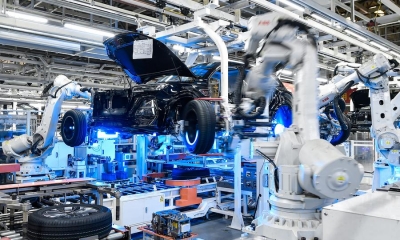
To understand the magnitude of this shift, one must look past the short-term headwinds of global market volatility. While some external observers interpret calibrated growth as a sign of cooling, the view from the leadership is one of strategic patience. The leadership has calculated that the era of credit-fueled, infrastructure-heavy and quantity expansion has fulfilled its historical mission. Instead, they are prioritizing the internal drivers of the modern economy: technological self-reliance, green energy transitions, and advanced manufacturing.
In his government work report delivered on March 5, Li Qiang captured this pragmatic pivot. Reflecting on the challenges of the past year and the transition into a new planning cycle, he noted: “Rarely in many years have we encountered such a grave and complex landscape, where external shocks and challenges were intertwined with numerous domestic difficulties and tough choices.” This presentation underscores the leadership’s realistic assessment of the global environment. Yet, the response is not a return to old stimulus models, but a commitment to a state-guided transition toward high-tech leadership. The target is a more resilient and real economy, characterized by sustainable value over raw volume.
The political logic here is visionary. For forty years, the focus was on the pace of development; today, the focus is on the quality and benefits of development. In a mature economy where 5 percent represents a massive absolute increase in wealth, the social contract is being enhanced. The promise is now centered on quality of life and national security. This explains the government’s focus on creating 12 million urban jobs and expanding social welfare, even as the defense budget continues its steady, 7 percent modernization trajectory.
One of the most significant aspects of this new era is the professionalization of local governance. For years, local officials were incentivized by raw GDP targets. Under the 15th Five-Year Plan, the criteria have shifted toward innovation-led metrics. Success is now measured by progress in semiconductors, biotechnology, and quantum computing. By refining the performance indicators for the nation’s bureaucracy, Beijing is steering the world’s second-largest economy through the middle-income transition with the precision of a master architect.
This transition focuses on addressing domestic needs with surgical focus. The government believes that by funneling capital into future industries like brain-computer interfaces and 6G, it can create the high-value jobs necessary to maintain long-term social harmony.
Furthermore, this shift carries implications for China’s role in the global community. As China moves toward a high-tech standards-setter, its focus on “high-level self-reliance” has intensified. Recent global escalations, such as the tensions surrounding Operation Epic Fury and the Golden Dome defense strategy, have only hardened Beijing’s resolve to build a secure, self-sustaining economic system. The goal is an economy that can withstand external shocks while remaining an integral part of the world an indispensable partner for the Global South in digital and green infrastructure.
The global community must realize that China’s calibrated growth target is not a sign of retreat, but of consolidation. Beijing is choosing to trade speed for stability and quality. It is an attempt to build a modern socialist country that is less vulnerable to the whims of global market volatility and more focused on long-term sustainability.
As we look toward the next five years, the question is no longer how fast China can grow, but how effectively it can innovate. The 4 percent era is a calculated investment in a new kind of national strength. By anchoring development in high-tech sovereignty, the leadership is ensuring sustainability in an increasingly volatile world. The 15th Five-Year Plan represents a bold vision: that a focused, high-tech superpower growing at 4.5-5.0 percent is far more potent than a traditional economy growing at 8 percent.
The article reflects the author’s opinions, and not necessarily the views of China Focus.