An Effort to Promote Global Data Governance
 Facebook
 Twitter
 Linkedin
 Google +
For the Global South, the WDO points to another path: not as a passive supplier of data, but as an equal partner.
For years, the digital economy has not been a level playing field ‒ it has been a new frontier of extraction. Wealthy nations and their tech giants have raced ahead, drawing vast amounts of data from developing countries ‒ personal, agricultural, health, and financial – only to convert it into profits and powerful AI systems that ultimately flow back to advanced economies.
The Global South has long been treated as a raw material supplier in the data age. That imbalance may finally be facing a credible challenge.
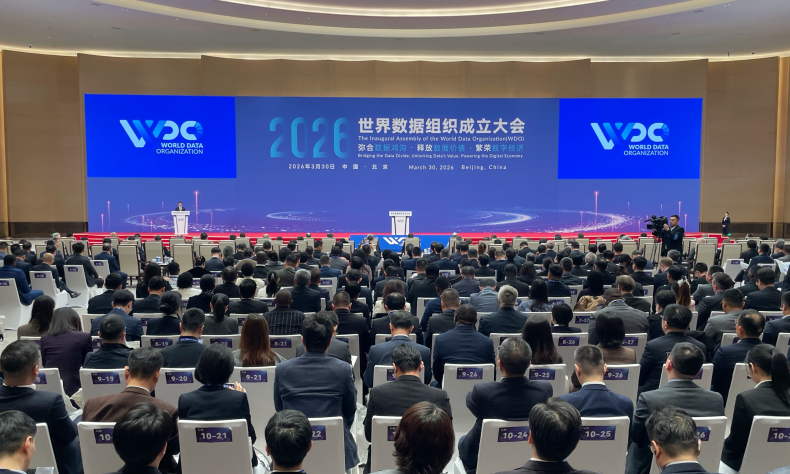
Last Monday, China announced the establishment of the World Data Organization (WDO), a Beijing-based, non-governmental, non-profit platform. Unlike treaty-based institutions such as the World Trade Organization, the WDO will not enforce binding obligations. Instead, it seeks to address critical gaps in global data governance by coordinating policy, recommending standards, facilitating technical collaboration, and supporting capacity building while positioning itself as a “trust anchor” for cross-border data flows. Its stated objective is to evolve into an influential global hub for data governance and cooperation by 2030.
For the Global South, it has the potential to become a structural turning point.
The existing data order has been shaped largely by those who already control the greatest volumes of data. Wealthy nations advocate for open data flows that benefit their cloud providers and AI firms, while embedding binding rules in trade agreements that lock in these advantages. Meanwhile, developing countries face a stark choice: accept these terms or risk digital isolation. The result is a quiet yet pervasive form of data colonialism, in which the Global South supplies raw data while the Global North captures the value in the form of insights, revenue, and power.
The WDO departs from existing models in three important ways.
First, it does not rely on binding rules. While this may appear to limit its authority, it instead offers flexibility. Developing countries have often been constrained by uniform frameworks designed in Geneva or Washington; the WDO’s voluntary, consensus-driven approach allows for national policy autonomy while maintaining international cooperation.

Second, it promotes equal participation and voting rights. In contrast to institutions such as the IMF and World Bank, where voting power is weighted by financial contributions, the WDO proposes a governance structure that ensures parity among members, regardless of economic size.
Third, it prioritizes capacity building over value extraction. By aiming to “bridge the data divide,” the WDO seeks to support developing countries in building digital infrastructure, cultivating human capital, enhancing analytical capabilities, and formulating context-specific regulatory frameworks.
For developing countries, data collection, processing and application holds significant potential to improve public health outcomes, strengthen climate resilience, and boost agricultural productivity provided the capacity to use it exists. In its absence, data is often exported, processed externally, and re-imported as high-value services, reinforcing existing asymmetries in the global digital economy.
Yes, the WDO is headquartered in Beijing and registered under Chinese law, and critics will be quick to label it a soft-power play. But look closer: it is structured as a voluntary international association, bringing together members from across countries and sectors. Its core premise that data governance should not serve as a profit engine for those already at the top resonates far beyond any single capital.
The real question is not where it comes from, but what it changes. Can it give developing countries a meaningful voice? Can it help them build the capacity to use their own data? Can it shift who captures the value? If the answer is yes, then the WDO may matter far more than its critics expect.
The timing is no accident. The world is rapidly moving toward a data-driven future. The question is simple: who gets to write the rules?
Until now, the answer has been clear those who already hold power. But that certainty is beginning to crack. As more countries demand a seat at the table, the digital economy will be shaped not just by innovation, but by whose interests it serves and who gets left out.
For the Global South, the WDO points to another path: not as a passive supplier of data, but as an equal partner. Not as a colony of the digital age, but as a co-author of how it is built.
If the WDO delivers on its promise ‒ equal votes, genuine support, and a foundation of trust beyond commercial interests ‒ it may become the most important data institution the developing world has ever known. And it sends a clear message to those long accustomed to writing the rules: the data divide will not be closed by charity. It will be closed by power ‒ power that is shared, not hoarded; built together, not imposed.
The article reflects the author’s opinions, and not necessarily the views of China Focus.