Who Decides What Happens on the Ocean Floor?
 Facebook
 Twitter
 Linkedin
 Google +
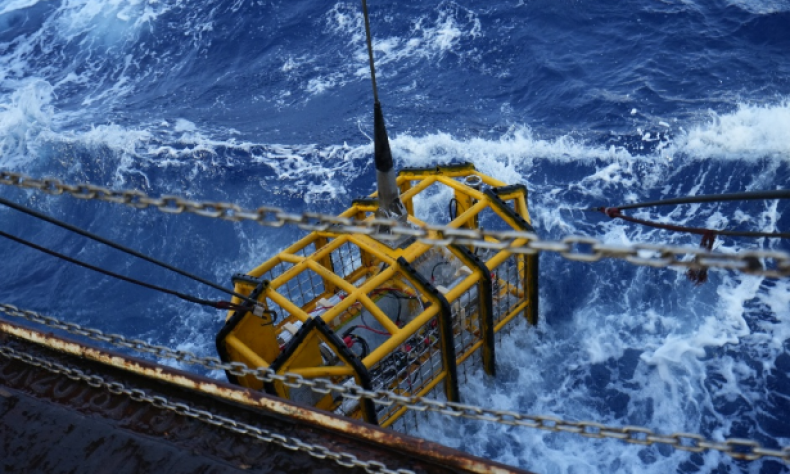
When technological capacity and resource distribution are profoundly unequal, how to prevent the powerful from claiming, in the name of efficiency, what belongs to everyone?
Within a span of less than 48 hours, between January 21 and 22, three things happened in quick succession: The U.S. National Oceanic and Atmospheric Administration (NOAA) published its final rule on deep-sea mining; the American subsidiary of The Metals Co. filed the first-ever “consolidated application” for both an exploration license and a commercial recovery permit; and the U.S. House of Representatives held a dedicated hearing on deep-sea mining. The synchrony of these three events points to a single underlying conclusion: The United States is issuing mining licenses for the international seabed on the basis of its own domestic law.
What lies on the ocean floor
Before unpacking what this means, a step back is in order.
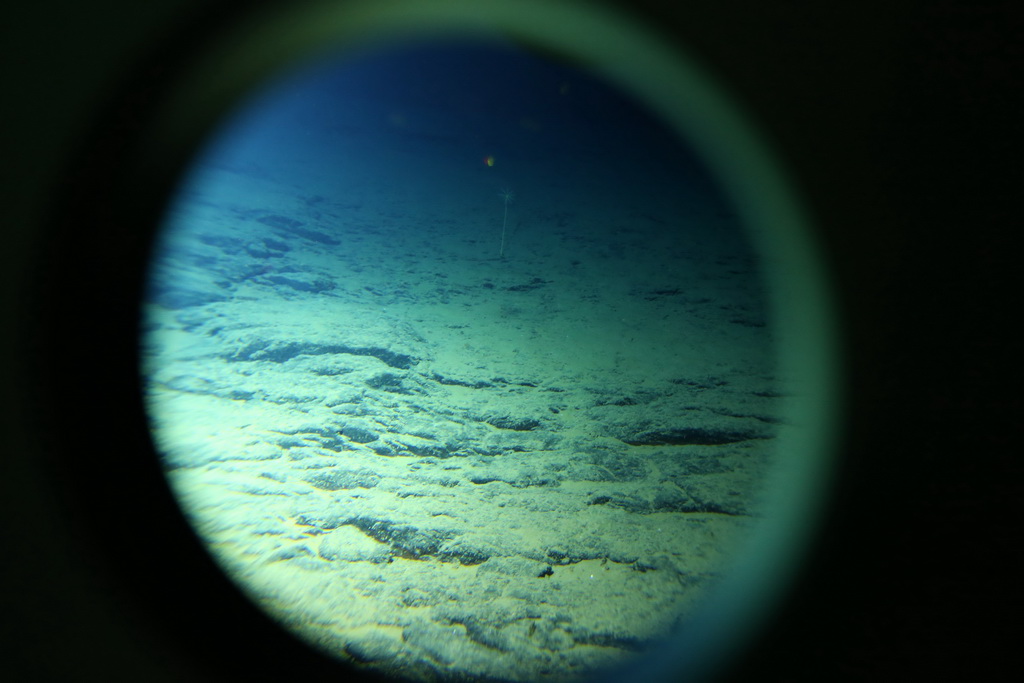
At depths of 4 to 5 km beneath the Pacific Ocean, scattered across the seafloor, lie hundreds of billions of potato-shaped formations known as polymetallic nodules. Rich in cobalt, nickel, copper and manganese—the metals essential for manufacturing electric vehicle batteries, wind turbines and semiconductors—these nodules have become objects of intense interest as terrestrial reserves grow tighter. The Clarion-Clipperton Zone alone, a stretch of the Pacific between Hawaii and Mexico, is estimated by the International Seabed Authority (ISA) to contain more than 21 billion tons of polymetallic nodules, with concentrations of cobalt and nickel exceeding the entirety of known land-based global reserves.
So why has no one mined them yet? Two obstacles remain: The technology required to operate at such depths is still extraordinarily challenging and expensive, and the world has yet to agree on the rules. Under the 1982 United Nations Convention on the Law of the Sea (UNCLOS), the international seabed beyond national jurisdiction and its resources are declared the “common heritage of mankind,” to be governed by the ISA on behalf of all humanity. The ISA has some 170 members and has issued 31 exploration contracts, but a regulatory framework for actual commercial mining has never been finalized. The sticking points are familiar: How much ecological damage is acceptable, how should revenues be shared with countries that lack the technology to mine, and who enforces the rules. After years of negotiation, none of these questions have been resolved.
The U.S. never ratified UNCLOS and is not an ISA member. For decades, this changed little in practice. What is new is that Washington has decided to act on it.
What the United States is doing
The legal foundation for U.S. push is a domestic statute from 1980—the Deep Seabed Hard Mineral Resources Act—that had sat largely dormant for over four decades. NOAA’s January rule effectively transforms the act into a functioning commercial licensing framework. The centerpiece of the new rule is a “consolidated application” process that merges what had previously been sequential steps—an exploration license followed separately by a commercial recovery permit—into a single procedure, dramatically shortening the timeline to approval. At the same time, at the ISA Assembly in July 2025, the U.S. formally clarified that it does not consider itself bound by UNCLOS provisions governing deep-sea mining. This marks a shift from decades of deliberate ambiguity toward explicit unilateralism.
On the commercial and diplomatic fronts, Washington has moved with similar purpose. A U.S.-Japan framework agreement on critical mineral supply chains was signed last October, with the aim of building an end-to-end industrial chain covering exploration, extraction and processing. NOAA completed a scientific mapping survey of the Cook Islands’ exclusive economic zone, establishing a foothold in the Pacific under the banner of research cooperation. Taken together, these moves send a clear signal: the U.S. is not merely seeking to mine the seabed itself, but to construct an alternative mineral order—one that operates outside the ISA system and on terms it controls.
This move has not gone uncontested at home. During the public comment period for NOAA’s new rule, some 24,000 written and oral submissions were received, approximately 98 percent of which expressed opposition, from environmental groups, scientists and fishing communities. The legislature of Guam, a U.S. territory in the western Pacific Ocean, formally requested a moratorium on mining in the Mariana region, citing threats to fisheries and the cultural rights of the indigenous Chamorro people. However, none of this altered the course. The U.S. Congress went further, launching investigations into environmental organizations that had participated in the public debate over deep-sea mining—framing legal opposition as a political act.
Where the problems lie
Supporters of the U.S. approach often point out that ISA negotiations have dragged on for years, leaving companies without a workable regulatory framework. This is not an unreasonable observation. But the problems created by unilateral action cannot be resolved through appeals to efficiency.
The first problem is the challenge to international legal order. The “common heritage of mankind” is not a rhetorical flourish, it means that no state may claim exclusive rights over the mineral resources of the international seabed. ISA Secretary General Leticia Carvalho stated plainly after the U.S. executive order that the move “sets a dangerous precedent that could destabilize the entire system of global ocean governance.” The deeper concern is the precedent itself: If the U.S. is permitted to issue seabed licenses under domestic law, the same right is available to every other country. Once that norm is established, the ISA framework loses its authority and there is currently no alternative international order to take its place.
The second is the effective exclusion of smaller states. One of the core purposes of the ISA framework is to give small island nations and developing countries a meaningful institutional seat at the table, to participate in rule-making, register objections and share in future revenues. When the U.S. bypasses the ISA, these countries have no standing in U.S. domestic proceedings and no mechanism through which to challenge American actions. The experience of Guam is instructive—even a formal request for a moratorium from a U.S. territory went unanswered. The prospects for independent Pacific island nations are, by implication, even more limited.
The third is the unequal distribution of environmental risk. Deep-sea ecosystems are exceptionally fragile; once disturbed, recovery timelines are measured in decades or longer, and the effects do not respect national boundaries. The ISA framework exists in part to ensure that extraction is being grounded in adequate environmental assessment and that the distribution of benefits is transparent and fair. The U.S. rule formally retains environmental review requirements, but merges them with the commercial application process, allowing both to proceed in parallel. Critics worry about precisely this logic of “assess as you go”: It is procedurally compliant, but places the commercial timeline ahead of environmental understanding. This is not a question of technical capacity, it is a question of where responsibility sits. Without international oversight, the potential environmental costs are borne globally, while the countries and peoples with no voice in the process have no avenue for accountability.
A question left open
The age of deep-sea mining may be difficult to forestall. The demand for these minerals, driven by the energy transition, is real. So is the anxiety about supply chain security.
But the need for these minerals and who gets to decide how they are extracted are two separate issues. The principle of common heritage of humankind, as established by UNCLOS, is at its core an institutional answer to a practical problem—when technological capacity and resource distribution are profoundly unequal, how do you prevent the powerful from claiming, in the name of efficiency, what belongs to everyone?
When those who shape the rules choose to stand outside them and begin to act on that choice, the question becomes more pressing than ever: What, in the end, gives international order its authority?
The author is an associate professor at China Strategy Institute of Ocean Engineering, Shanghai Jiao Tong University.