Zero Carbon Pioneers
 Facebook
 Twitter
 Linkedin
 Google +
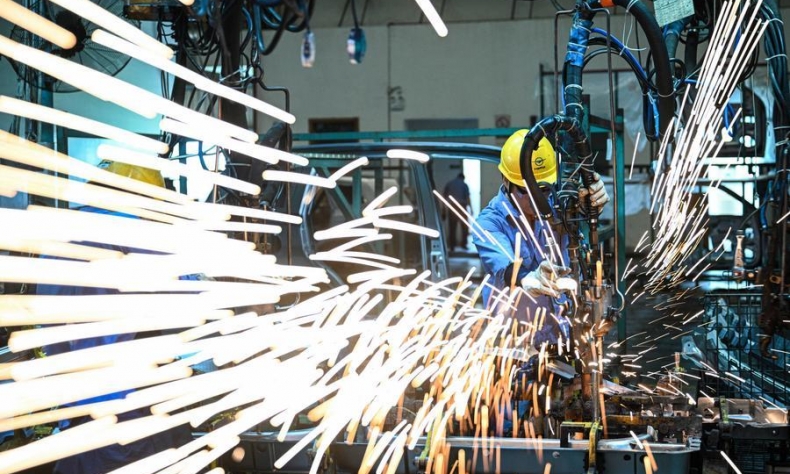
China is advancing a national strategy to develop net-zero carbon factories, driving the greening of key industries.
Long associated with industrial smoke and heavy pollution, the chemical industry is undergoing a rapid transition to cleaner production. In the Jintang Economic Development Zone in Chengdu, Sichuan Province, B&M Tech’s lithium-ion battery materials factory exemplifies this change.
Inside its smart workshops, autonomous vehicles handle internal logistics while highly digitalised production lines keep operations running smoothly. Comprising roughly 15 workshops and 100 production lines and capable of producing 100,000 tonnes annually, the site has achieved operational net carbon neutrality and become the first cathode material factory in China certified as “zero carbon.”
This transformation is taking place against a global backdrop of stronger climate commitments and accelerating decarbonisation efforts in China and beyond. B&M Tech, which introduced its zero-carbon factory programme in 2021, demonstrates this approach through optimised processes, reduced energy use and extensive digital management systems.
The practices of such companies are supporting the implementation of a broader national policy framework. On 19 January, five Chinese institutions published the Guidelines on Promoting the Construction of Zero-Carbon Factories, marking a further step in the industrial green transition. This approach was confirmed in the Government Work Report released in early March, which states that “the development of zero-carbon factories and industrial parks will be pursued.”
According to the Ministry of Industry and Information Technology, a zero-carbon factory does not imply the total absence of emissions. Rather, it refers to achieving the greatest possible reductions under current technological and economic conditions, while continuously improving processes to keep emissions at their lowest level. The release of the Guidelines marks a shift from isolated initiatives to a more structured national strategy.
Placing carbon at the centre
Carbon neutrality is increasingly recognised as a key objective of global climate governance. Tian Jinping, a researcher at Tsinghua University’s School of Environment, said that by November 2025, nearly 13,000 companies around the world had joined the international Race to Zero initiative, which seeks to cut global emissions by half by 2030. Over 2,300 companies have already adopted carbon neutrality goals and are stepping up efforts to build zero-carbon factories.
In this context, the Guidelines outline a detailed roadmap for building zero-carbon factories, with one key pillar being the establishment of a comprehensive carbon management system. This system must allow emissions to be measured, reported and verified rigorously. Companies are encouraged to produce a detailed inventory of direct emissions, especially those arising from fuel use or industrial processes, along with indirect emissions related to electricity and heat consumption.
Experts note that establishing a zero-carbon factory requires two complementary strategies. The first focuses on reducing emissions at their source, especially through changes in the energy mix. Expanding the use of green electricity and adopting hydrogen or biomass are among the main solutions. The second approach involves reducing emissions from industrial processes directly, particularly by streamlining production methods, improving the energy efficiency of equipment, and implementing emerging technologies like carbon capture and storage.
However, the transformation goes beyond the factory floor. The Guidelines also emphasise the concept of the carbon footprint, aiming to involve the entire industrial chain in emissions reduction. Companies are encouraged to assess emissions across the product life cycle, from raw material sourcing to transport and distribution.
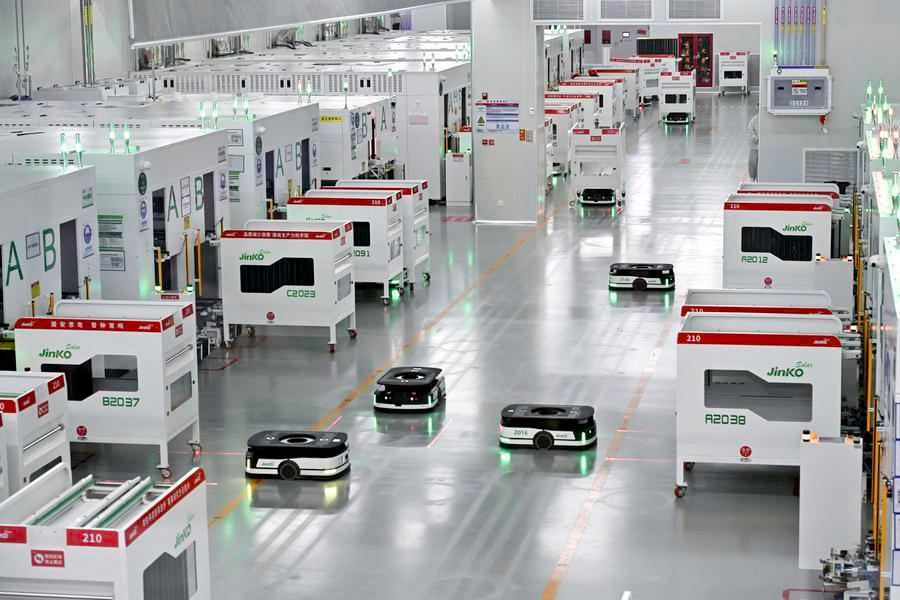
Digital technologies are crucial to this transformation. Using industrial internet, big data and artificial intelligence technologies, companies can monitor energy consumption and carbon emissions in real time. Digital energy management platforms support data-driven analysis, optimise production and improve environmental outcomes.
The issue of carbon offsetting is also gaining attention. The Guidelines stress that carbon neutrality must first rely on effective emissions reductions. Offsetting mechanisms, such as carbon markets or specific environmental projects, should be used only as a last resort to neutralise residual emissions that cannot be eliminated.
Technical standards play a central role in this effort. A set of technical standards and methodological frameworks will be developed to harmonise emission calculation methods, assessment criteria and certification procedures. The aim is to ensure international credibility and support the integration of Chinese companies into global low-carbon value chains.
A phased development strategy
China is adopting a phased approach to building zero-carbon factories. The initial focus will be on industries where the transition is technically simpler and where electricity is the main source of energy consumption.
From this year, the first group of pilot plants will be selected to serve as benchmarks. By 2027, sectors such as automotive, lithium-ion batteries, photovoltaics, electronics and computing infrastructure are expected to constitute the initial core of zero-carbon industries. By 2030, the aim is to extend this approach to traditional energy-intensive industries such as steel, construction materials and non-ferrous metals.
This gradual, sector-specific approach takes into account the development characteristics of different industries, their emissions profiles, the technological challenges of decarbonisation, and the cost-benefit balance. It aims to cultivate leaders in competitive sectors such as automotive and lithium batteries, while exploring transition pathways for traditional energy-intensive industries, said Pan Xiaohai, deputy general manager of China International Engineering Consulting Corp., China Energy News reported.
However, he noted that the transition to a zero-carbon industry remains at an experimental stage: some companies do not yet fully understand the transformation and lack clear strategies to achieve it. This is why the Guidelines stress the importance of coordinated support from public policies, market mechanisms and technological innovation.
Han Qifang, a deputy to the National People’s Congress and director of the training centre at Chenguang Cable, a cable manufacturer based in Zhejiang Province, told 21st Century Business Herald that it is necessary to accelerate the development of unified standards for evaluating zero-carbon factories. He also recommended enhancing support for direct green electricity procurement, the green electricity certificate market, and the carbon market to lower companies’ energy expenses. Additionally, he suggested setting up targeted financial mechanisms and subsidies for low-carbon technology transformation.
In December 2025, just prior to the release of the Guidelines, three national institutions announced the first national list of 52 zero-carbon industrial parks. Expanding from zero-carbon factories to industrial parks signals a strategic shift in scale, linking single-site efforts to broader systemic change.
As Pan pointed out, “Zero-carbon factories are not only an essential vehicle for companies wishing to reduce their emissions while improving efficiency, but also the basic unit supporting the construction of zero-carbon industrial parks and the green transition of national development.”