Trump’s Global Gamble Is Undermining America
 Facebook
 Twitter
 Linkedin
 Google +
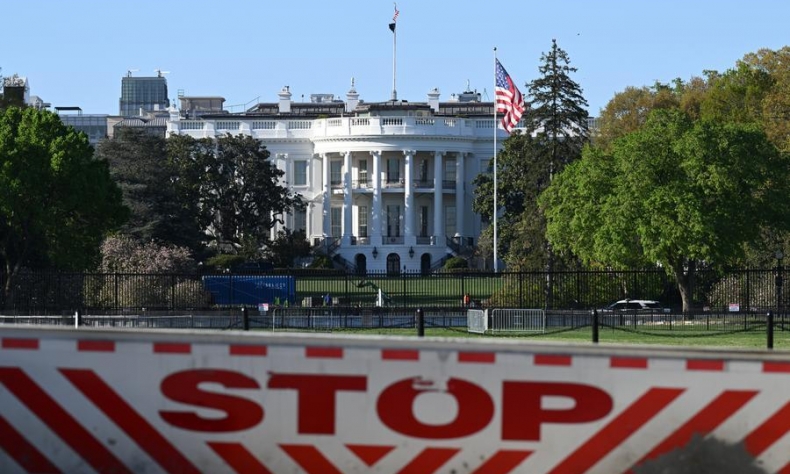
President Trump’s reckless global gamble has blinded him to the long-term risks that his series of almost obsessive foreign moves—targeting China, Europe, Russia, Iran and indeed the entire world—pose to the U.S.
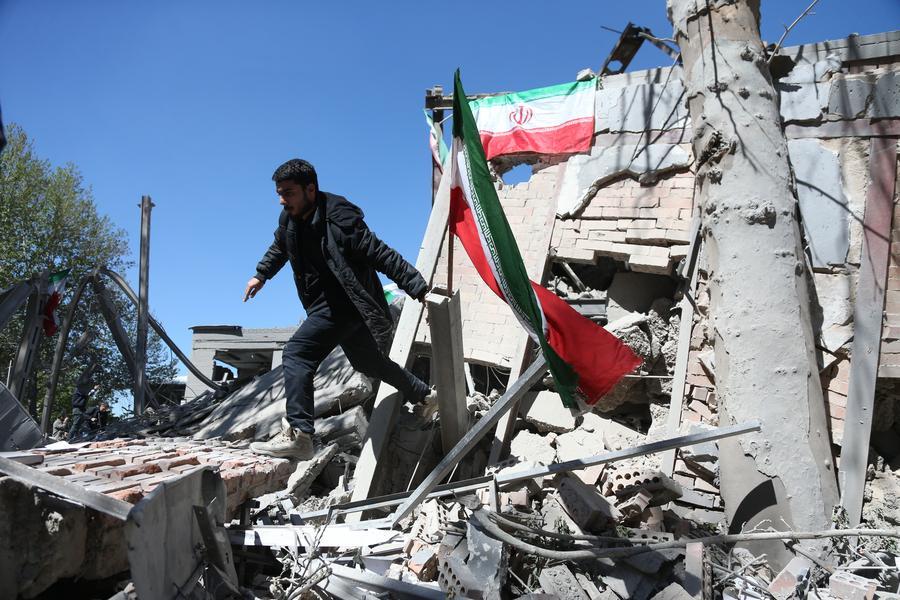
The United States is clearly in trouble in Iran. Despite it successfully assassinating Iran’s Supreme Leader Seyyed Ali Khamenei, the country has stood firm. Iran still has a younger Khamenei at its helm, Mojtaba Khamenei, the son of the late supreme leader, and the position of the Islamic Revolutionary Guard Corps (IRGC) in the country has only been further consolidated as a result.
Washington’s blitzkrieg plan has completely backfired, miring it in this costly and protracted military campaign. According to Center for Strategic and International Studies, the figure the U.S. spent during the first 100 hours was approximately $3.7 billion, or $890 million per day, and the comprehensive estimate as of late March (30 days) was $27 billion to $29 billion. What is more, Iran’s retaliatory strikes on U.S. military bases in the Middle East have inflicted losses of at least several billion dollars on the U.S.
In Russia, numerous analysts believe that U.S. President Donald Trump launched the war against Iran in a bid to seize important political leverage ahead of his upcoming visit to China, enabling him to engage with China from a position of strength. Yet it is now clear that this calculation has utterly failed.
Since returning to the White House, Trump has pursued an extremely radical and hardline foreign policy. In his quest to establish a new U.S.-led post-capitalist world order, he is openly dismantling the existing global framework: waging trade wars against the entire world, brazenly betraying America’s closest allies including the United Kingdom, Canada and Europe, and flouting international organizations such as the United Nations, the European Union, NATO, the G7, the World Trade Organization and the World Health Organization.
Endless conflicts
The U.S. president has sought to seize control of the world’s oil and gas resources: He orchestrated the detention of Venezuela’s presidential couple, putting the world’s largest oil reserves—Venezuela’s—under U.S. control; upon learning of the massive oil and gas deposits hidden beneath Greenland’s ice sheet, he immediately launched intense pressure on Denmark and Greenland’s indigenous people under the pretext of “threats posed by Russia and China,” in an attempt to gain control of the island’s resources; and his launch of the war against Iran is an effort to take hold of Iran’s oil as well. Had this gambit succeeded, the U.S. would have seized a controlling stake in the global oil industry, pushed Russia and its shadow oil tanker fleet —the fleet it uses to deliver sanctioned oil—out of the oil market, and left China, the UK, Europe and even the oil monarchies of the Persian Gulf dependent on Washington for oil supplies.
Among all of Trump’s foreign policy moves, the only one that can be called a success—and an unfinished one at that—is his maneuver in Venezuela. The U.S. had no choice but to end its trade war on China, as the negative impact of the war on the U.S. economy far outweighed that on China’s. Hamas has not been suppressed, the situation in Gaza has reached a stalemate and Trump’s promised “satisfactory resolution” is nowhere in sight. The conflict in Ukraine has also dragged on without a conclusion; what is worse, it has laid bare the fact that Ukrainian President Volodymyr Zelenskyy is in effect defying Trump. While paying lip service to Washington and feigning obedience, he has in practice pursued the UK’s agenda—one that aims to prolong the war between Ukraine and Russia until Russia is completely defeated in its confrontation with NATO. Amid these successive setbacks, Trump’s prestige has plummeted both at home and abroad.
Soured U.S.-EU ties
Another U.S. miscalculation is that U.S.-EU relations have deteriorated further during Trump’s second term. The Americans have never concealed their contempt for Europe, and have long sought to exclude it from the ranks of major players in world politics. Now, the U.S. is systematically delivering the final blow to the declining European nations: In 2022, it severed Europe’s economic ties with Russia and deprived Europe of access to cheap Russian energy supplies, directly robbing European goods of their international competitiveness.
Washington’s master plan was to push Europe’s economic giants and major corporations to increasingly turn to the U.S., seeing it as the world’s only safe and stable economic haven. In 2025, the EU formally capitulated to the U.S., striking a “deal” with Trump: The EU would impose zero tariffs on U.S. goods, commit $750 billion to importing energy from the U.S., invest an additional $600 billion in the U.S. economy, and spend tens of billions more on purchasing U.S. weapons for the war against Russia, while transferring its old weapons to Ukraine. In “return” for these concessions, the U.S. merely cut tariffs on European goods from 30 percent to 15 percent.
The U.S. willingness to sacrifice the EU for its own economic interests and political ambitions is forcing Europe to seek dialogue with Russia and China. France’s Ministry of Foreign Affairs recently announced that the EU needs to establish a direct dialogue channel with Russia. After all, it is the European countries that are shouldering the brunt of the financial and military burden of pursuing “victory” for the Zelenskyy regime. Europe is prepared neither resource-wise nor psychologically to fight on two fronts: against Russia on the one hand, and in a political and economic contest with the U.S. on the other. A complete break in direct communication with Russia will only end up harming the EU itself.
European leaders have also been visiting China one after another, including the February trip by German Chancellor Friedrich Merz. Many of Washington’s allies are deepening their economic and political cooperation with China by the day. This trend has not only weakened the unity of the Western alliance and made America’s containment of China unsustainable, but also forced the White House to scramble for new strategies to maintain its dominant position on the world stage—yet the White House is at a loss for solutions. While the U.S. pretends that nothing is amiss in public, the deepening integration of Canada, the UK, France and China has filled Washington with profound anxiety. These countries may soon be followed by America’s vassal states such as Japan, the Republic of Korea and Australia, which are highly likely to follow suit. Even India and the Gulf states, in this new global landscape, have in effect no other choice but to seek new avenues for secure cooperation with China.
President Trump’s reckless global gamble has blinded him to the long-term risks that his series of almost obsessive foreign moves—targeting China, Europe, Russia, Iran and indeed the entire world—pose to the U.S. Ironically, however, his actions have ultimately pushed Europe to rethink its relations with Russia and China.
The author is editor in chief of Russia and China magazine.