Heroic or Hegemonic?
 Facebook
 Twitter
 Linkedin
 Google +
When war is waged for hegemonic expansion and in violation of international law, then even the most daring rescue becomes a cold political spectacle—a flimsy fig leaf for imperial ambition.
On April 3, a U.S. F-15E Strike Eagle fighter jet crashed in the mountainous region of south Iran’s Isfahan Province. What followed was a 36-hour cross-border search-and-rescue operation. President Donald Trump then hailed it on social media as “one of the most daring search and rescue operations in American history,” claiming both pilots were safely recovered “without a single American killed, or even wounded.”
Iran’s account was the opposite. Iran’s Tasnim News Agency reported that its forces shot down two Black Hawk helicopters and one C-130 transport aircraft, killing multiple U.S. soldiers, and accused American forces of trying to destroy wreckage and conceal the bodies of the dead. It revealed in the early hours of April 5 that a U.S. search-and-rescue operation for one pilot of a downed warplane had yielded no results, and that U.S. forces had attempted to kill the pilot through airstrikes on potential hiding places inside Iran.
The heroic rescue became world-class black humor.
But the critical question is not who was lying. One must instead ask a harder question: Why has the moral significance of such rescue missions shifted so dramatically over time?
The answer lies not in tactical details, but in the nature of war itself.
There was a time when stories of U.S. rescues resonated deeply. Saving Private Ryan (set in Normandy in 1944) shows sacrificing eight to save one, revering life in a just anti-fascist war. Black Hawk Down (set in 1993 in Somalia) depicts special forces’ duty, but in an ambiguous era of geopolitical ambition cloaked in humanitarianism; both captivated the public.
The 2026 rescue in Iran was a different story altogether. According to reports, U.S. forces operated more than 300 km inside Iranian territory. To cover their advance, they conducted “targeted fire missions” against Iranian search parties, while the Central Intelligence Agency spread disinformation.
Some will argue: Any sovereign nation has the right to rescue its downed personnel, regardless of the mission’s original purpose. Rescue is inherently humanitarian.
That argument has force—but only up to a point. Article 2(4) of the UN Charter prohibits the threat or use of force against the territorial integrity of any state. If the U.S. incursion into Iran lacked a legal basis—no UN Security Council authorization, no imminent armed attack justifying self-defense—then the rescue operation is not a neutral humanitarian act. It is an extension of an unlawful intervention.
The 2026 mission, whatever its specific purpose—intelligence gathering, preemptive strike or coordination with Israeli operations—had no UN Security Council mandate and was not framed by Washington as collective self-defense against an imminent Iranian attack on the U.S. homeland.
There is no denying the courage of the individual U.S. soldiers, but a simple principle holds: The moral significance of a rescue cannot be separated from the legitimacy of the mission that required it.
What makes this more troubling is that it is not an isolated incident. Since 2001, the U.S. has conducted military operations in some 80 countries under the so-called “war on terror.” Brown University’s Costs of War Project revealed in 2021 that these campaigns have killed more than 940,000 people directly, including over 432,000 civilians, and displaced nearly 38 million people.
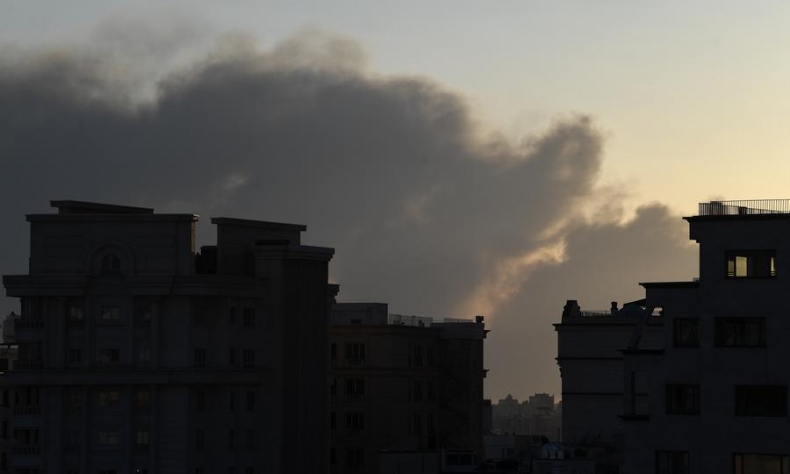
Since the U.S. and Israel launched an attack on Iran on February 28, many key figures of Iran including Supreme Leader Ali Khamenei have been killed in the air strikes. According to the latest data from the International Federation of Red Cross and Red Crescent Societies, over 1,900 Iranian civilians have died and at least 20,000 have been injured, among whom a large number are women and children. What is most heartrending is that, according to Iran’s Department of Education, till April 8, at least 312 teachers and students were killed in this war. On the scales of humanity, the life of an American pilot and that of an Iranian child carry equal weight.
When war is fought to resist aggression and defend peace, rescue is a heroic testament to humanity. When war is waged for hegemonic expansion and in violation of international law, then even the most daring rescue becomes a cold political spectacle—a flimsy fig leaf for imperial ambition.