Spain Says ‘No to War’
 Facebook
 Twitter
 Linkedin
 Google +
Spain’s firm stance, calling for an immediate ceasefire and a return to dialogue, signals a broader awakening of Europe’s strategic autonomy, reflecting a shared commitment among European countries to uphold international law, multilateralism and global stability.
On April 11-15, Spanish Prime Minister Pedro Sánchez paid an official visit to China. In just four years, this was his fourth trip to the country.
At a time when Europe’s political atmosphere is becoming increasingly tense and debates over “China policy” throughout the European Union are growing more vocal, Sánchez’ visit, as scheduled, sent a clear signal: Spain maintains its own independent assessment of global developments and seeks to preserve greater strategic autonomy.
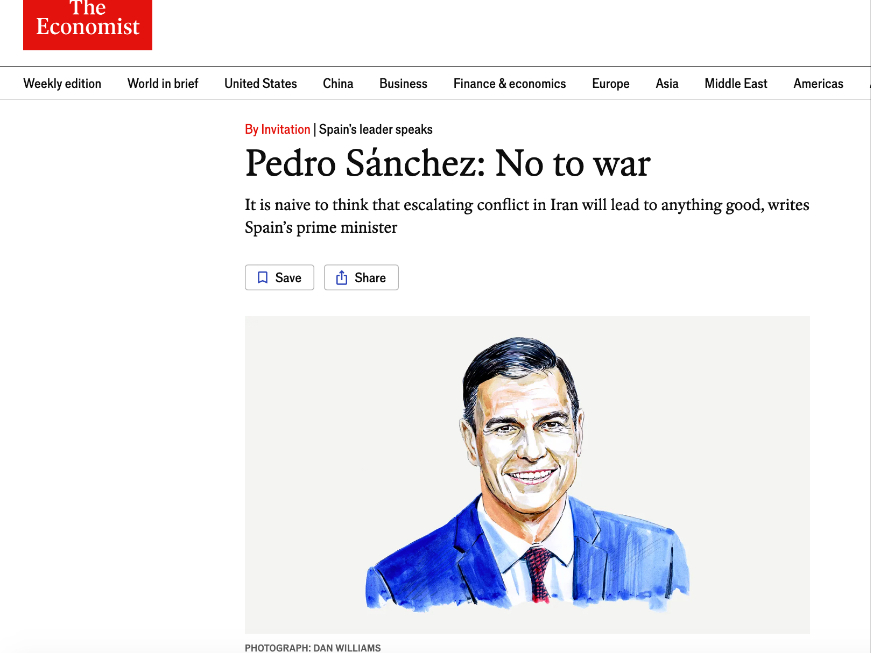
“No a la guerra” (“no to war” in Spanish), Sánchez declared the Spanish Government’s official position on the situation in Iran on March 4 after the U.S. and Israel launched strikes on the Middle Eastern country on February 28. As the risk of spillover from conflicts in the region continued, and continues, he firmly opposed unilateral military actions that violate international law and called on all parties to cease hostilities immediately and return to resolving disputes through political and diplomatic means.
Sánchez also emphasized that Spain would not be “complicit in something that is bad for the world and contrary to our values and interests simply out of fear of reprisals from someone.” Addressing the issue of the American use of military bases on Spanish soil, he reiterated that Spain’s defense cooperation with the United States is governed by treaty frameworks, and that these bases would not be used for operations beyond those agreed arrangements.
Lessons from history
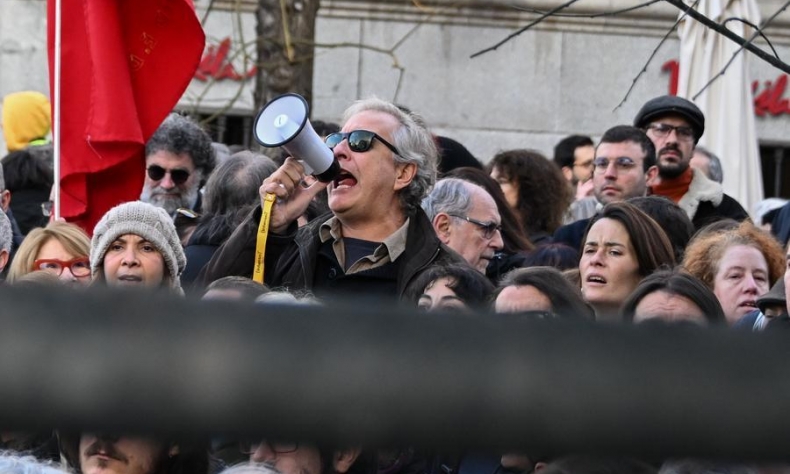
Spain’s anti-war stance is rooted in historical experience. In 2003, the Spanish Government supported and participated in the U.S.-led invasion of Iraq, a decision that triggered intense domestic controversy. The move bypassed United Nations Security Council authorization and lacked a solid legal basis under international law. More importantly, it ran counter to overwhelming public opinion: 80-90 percent of Spaniards opposed the country’s involvement in military action against Iraq. Millions took to the streets in large-scale anti-war protests, with “No a la guerra” becoming the defining slogan nationwide.
On the morning of March 11, 2004, in retaliation for Spain’s support of the Iraq War, terrorist group al-Qaeda carried out coordinated bombings on commuter trains in Madrid, the Spanish capital, killing 193 people and injuring more than 2,000. It remains the deadliest terrorist attack in Spain’s history.
The tragedy took place just three days before Spain’s general elections and is widely believed to have influenced the outcome. The incumbent People’s Party was defeated and the new Socialist administration, led by José Luis Rodríguez Zapatero, announced the full withdrawal of Spanish troops from Iraq by May 2004.
To this day, the memory of these events remains all too vivid for many Spaniards. The Iraq War triggered severe consequences, including acts of terrorism and refugee flows, which reverberated across Spain and Europe at large.
This experience has since shaped a strong current in Spanish public opinion and, at times, government policy, favoring opposition to unilateral military intervention, prioritizing international law and avoiding involvement in wars that run counter to public will.
In addressing the current Middle East situation, Sánchez has repeatedly invoked this historical lesson, stressing that people do not want to see more war and an uncertain future, and reiterating that Spain will not repeat past mistakes or pay the price for reckless unilateral military adventurism.
Public consensus
Within today’s European political landscape, the Sánchez government has emerged as a leading voice among left-leaning administrations, upholding a progressive and peace-oriented foreign policy. This approach not only aligns with the Spanish public’s longstanding inclination toward peace and social progress, but also reflects shifting perceptions amid evolving transatlantic relations.
According to a poll released in February by Belgium-based market research and public opinion firm Polling Europe, European public perceptions of the U.S. saw a sharp decline in 2025, influenced by shifting domestic political dynamics in the U.S. and its unilateral actions abroad. In Spain, public disapproval of U.S. President Donald Trump was even stronger than the EU average. Notably, a higher proportion of Spanish respondents supported adopting a “confrontational stance” toward the U.S. (17 percent) rather than a “permissive” approach (15 percent). This evolving public sentiment provides a solid domestic foundation for the Spanish Government’s diplomatic strategy.
For decades, the U.S. has maintained a regular military presence at the Rota Naval Base and the Morón Air Base in south Spain, both of which serve as key nodes in NATO’s southern defense architecture.
Under the U.S.-Spain defense cooperation agreement, the bases are Spanish sovereign territory, and any usage beyond routine training and maintenance requires explicit Spanish Government approval. In February-March, Spain denied the U.S. use of these bases to carry out offensive strikes against Iran, given the recent unilateral U.S. military actions against Iran lack authorization from the UN Security Council and fall outside the scope of both NATO’s collective defense framework and Spain-U.S. defense cooperation agreements, leading to diplomatic tensions with the Trump administration. The bases do remain operational for NATO missions and non-offensive U.S. activities.
Spain’s firm stance, calling for an immediate ceasefire and a return to dialogue, is therefore not an isolated diplomatic gesture. Rather, it signals a broader awakening of Europe’s strategic autonomy, reflecting a shared commitment among European countries to uphold international law, multilateralism and global stability.
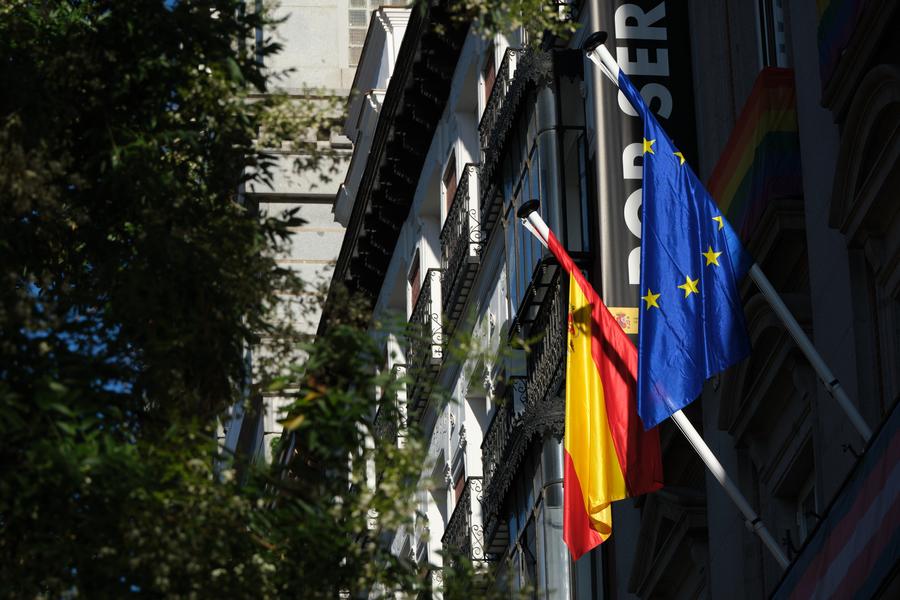
Strategic autonomy
Spain’s position has resonated widely across Europe. Leaders of major EU institutions, including European Commission President Ursula von der Leyen, as well as heads of key member states such as French President Emmanuel Macron, have publicly supported Spain’s stance.
The use of U.S. military bases has sparked much debate in several European countries. In Romania, media outlets have warned that the unauthorized use of national military facilities by the U.S. could risk drawing the country into regional conflicts. Portugal faces similar concerns, with public opinion widely opposed to allowing its military bases to serve as logistical hubs for unilateral military interventions. Many in Portugal fear that prioritizing alliance ties over independent diplomacy could lead to an erosion of national sovereignty.
In response to Trump’s threats of cutting off all trade with Spain, following the country’s denial of U.S. access to military bases for operations related to strikes on Iran, the Spanish Government has expressed confidence in its ability to manage the situation, while placing its hopes in coordinated action at the EU level. As noted by Mao Ning, a spokesperson for China’s Ministry of Foreign Affairs, in response to a media inquiry on Trump’s fury toward Spain, trade should not be instrumentalized or weaponized, a position that received positive coverage in Spanish media as a show of support from China.
Meanwhile, the Spanish prime minister’s consultations with von der Leyen, Macron and other European leaders, and European Council President António Costa’s statement on March 4 that “the EU will always ensure that the interests of its member states are fully protected,” highlight the urgency of forging a unified European voice. Such unity is seen as essential to stabilizing regional dynamics and safeguarding global peace.
In a world marked by conflict and fragmentation, the need for rationality and restraint has never been greater. As Sánchez observed, it is naive to think that “practicing blind and servile obedience is a form of leadership.” Indeed, the more challenging Europe’s external environment becomes, the more important Spain’s independent diplomatic approach appears. Decades of European integration have demonstrated that only through internal unity can Europe confidently uphold its values, defend international legal norms and independently determine its position in major global crises.
The international community increasingly looks to the EU, and to more European countries, to move beyond blind alignment, assert strategic autonomy and exercise greater global influence, helping steer the Middle East back toward peace and stability, and contributing greater certainty to an increasingly turbulent world.
The author is secretary general of the Center for Spain Studies, the Chinese Academy of Social Sciences.