Washington Is Undermining International Institutions With Power Politics
 Facebook
 Twitter
 Linkedin
 Google +
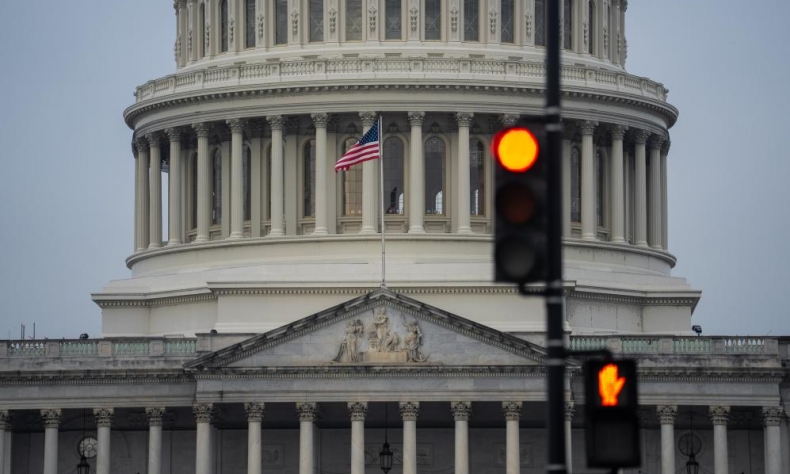
The United States must drop its cynical power politics, militarism, and imperialism.
President Donald Trump, in his first and second administrations, broke with American tradition and rejected International Law and institutions. Washington’s foreign policy is fully militarized and is characterized by power politics. The present long-planned war against Iran is a war of aggression and is contrary to International Law.
U.S. once supported international law and institutions
In the past, from its founding as a representative, constitutional, and federal Republic, the United States valued constructive diplomacy and valued the ideal of International Law with its emphasis on justice and peace. This concern for cooperative relations and for the moral and legal dimension in international relations carried the United States through the nineteenth century. In the twentieth century, it influenced Washington’s cooperation in the activities of the League of Nations and influenced the U.S. role in the founding of the United Nations.
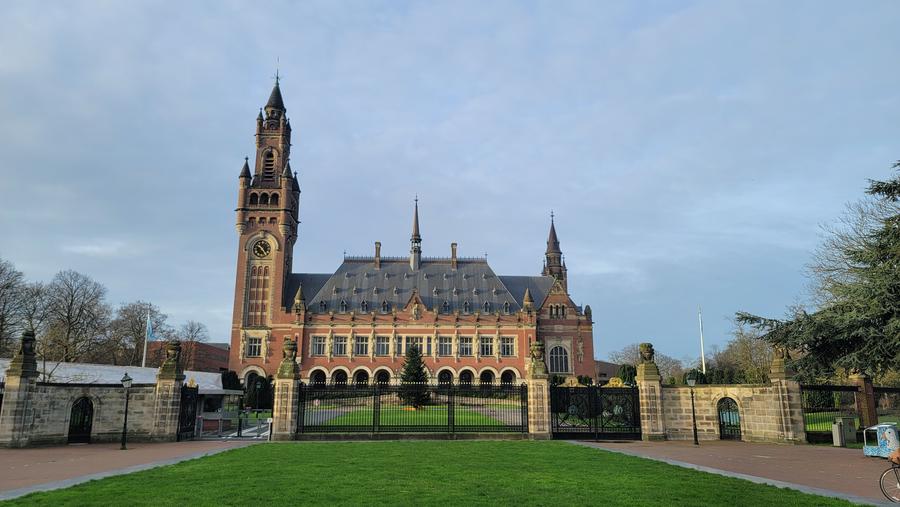
The United States proposed the formation of an International Court of Justice at the second Hague peace conference in 1907. A spirit of internationalism in support of diplomacy and international law, rather than a spirit of militarism and power politics, was in the minds of American leaders in the past but not today.
After World War II, the United States supported various international organizations in the effort to promote worldwide peace and economic, social, and scientific development.
“The upheaval produced by a world conflict has again confronted public opinion with the necessity of reexamining the basic institutions of world society,” Manley O. Hudson, an American judge on the International Court of Justice (ICJ), wrote in 1944. “The generation that is bearing the brunt of the present struggle may seize the opportunity to reshape many of these institutions for the better serving of future needs.”
Is the current global turmoil and economic upheaval caused by Washington’s war against Iran a similar turning point requiring the reshaping of international institutions and a reaffirmation of, and a return to, International Law?
Trump’s power politics in foreign policy
The Trump Administration amplifies a new Cold War against Russia, China, and now Iran. Washington pursues a foreign policy of reckless, amoral, and lawless “power politics,” what twentieth-century Germans called Machtpolitik (Power politics) and Realpolitik (Realist politics). Such policy was implemented under the Kaiser and under Hitler. The U.S. and allies, including China, fought two World Wars to defeat it.
Louis Fisher, an expert on the U.S. Constitution, presented a detailed study of the problem in his book, Presidential War Power (2004).
“In our time, there is a tendency to dismiss what the framers said about the war power, as though contemporary conditions have eclipsed their eighteenth-century models,” he said. “Yet on the willingness of Presidents to go to war for personal (or partisan) reasons rather than the national interest, the framers gave clear warning of a presidential weakness that has been in full view, particularly since World War II.”
“Might makes right” mentality in Washington
Washington today is awash in cult-like power politics “might makes right” thinking. Christian Zionists, Jewish Zionists, and Neoconservatives promote war in the Middle East. The military-industrial complex feeds the fire in the minds of assorted hawks in the Washington “Swamp” like Pete Hegseth and Lindsay Graham.
Such alien and aggressive “Machtpolitik” foreign policy thinking entered the United States at the university level during the 1930s primarily through professor Hans J. Morgenthau, a Jewish émigré from Nazi Germany. Morgenthau taught at the University of Chicago. His so-called “Realist” school of international relations became influential in the Cold War era and, unfortunately, persists today in Washington.
Christoph Frei, a professor in Switzerland, wrote a revealing and definitive study, Hans J. Morgenthau: An Intellectual Biography. Frei documented how Morgenthau’s “might makes right” thinking derived mainly from the 19th-century German philosopher Friedrich Nietzsche.
Nietzsche’s philosophy of the “will to power” influenced the rising European militarism of the late 19th century which, in turn, led to the clash of European empires in World War 1 ― British, French, German, Russian, Austro-Hungarian, and Ottoman.
It is useful to separate traditional American clear-eyed realism from the cynical European Realpolitik. As noted, American foreign policy traditionally included elements of idealism such as respect for International Law and institutions.
In the post-World War II years, Morgenthau cloaked this German origin of the Realpolitik international relations theory he propounded. Frei explained his method. “He set out to wrap his distinctly German theory in entirely new clothing,” he said. “The most obvious, if laborious, approach was to cite Anglo-Saxon authors as well as classical authorities in support of his position.” The use of the cynical 17th-century British writer, Thomas Hobbes, comes to mind.
Morgenthau’s “Realism” was given respectability by deceptively camouflaging it as “Hobbesian.” Hobbes argued that international relations consisted of a vicious “war of all against all.” Morgenthau praised the 20th-century British historian, E. H. Carr, who is also considered a contributor to the Realist school of international relations. The erratic and cynical Carr, a former British official, once supported Hitler, promoted Hobbes.
For Nietzsche, and for Hobbes, power was the ultimate goal in a grim and lawless world. Both reduced international relations to a psychological model. Theirs was a psychology of amoral cynicism. Frei explained that “Nietzsche explores human impulses in all their diversity, only to reduce them to a single basic drive, the will to power.” Adding a vulgar Darwinian and Spenserian biological “survival of the fittest” cast to such a theory, it serves to justify aggression and war.
The United States must drop its cynical power politics, militarism, and imperialism. Washington must abide by its own Constitution, must respect the UN Charter and International Law, and must pursue peaceful coexistence and international cooperation.
The article reflects the author’s opinions, and not necessarily the views of China Focus.