China’s Successful Poverty Alleviation Efforts and Valuable Lessons for the Developing World
 Facebook
 Twitter
 Linkedin
 Google +

Key lessons for other developing states include sound governance and targeted interventions with pragmatism.
There is little denying that China’s historical poverty alleviation efforts are anchored in its ability to lift 800 million people out of poverty since the 1970s. Over the past four decades, China has contributed to a staggering 75 percent of global poverty reduction.
In 2026, major achievements in the post-poverty alleviation governance indicate successful and targeted strategies from Beijing to consolidate gains. Examined closely, prudent and pragmatic outlooks under the leadership of President Xi Jinping have allowed for the institutionalization of poverty alleviation policies, rural empowerment drives and the establishment of monitoring systems with data analytics, providing lessons on domestic poverty alleviation models for the developing world to possibly replicate.
Building on historical precedent
Much of the success of Beijing’s 2026 poverty alleviation campaign builds on historical precedent and accelerates gains. Poverty remains a significant challenge in the Global South. According to United Nations estimates, 808 million people worldwide were living in extreme poverty in 2025. Against this backdrop, China stands out as a rare success story. Key events such as China’s accession to the WTO in 2001 allowed for its strong domestic systems to benefit from increased economic growth and marketization which had reduced poverty significantly.
Addressing drivers and enablers
Key drivers and enablers in 2026 explain Beijing’s ability to eradicate domestic poverty through alleviation strategies. Firstly, sustained economic growth has been concomitant with structural changes in the society and economy. Years of robust GDP growth culminating in 5 percent in the first quarter of 2026 for example, are consistent with employment generation and the consolidation of the market economy which has been able to reintegrate surplus labor. This entails that China’s economic growth model is not merely about pursuing GDP growth rates through market-oriented development, but is consistent with redistribution of economic dividends for a more prosperous and egalitarian society.

In this regard, several important variables in 2026 are of note. Firstly, the 2026 state-backed No.1 Central Document provides insights on how temporary programs lifting citizens out of the poverty net are complemented with a sound, norms-based, state-support system to prevent relapses into poverty and hedge against economic shocks. The holistic approach of the No. 1 Central Document follows years of planning, targeted strategies implemented by the Communist Party, which is data-driven and is cognizant of trends in household incomes. It also follows interventions including skills upgrading, vocational training and state-sponsored financial assistance as multilayered, multipronged processes offering lessons for developing countries pursuing one-dimensional approaches to eradicating poverty.
Rural revitalization and holistic frameworks
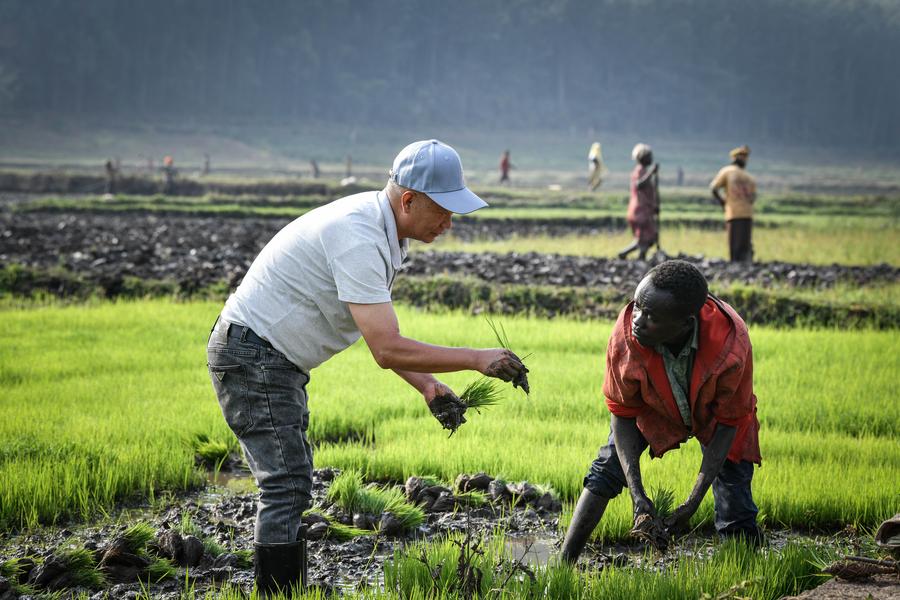
Rural development has remained central to poverty alleviation efforts. In 2026, this focus has been reflected in national revitalization policies targeting hinterland regions, aligning agricultural production with evolving consumption patterns. Such revitalization is complemented by robust monitoring and evaluation frameworks ensuring that state-backed strategies are followed by innovative mechanisms identifying people at risk of relapsing into poverty. This constitutes an important recurring pattern in Chinese policy making. Unlike countries which witness frequent political instability, the Communist Party’s ability to ensure policy continuity allows for successful interventions to take hold.
Long-term planning from Beijing includes successive Five-Year Plans, most notably the recent 14th Five-Year Plan (2021-2025) which focuses on consolidating and expanding poverty alleviation achievements, alongside resource distribution mechanisms for effective policy implementation. However, such multilayered approaches entail prioritization for market access and market-oriented development which have been the bedrock of the Chinese economy. By combining rural revitalization with modernization, China has allowed rural citizens to benefit from improved access to e-commerce and e-governance. This in turn, has had a trickle-down effect on segments such as farmers who are able to take part in nationwide supply chains. The Household Responsibility System for example, seeks to boost agricultural productivity while promoting rural income growth by accommodating all segments of society.
Lessons and takeaways
Such foundational contexts provide valuable lessons for other developing countries. Firstly, it demonstrates that growth alone does not suffice in the absence of inclusivity and employment-intensive approaches, which are needed to address income inequalities. Secondly, states must demonstrate inbuilt capacities, innovative approaches and financial capacity which China has done through administrative efficiency, capacity and strong, inbuilt statistical methods for inference.
Furthermore, loopholes in governance in developing countries remain the biggest obstacle to achieving poverty alleviation. One-dimensional policies such as providing subsidies or state-backed financial support will not address underlying structural root causes. China’s approach is comprehensive, holistic, and targeted, focusing on specific households, income levels, counties, and the distinct needs of individual citizens. Equally important is the provision of digital services to least advantaged segments in rural areas, alongside the provision of roads and electricity to make them part of the national economy. Such facilities cannot be limited to certain urban areas, which despite being hubs for economic activity, do little to address underlying poverty in the developing world.
Poverty alleviation policy-making is also long-term, underpinned by years of investments and strategic foresight. It is the product of over 40 years of long-term planning and unwavering political commitment which has resulted in tangible gains in the post-poverty governance era, including relatively underdeveloped counties transitioning towards low-carbon sustainable development.
It is undoubtedly true that differing economic and political systems across the developing world can make such models difficult to replicate, particularly given constraints in resources, financing, economic development and infrastructure. However, key lessons for other developing states include sound governance and targeted interventions with pragmatism. Such pragmatism is the key to alleviating poverty amid global uncertainties, as global supply-side shocks, the prolonged conflict in the Middle East and rising oil prices make such domestic efforts increasingly difficult.
Hence, China’s poverty alleviation model is a rare success story with plenty of takeaways for the developing world.
Hamzah Rifaat Hussain, a former visiting fellow at the Stimson Center in Washington and former assistant researcher at the Islamabad Policy Research Institute, is an anchor at ThinkTech Hawaii.
The article reflects the author’s opinions, and not necessarily the views of China Focus.