The Strategy Behind Spacesail
 Facebook
 Twitter
 Linkedin
 Google +
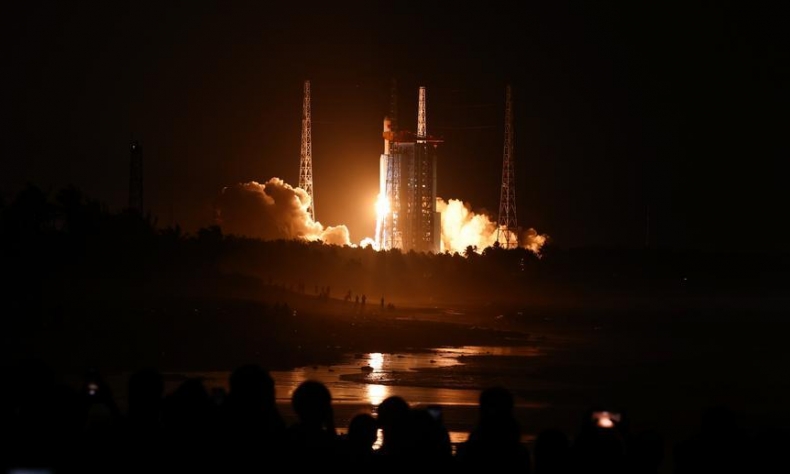
China’s development of Spacesail Constellation addresses multiple strategic considerations and pursues multiple goals relating to economic development, national security and international resource competition.
On May 17, China launched the ninth group of 18 Spacesail Constellation communication satellites into orbit from Hainan International Commercial Aerospace Launch Center. The launch brought the total number of orbiting Spacesail Constellation satellites to 162, with the total number expected to reach 648 by the end of 2026.
The Spacesail Constellation project, also known as Qianfan Constellation, is a Chinese commercial low Earth orbit (LEO) broadband satellite constellation designed as China’s answer to systems like Starlink of the United States. The project was launched in 2023, with the Shanghai Municipal Government providing the initial funding of 6.7 billion yuan ($943 million). It plans to deploy around 15,000 satellites by 2030.
From a global perspective, the LEO has become one of the forefronts of global geopolitical competition and the defense of national digital sovereignty. The United States, Russia, China and the European Union are all accelerating deployment of their own LEO satellite constellations. China’s development of Spacesail Constellation addresses multiple strategic considerations and pursues multiple goals relating to economic development, national security and international resource competition.
Realizing seamless global Internet communication coverage is one of the main purposes of Spacesail Constellation. Currently, traditional terrestrial mobile communication services cover less than 6 percent of Earth’s surface. Vast areas outside cities, including remote mountain areas, deserts, oceans and polar areas still have communication dead zones. The cost of deploying ground stations across the entire planet is excessively high. Especially in areas with complex terrain or sparse populations, building ground stations is not only economically unfeasible, but also faces numerous technology restrictions. LEO satellite Internet will overcome these challenges. By networking thousands of LEO satellites, the project will realize full coverage of Earth’s surface, allowing users anywhere to access the Internet.
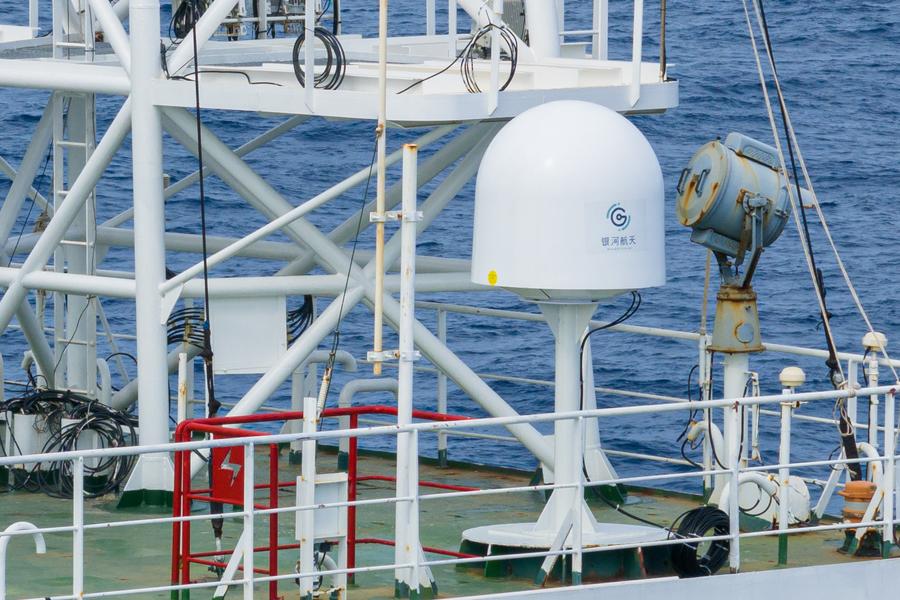
Ensuring the security and independence of telecommunication is also a crucial reason for developing the project. Traditional communication networks are highly dependent on ground stations, forcing Chinese users to rely on foreign infrastructure when they are outside the country. But after the establishment of satellite Internet, China will be able to provide independent telecommunication service support for its users globally. This will be of great importance for overseas projects, ocean trade and diplomatic missions. In addition, LEO satellite constellations are highly resilient, and the loss of a small number of satellites does not affect the operation of the entire network. This means that even if ground communication facilities are damaged, China can still maintain communications uninterrupted. For fields such as national defense and emergency command, satellite Internet is an indispensable last line of defense.
This year, China is accelerating Spacesail Constellation implementation, launching 54 satellites in three batches within the last two months. The practice of launching 18 satellites aboard one rocket will remain unchanged in the future. LEO satellite orbits and radio spectra are finite and non-renewable strategic resources, and according to the International Telecommunication Union (ITU), they are allocated on a “first-come, first-served” basis, giving early market entrants important technical and strategic advantages. Applicants must launch their first satellite within seven years of application, 10 percent of authorized satellites within nine years, 50 percent within 12 years and full deployment within 14 years. Failure to meet the required number of launches within the ITU timeframe is considered a forfeiture of orbit access rights and radio frequency assignments.
Global competition for LEO satellite resources is becoming increasingly intense. The United States has already gained a first-mover advantage in global satellite Internet services with its Starlink project. Other players such as OneWeb of the United Kingdom and Amazon Leo (formerly Project Kuiper) are also in competition. Therefore, accelerating Spacesail Constellation deployment is a necessary choice for China to secure a position in the field of LEO satellites.