The Illusion of Peace
 Facebook
 Twitter
 Linkedin
 Google +
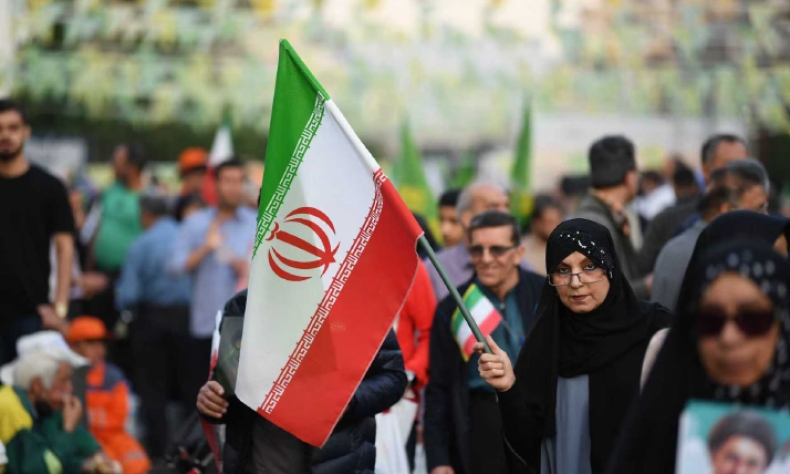
It is Iran’s deterrence capability, not its negotiating skill, that will prevent future U.S. aggression.
Iran and the United States jointly announced the conclusion of the Islamabad Memorandum of Understanding on June 15, pledging permanent ceasefire across all battlefronts and the lifting of the maritime blockade imposed on Iran. Many observers took this diplomatic breakthrough as a definitive harbinger of lasting peace. Yet beneath this superficial sense of relief lies a stark reality: Genuine, sustainable peace is far from being easily attainable through a single diplomatic document.
On February 28, Iran was subjected to an attack by the United States and Israel, supported by the collective West and their regional allies, that was even larger than the one that had taken place a few months earlier, known to Iranians as the “12 Days War.” Following a series of assassinations targeting anti-imperialist leaders in Palestine, Lebanon and Iran, this latest aggression began with the assassination of Iranian Supreme Leader Ayatollah Ali Khamenei during a routine meeting with advisors, ministers and top commanders. The war did not go as Donald Trump and Benjamin Netanyahu had expected. Having failed to estimate Iran’s capacity and willingness to defend itself, Trump unconventionally threatened the Iranians multiple times, including with the use of a nuclear weapon he said would end Iran as a civilization.
The Iranians, particularly their defense forces, were under no illusion about the nature of the aggression and treated it as an existential threat. This was not the first time the Iranian people had faced imperial aggression in their modern history. In fact, the United States is a latecomer in seeking to dominate Iran. From the early 19th century through the mid-20th century, it was chiefly Britain that enforced Iran’s subordination to imperialism. The European Zionist movement, central to the facilitation of a settler-colonial project in Palestine, was introduced by the British in 1917 and has remained an integral part of the broader imperialist framework used to pressure Iran to this day.
This time, the Iranians appeared better prepared, armed largely with indigenously developed weaponry to defend their sovereignty. The national mood following the latest war with imperialism was captured in a remark by Esmail Baghaei, spokesperson for the Iranian Foreign Ministry, regarding the proposed Iran-U.S.”Islamabad Deal”: “Iran has defeated two nuclear powers and those who supported them. We are not bluffing; we are a real power.” And yet, while this reflects the prevailing spirit among the public and the armed forces following the recent U.S.–Israeli aggression, Iran’s diplomatic apparatus now appears poised to accept a deal designed to disarm the country.
The Iranian anti-imperialist bloc
Like societies everywhere under capitalism, Iranian society since the 1979 Revolution is socially stratified, with deep-seated contradictions and conflicts among distinct classes. In recent decades, the diplomatic apparatus has been dominated by a middle- and upper-class faction, often educated at Western universities and neoliberal in political orientation. This segment of the ruling elite is largely shielded from Western-imposed sanctions, maintains business and family ties with the West and is strongly pro-Western in outlook.
The second branch of the middle class in Iran can be described as the “nationalists.” This social force is subject to both Western sanctions and assassinations. Its political orientation is inward-looking and pro-East, particularly toward Russia and China, and it has historically allied itself with the left and the lower classes against imperialism. The military institution and its various branches are a key space where nationalists and the populist classes converge. In short, it was this broad social force and alliance that fought the war, made the greatest sacrifices, and ultimately prevailed.
The nationalist-left bloc emphasizes learning from history: It rejects trust in the West, particularly the United States, and advocates strengthening ties with China. After all, China was never an imperial or colonial power. On the contrary, much like Iran, it endured more than a century of colonial humiliation and waged a protracted struggle against imperialism for its independence. Moreover, through its friendship with China, Iran was able to withstand the harshest Western sanctions. One observable shift following the recent aggression against Iran may be the growing influence of nationalist voices within the diplomatic apparatus.
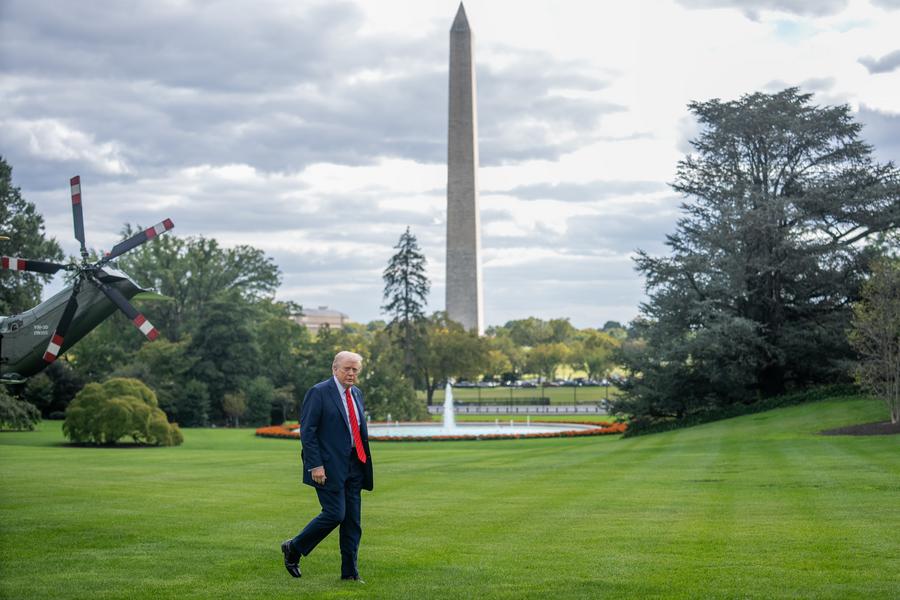
A deal to disarm Iran’s defense forces?
The last two attacks occurred while Iran was amid negotiations with the United States. Those talks centered on Iran’s nuclear program, specifically some 400 kilograms of uranium enriched to up to 60 percent, which Iranian authorities have secured in undisclosed locations. Some analysts believe the Revolutionary Guard Corps already possess a latent nuclear deterrent, ready to be activated should Iran be struck with a weapon of comparable mass destruction. This interpretation is often linked to a remark by the slain Supreme Leader, Ayatollah Ali Khamenei, who, shortly before the “12 Days War,” was asked in a speech in Mashhad, the capital of Razavi Khorasan Province, “What if the enemy attacks us with a nuclear weapon?” He reassured the public, saying, “We will respond to the enemy at the same level of their aggression.”
Trump was eager to secure a “deal” almost immediately after launching the attack, having realized that neither the United States nor Israel would achieve any of their stated objectives. He repeatedly extended the ceasefire period even though the Iranians showed no interest in returning to the table and, convinced they had been the war’s true victors, set a high bar for any future negotiations.
The Iranians are justified in distrusting the United States, even at the negotiating table. Yet Tehran has now signed an agreement the usefulness of which in safeguarding Iran’s security and protecting its national interests is highly questionable, particularly in the eyes of the nationalist-populist bloc, which already objects to the deal. In form, it is merely a 60-day mutual ceasefire, extendable to 90 days, but what is truly in question are the terms the United States intends to extract during those subsequent negotiations.
In the wake of the recent war, Iran consistently insisted on—and refused to compromise over—five points: a ceasefire in Lebanon, the release of Iran’s frozen assets (reportedly up to $300 billion), unhindered control of the Strait of Hormuz, preservation of its missile industry and retention of its nuclear enrichment capacity. What drove the United States to the negotiating table, by contrast, was the fear that Iran is potentially capable of becoming a nuclear power and the conviction it must therefore be constrained now. This explains why the current deal deliberately avoids the missile issue: Washington assumes a missile force would be strategically irrelevant without a nuclear warhead.
With regard to the Lebanese ceasefire, no one—not even the U.S. president— can guarantee that Israel will not invade or strike Lebanon whenever it chooses. Iran has agreed to temporarily waive transit fees and tolls for passage through the Strait of Hormuz for 60 days, after which it reserves the right to begin exercising its sovereign prerogative to charge for services such as ensuring safe maritime navigation. Billions in Iranian assets, illegally frozen since 1979, are to remain in U.S.-approved banks, accessible only through requests by the Central Bank of Iran to purchase specified goods (subject to U.S. approval), mostly from American companies. Needless to say, such an arrangement serves primarily to refresh the U.S. economy while incentivizing further freezes and locking Iran into an even deeper condition of economic dependency.
The worst aspect of the deal, however, is the stipulated negotiation to reduce existing enriched uranium stockpiles under the supervision of the International Atomic Energy Agency, the same body Iranian officials have repeatedly accused of espionage, alleging it leaked sensitive information about Iranian scientists to U.S. and Israeli intelligence services.
Iran’s new leadership and senior officials have repeatedly stressed that “the enemy cannot achieve at the negotiating table what it failed to achieve on the battlefield.” Whether that holds true in this instance remains to be seen. Ultimately, it is Iran’s deterrence capability, not its negotiating skill, that will prevent future U.S. aggression.
The author is an Iranian lecturer specializing in global political economy and West Asian and North African politics at Beijing Foreign Studies University.